
Beyond the Quiet Classroom:
The Real Cost of Korea’s Shrinking Schools
A classroom with five children might look idyllic, but Korea’s dwindling class sizes tell a story far deeper than “small is better.” For those seeking to understand rural Korea, the challenge isn’t just education—it’s the unraveling of a village system.
When a school closes, a town loses more than desks and textbooks; it loses its town hall, its largest employer, and the very signal of a future.
- • Demographic Realities: Moving past easy assumptions.
- • Social Infrastructure: Schools as the heartbeat of community survival.
- • The Trade-off: Weighing personalized learning against “thinner” peer life.
Not just fewer students. Not just quieter classrooms.
A whole system, changing one empty desk at a time.
Table of Contents
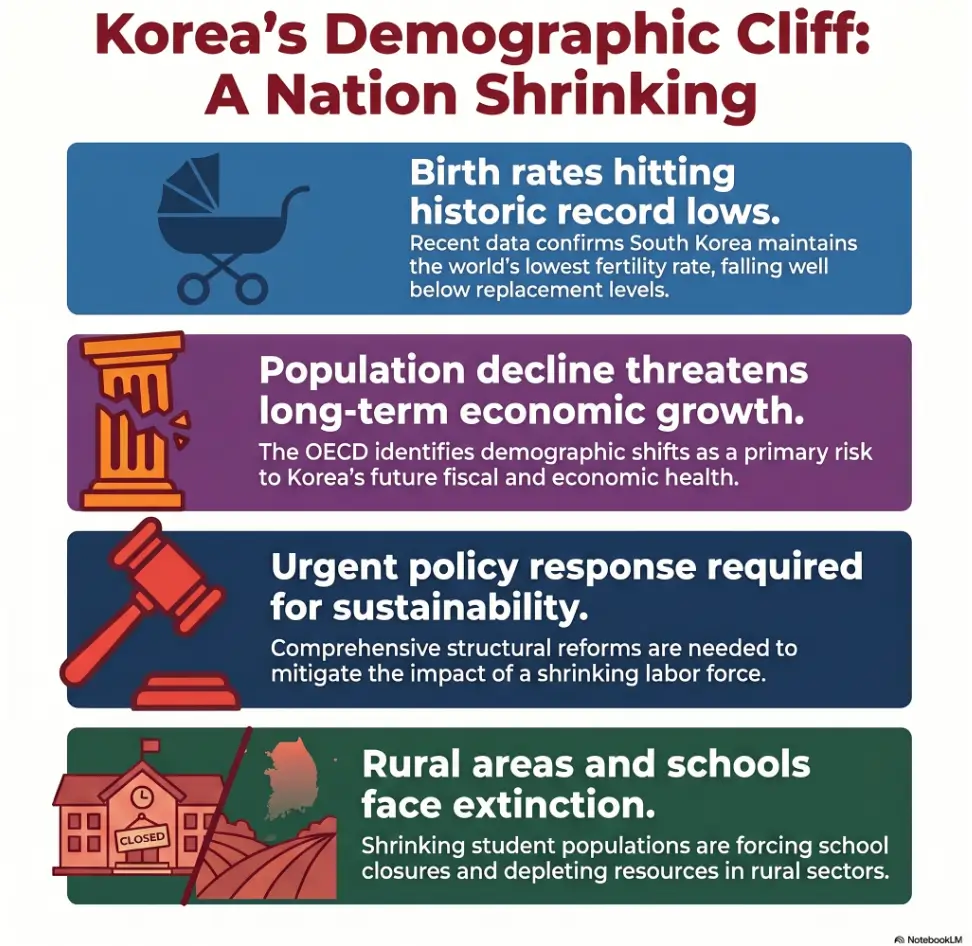
Context Snapshot: The Numbers Behind the Empty Desks
Why One Tiny Class Can Signal a Whole Village Problem
A class of five students is not merely “small and cozy.” It can be a demographic smoke alarm. Behind those five students may be fewer births, fewer young families, fewer local jobs, and a village economy losing its weekday rhythm.
In South Korea, the classroom is often one of the first places where population change becomes visible. National birth statistics are abstract until they become an empty desk near the window. Then the number has a chair.
Annual births, total fertility rate, natural population change and school enrollment measure different things. A short-term birth change cannot establish the enrollment outlook of one rural school. Use the local education office’s current cohort and enrollment data when assessing a proposed change.
The Birthrate Rebound Is Real, But Not a Rescue
The birth rebound is worth taking seriously. A country does not climb out of a demographic basement by ignoring any step upward. But one year of better birth numbers does not refill a rural first-grade classroom overnight.
Schools plan around cohorts already born. A baby born in 2025 does not enter elementary school the next morning carrying a tiny backpack and an apology note. Rural education offices must manage today’s enrollment while watching tomorrow’s pipeline.
- A small class may reflect years of low births.
- Rural areas feel the shift earlier than major cities.
- A modest birth rebound does not quickly restore school-age numbers.
Apply in 60 seconds: When you see a tiny rural class, ask what happened to births, jobs, housing, and family migration 6 to 12 years earlier.
From School-Age Decline to Local Disappearance
Korea’s broader concern is often described as local disappearance: towns and counties losing enough people, especially young residents, that basic services become hard to sustain. The OECD has identified responding to population decline as a major Korean policy priority, especially because regional aging and population loss do not move evenly across the country.
That unevenness matters. Seoul can feel crowded while a rural school struggles to form one full class. Demography does not fall like rain. It pools in some places and dries out in others. This same unevenness also shows up in Korea’s aging neighborhoods, where the absence of children can reshape the mood, services, and social rhythm of an entire street.
Show me the nerdy details
For rural schools, the important number is not only the national fertility rate. The sharper indicators are local births by county, net migration of young adults, the number of children entering each grade, teacher allocation rules, school transportation distance, and whether nearby schools are also shrinking. A national rebound can coexist with local decline if births are concentrated in metropolitan areas or if young families keep moving toward larger labor markets.
Who This Is For / Not For: Read This Before You Blame the School
For Readers Comparing Education, Demography, and Rural Policy
This article is for US readers trying to understand Korea through education, public policy, local planning, or family migration patterns. It is also for anyone who has heard “small class size” and assumed the story ends with better teaching.
It does not. Small classes can be wonderful. They can also be the educational version of a porch light left on in a nearly empty street.
I once visited a small rural school where the teacher knew every child’s handwriting from twenty feet away. That intimacy was beautiful. Then I noticed the playground had more equipment than children. Beauty and warning were standing in the same yard.
For Expats Wondering Why Rural Schools Feel Different
For expats, rural Korean schools may feel less like stand-alone institutions and more like community organs. The school is not just where children learn math. It is where a village announces, “We still have children here.”
That makes school decline emotionally charged. A school merger can sound practical on paper, but in the village, it can feel like someone has removed a family photograph from the wall.
Not For Quick “Small Classes Are Always Better” Takes
Smaller classes can help instruction. Many teachers can give more feedback, catch confusion earlier, and adjust lessons faster when they teach fewer students. But extreme smallness brings a different set of costs.
Tiny is not automatically tender. Sometimes tiny is a warning bell in a hanok courtyard.
Eligibility Checklist: Is This Really a Rural School Fragility Case?
Use this simple yes/no screen before blaming a single school administrator or teacher.
- Yes/No: Has enrollment declined for 5 or more years?
- Yes/No: Are nearby schools also shrinking?
- Yes/No: Are young families moving out faster than they move in?
- Yes/No: Does the school also serve as a community event space?
- Yes/No: Would closure increase daily travel time for children?
Neutral action: If three or more answers are “yes,” treat the issue as a community-planning problem, not a simple school-management problem.
The Small-Class Paradox: Better Attention, Thinner Childhood
When Five Students Get More Teacher Time
There is a real upside to small classes. A teacher with five students can notice hesitation before it becomes failure. A shy child cannot disappear into the back row because there is no back row, just the room and its tiny republic of pencils.
Teachers can personalize reading, math practice, and project work. Feedback can happen in real time. A student who struggles with fractions might get help before the confusion grows teeth.
For children who need confidence, this can be powerful. A small classroom can feel like a warm kitchen on a cold morning: ordinary, close, and mercifully human.
When Five Students Lose the Peer World
But childhood is not only instruction. It is rehearsal. Children learn by negotiating rules, losing games, choosing teams, making up after arguments, copying the older kid’s soccer trick, and discovering that other people’s jokes have strange weather.
When a grade has only a handful of students, the peer world narrows. Clubs may be limited. Sports teams may be impossible. Group projects can feel like the same three voices in different hats.
This is the paradox: a child may receive more adult attention and fewer child-to-child possibilities. You can see a related pressure in Korean teen life, where school routines, peer groups, and social expectations often carry more emotional weight than outsiders first notice.
Here’s What No One Tells You…
A very small class can feel safe to adults but lonely to children. The room is quieter, yes, but sometimes too quiet.
Adults often admire calm. Children often need movement, friction, and a little social thunder. Without enough peers, school can become efficient but thin, like soup made by someone who forgot the broth.
Rural School Shrinkage Chain
The first-grade pipeline thins years before desks empty.
Students get attention, but peer options shrink.
Curriculum, clubs, and services become harder to sustain.
Consolidation starts looking administratively tempting.
Families question whether the area has a future.
Village Schools as Social Infrastructure: The Building Does More Than Teach
The School as Morning Traffic, Lunch Economy, and Local Proof
A rural school creates motion. Buses arrive. Parents wave. Teachers buy coffee. Lunch suppliers deliver. A small shop sells snacks, notebooks, batteries, and emergency umbrellas because someone always forgets an umbrella.
Take away the students and the village does not simply lose lessons. It loses daily circulation.
In a city, one school closure may be absorbed by a wider system. In a village, the school might be the last public institution that brings children, workers, elders, and parents into the same calendar. Even ordinary routines, from shared meals to the way students experience South Korean school lunch culture, become part of the social infrastructure that makes a school feel larger than its enrollment count.
The Gym Is Also a Town Hall
Rural schools often serve as more than classrooms. The gym may host festivals, sports days, voting, emergency shelter use, cultural events, and intergenerational gatherings.
A schoolyard can be a memory machine. Grandparents remember their own ceremonies there. Parents remember field days. Children remember the smell of dust, gimbap, and nervous performance rehearsals.
When enrollment falls, those shared rituals become smaller. When a school closes, the rituals may vanish unless another institution is ready to carry them.
Why Closure Feels Like Losing a Clock
When the school closes, the village loses a schedule. Bells, pickup times, field days, parent meetings, and graduation banners disappear from the social calendar.
A village without a school can still be alive. Of course it can. But it may lose one of its clearest ways of measuring ordinary time.
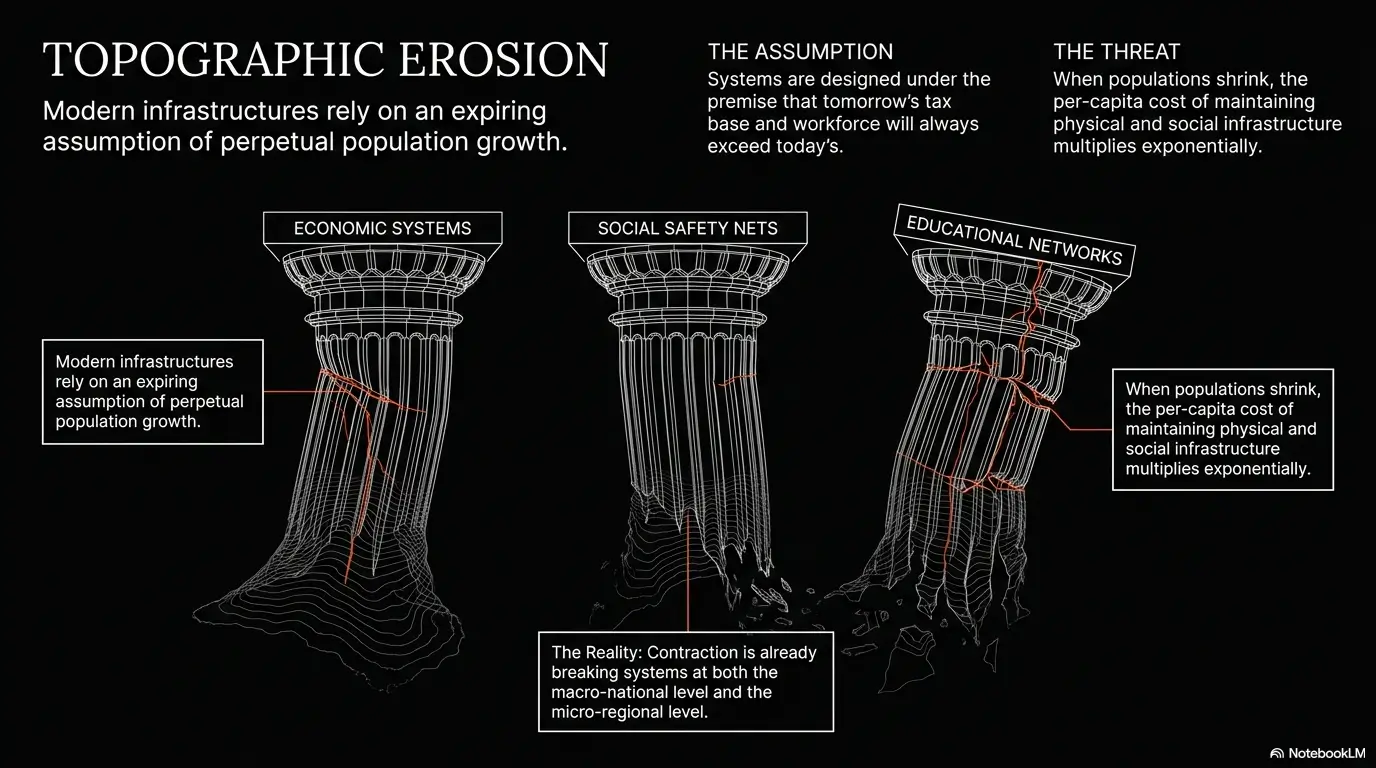
Closure Pressure: When Small Becomes Administratively Fragile
Why Education Offices Consolidate Schools
School consolidation is rarely presented as emotional surgery. It is usually presented as logistics: staffing, maintenance, transportation, curriculum breadth, special education support, and budget efficiency.
Those are real concerns. A school with very few students still needs heat, repairs, administrators, safety checks, teachers, meals, and transportation. It may also struggle to offer music, science labs, counseling, sports, and specialized support.
The problem is not that officials ask efficiency questions. The problem is when efficiency becomes the only language in the room.
The Closure Numbers Are No Longer Abstract
A cumulative national school-closure count needs a defined period, school types and an official dataset. It cannot by itself identify why a particular school closed or whether consolidation improved access. This guide does not retain an unverified cumulative count as a measure of current rural school quality.
Elementary schools make up the largest share because they are the most local. They sit closest to family life. They are often the first institution to reveal whether children still live nearby.
| Cost Type | Who Feels It | What to Check |
|---|---|---|
| Operating cost | Education office | Maintenance, staffing, utilities, repair backlog |
| Commute cost | Students and families | Bus time, winter road safety, after-school access |
| Community cost | Village residents | Lost events, lost gathering space, reduced local confidence |
| Opportunity cost | Children | Course variety, clubs, counseling, peer interaction |
Neutral action: Compare at least four cost types before calling consolidation “cheap” or “expensive.”
The Rural Burden Lands First
Closures are felt more sharply in provinces and villages because one closed school can remove the area’s main child-centered institution. It is not one building among many. It may be the building that tells newcomers, “Families still belong here.”
That is why rural residents often resist closure with a kind of grief that outsiders misread as nostalgia. Sometimes it is nostalgia. Often it is risk assessment wearing a tearful coat. The deeper story connects closely to Korea’s low birth rate effects, where school closures are only one visible symptom of a wider demographic rewiring.
Don’t Make This Mistake: Treating Consolidation as Just a Bus Route
Longer Commutes Are Not a Footnote
When schools merge, transportation becomes the hinge. A longer bus ride may look efficient on a spreadsheet. For a seven-year-old in winter, it can feel like the day begins before the sun has signed in.
Longer commutes can reduce sleep, limit after-school participation, and make it harder for grandparents or working parents to respond quickly when a child gets sick. Travel time is not empty time. It is childhood time.
In rural areas, roads, weather, and distance change the meaning of “nearby.” Ten miles on a map can become a long emotional hallway.
Transportation Changes Family Decisions
School distance can affect whether young families stay, move, or avoid rural relocation altogether. Parents may tolerate a small school. They may even love it. But if the local school closes and the next option is far away, the family’s calculation changes.
Housing, work, childcare, and school distance braid together. Pull one strand hard enough and the whole rope shifts.
Let’s Be Honest…
Consolidation can bring benefits. A larger school may offer more peers, more clubs, better facilities, and more specialized teachers. But those benefits should be measured against the daily cost of distance.
A bus route is not just a line. It is a child’s morning. For families with tight work schedules, the same pressure appears in everyday logistics such as Korean childcare pickup, where school location and timing quietly shape the whole household day.
- Commute time can affect sleep and after-school access.
- Distance can shape family migration decisions.
- Transportation plans should be designed before closure decisions harden.
Apply in 60 seconds: Add estimated daily travel time to any school merger discussion before judging the policy.
Multi-Grade Classrooms: Survival Tool or Hidden Inequality?
How Mixed-Age Learning Can Work Well
Multi-grade classrooms are not automatically second-best. In some small schools, older students mentor younger ones. Younger children learn by watching. Teachers create flexible groups. A class can become unusually close, almost like a small workshop.
There is a quiet beauty in that model when it is resourced well. The older child tying a younger child’s shoelace may be learning responsibility as surely as any worksheet teaches grammar.
Rural schools often survive because adults improvise with care. Anyone who has watched a teacher manage three grade levels in one room knows it is part lesson planning, part jazz performance, part controlled weather system.
Where It Can Break
The same model can break when teachers are overloaded. Curriculum complexity rises. Subject specialization becomes harder. Social gaps widen. Enrichment options shrink.
A teacher may be expected to teach multiple grade-level standards while also managing behavior, counseling needs, parent communication, lunch routines, and the occasional printer rebellion. The printer always chooses a dramatic moment.
The Quiet Risk: “Good Enough” Becomes the Standard
The quiet danger is accepting reduced access as inevitable because rural children are fewer in number. “Good enough” can become the polite mask of inequality.
Small schools deserve creativity, not lowered expectations. If a multi-grade classroom is the survival tool, it needs training, planning time, shared curriculum resources, digital support, and access to rotating specialists.
Decision Card: Multi-Grade Classroom vs. Consolidated School
Choose stronger multi-grade support when: travel distances are long, the school is central to village life, and teachers can receive real planning support.
Choose consolidation discussion when: students lack essential services, safety is difficult to maintain, and nearby schools can provide better programs without punishing commutes.
Time/cost trade-off: Multi-grade support may require investment in teacher training and shared resources. Consolidation may save building costs but increase transportation and community costs.
Neutral action: Put student access and commute time in the same comparison table before making a recommendation.
Rural Villages After the School Shrinks: The Dominoes Fall Softly
Fewer Students, Fewer Parents, Fewer Volunteers
Rural decline rarely arrives with a drumroll. It arrives as a smaller festival committee. A sports day with fewer tents. A parent association that meets around one table instead of three.
Fewer children usually means fewer young adults. Fewer young adults means fewer volunteers, fewer informal caregivers, fewer customers, and fewer people to organize the small events that make a village feel awake.
The dominoes fall softly, which is why outsiders miss them.
Housing Demand Changes When the School Looks Uncertain
Families may hesitate to buy, rent, or return to a village if the local school appears likely to merge or close. A school is one of the strongest signals that a place can support family life.
When that signal flickers, the housing market feels it. Not always immediately. Not always dramatically. But the doubt spreads.
Local Businesses Feel the Missing Backpacks
Convenience stores, stationery shops, snack sellers, bus operators, lunch suppliers, and small service businesses can all feel the decline. Children are not just students. They are tiny carriers of routine demand.
A missing backpack can mean a missing snack sale, a missing parent errand, a missing bus contract, and a missing reason to keep the lights on until 6 p.m.
Illustrative Scenario: The Last Sports Day Banner
The banner was still bright, tied between two poles at the edge of the schoolyard. “Autumn Sports Day,” it said, cheerful as a trumpet. But the field beneath it looked too large for the children gathered there. Five students warmed up for a relay designed for twenty. Three grandmothers clapped with heroic seriousness. One teacher held a whistle and a clipboard, trying to make the morning feel full.
Then something small happened. An older man from the village shop brought oranges and set them on a folding table. A bus driver moved chairs into the shade. Parents rearranged the race so everyone could run twice. The day did not become large, but it became complete.
That is the lesson. Rural schools do not survive by sentiment alone. They survive when a community can redesign the ritual before the ritual disappears.
Common Mistakes: What Policymakers and Commentators Get Wrong
Mistake 1: Counting Students but Not Community Functions
A school’s value is not measured only by enrollment. It may also function as a social hub, emergency facility, voting site, cultural venue, and symbol of village viability.
Counting students is necessary. Counting only students is a narrow flashlight in a large room.
Mistake 2: Romanticizing Tiny Schools
On the other side, nostalgia can be a fog machine. A tiny school can be warm, but warmth does not replace subject access, peer diversity, counseling, arts, sports, or special services.
Children deserve affection and opportunity. One without the other is not enough.
Mistake 3: Assuming Technology Solves Distance
Remote learning can expand course access. It can connect a rural student to a subject teacher who would otherwise be unavailable. That is useful.
But technology cannot fully replace friendships, recess, live mentoring, school festivals, or the everyday texture of belonging. A screen can carry a lesson. It cannot carry the smell of the gym floor before a performance.
Mistake 4: Closing First, Planning Later
Reports have noted that hundreds of closed schools in Korea remain idle, with some unused for decades. That is not just wasted property. It is civic drift.
If closure is unavoidable, the afterlife of the building should be planned before the last bell rings.
- Enrollment matters, but it is not the whole value.
- Nostalgia should not hide unequal access.
- Closed buildings need a planned second life.
Apply in 60 seconds: List every non-classroom function a rural school serves before judging whether it should close.
What Smart Rural School Policy Could Look Like
Keep Schools Open by Making Them Multi-Use
One smart path is to make rural schools more useful to more people without weakening their child-centered purpose. A school can share space with a library, childcare program, senior class, health outreach service, cultural workshop, or remote-work hub.
This approach does not pretend enrollment is fine. It asks whether the building can serve a wider civic function while still protecting students’ safety and learning.
Build “Small School Networks,” Not Lonely Schools
Small schools do not have to be isolated schools. Rural schools can link together for shared teachers, online electives, joint sports days, arts programs, field trips, and rotating specialists.
The goal is not to make every school large. The goal is to make every child’s world large enough.
Make Repurposing Plans Before Closure
If closure is unavoidable, the village needs a transition plan before the final ceremony. Strong reuse options might include childcare, community libraries, youth housing, training hubs, cultural centers, elder-care services, or rural coworking spaces.
The worst outcome is a locked building with fading posters still on the wall. That turns a school from public memory into public dust.
Coverage Tier Map: Five Levels of Rural School Response
- Tier 1: Basic maintenance. Keep the school open but do little else.
- Tier 2: Teacher support. Add planning time, multi-grade training, and shared materials.
- Tier 3: Networked services. Share specialists, clubs, and electives across schools.
- Tier 4: Multi-use campus. Add library, childcare, senior, or community services.
- Tier 5: Planned transition. If closure happens, reuse is ready before the last day.
Neutral action: Ask which tier a policy proposal actually funds, not just which tier it praises.
The Human Story: A Village Without Children Sounds Different
The Soundscape Changes First
Before a village looks different, it sounds different. Fewer sneakers in hallways. Quieter playgrounds. Fewer festival rehearsals. Fewer buses coughing up the hill. Fewer children shouting with the wild confidence of people who do not yet know property taxes exist.
Sound is a demographic record. You can hear when a place is aging. You can also hear how Korean city identity changes when local institutions, schools, markets, and public rituals no longer pull people into the same shared rhythm.
Teachers Become Witnesses to Demography
Rural teachers become witnesses to shrinking cohorts, changing family structures, and village aging. They see the trend not as a chart but as a seating arrangement.
A teacher may remember when a grade filled two classrooms. Then one. Then half of one. That kind of change has weight.
Children Become Symbols, Not Just Students
Remaining children may be treated as signs of whether the village still has a future. That can be sweet, but it can also be heavy.
A child should not have to carry a village’s anxiety in a backpack. Policy should protect children from becoming symbols too soon.
What US Readers Can Learn From Korea’s Rural School Shift
Rural Decline Travels by Different Roads, But the Destination Rhymes
Korea’s demographic speed is distinctive, but US readers may recognize the school-as-community-anchor debate. Many rural US districts also face consolidation pressure, long bus routes, staffing shortages, aging buildings, and questions about whether schools should be measured only by enrollment.
The roads differ. The destination rhymes.
Education Policy Is Also Place Policy
The central lesson is simple: education policy is also place policy. School decisions shape housing, labor, family confidence, elder care, transportation, and local identity.
A school board decision can become a real estate signal. A bus route can become a family migration trigger. A closed gym can become a missing town hall.
The Korean Case Is a Preview, Not a Curiosity
Korea is not a distant demographic curiosity behind glass. It is an early-warning case for aging societies where education systems must adapt before classrooms become museums with fluorescent lights.
For US readers, the useful question is not “Could this happen here in the same way?” It is “Which parts are already happening, quietly, under different names?” For readers looking at school pressure through the family lens, why Korean parents track height and grades adds another layer to how children become the measuring stick for household hope, anxiety, and social mobility.
FAQ
Why are class sizes shrinking in rural Korea?
School size depends on local birth cohorts, migration, family location and education policy. National fertility statistics provide background, while the relevant school and education office hold the enrollment and service details needed for a local decision. A smaller class can have advantages and constraints that a national average cannot resolve.
Are smaller classes always better for students?
Not always. Smaller classes can mean more teacher attention and closer relationships, but extremely small cohorts can reduce peer interaction, clubs, sports, friendships, and academic variety.
Why do rural school closures affect entire villages?
In many rural communities, the school is also a gathering place, employer, event space, family anchor, emergency facility, and symbol that the village still has a future.
What happens to students when schools merge?
Students may gain access to more programs, more peers, and better facilities. They may also face longer commutes, weaker neighborhood ties, and less participation in after-school activities.
Can technology save small rural schools?
Technology can expand course access and connect students with teachers outside the village. But it cannot fully replace in-person friendships, recess, mentoring, local belonging, or community use of school buildings.
What should happen to closed rural school buildings?
Closed buildings should be repurposed deliberately, not abandoned. Strong options include childcare, community libraries, senior programs, cultural centers, youth housing, training hubs, or rural coworking spaces.
Is Korea’s rural school problem unique?
The speed and severity are distinctive, but the underlying pattern is familiar in aging societies: fewer children, rural outmigration, school consolidation, and pressure on local services.
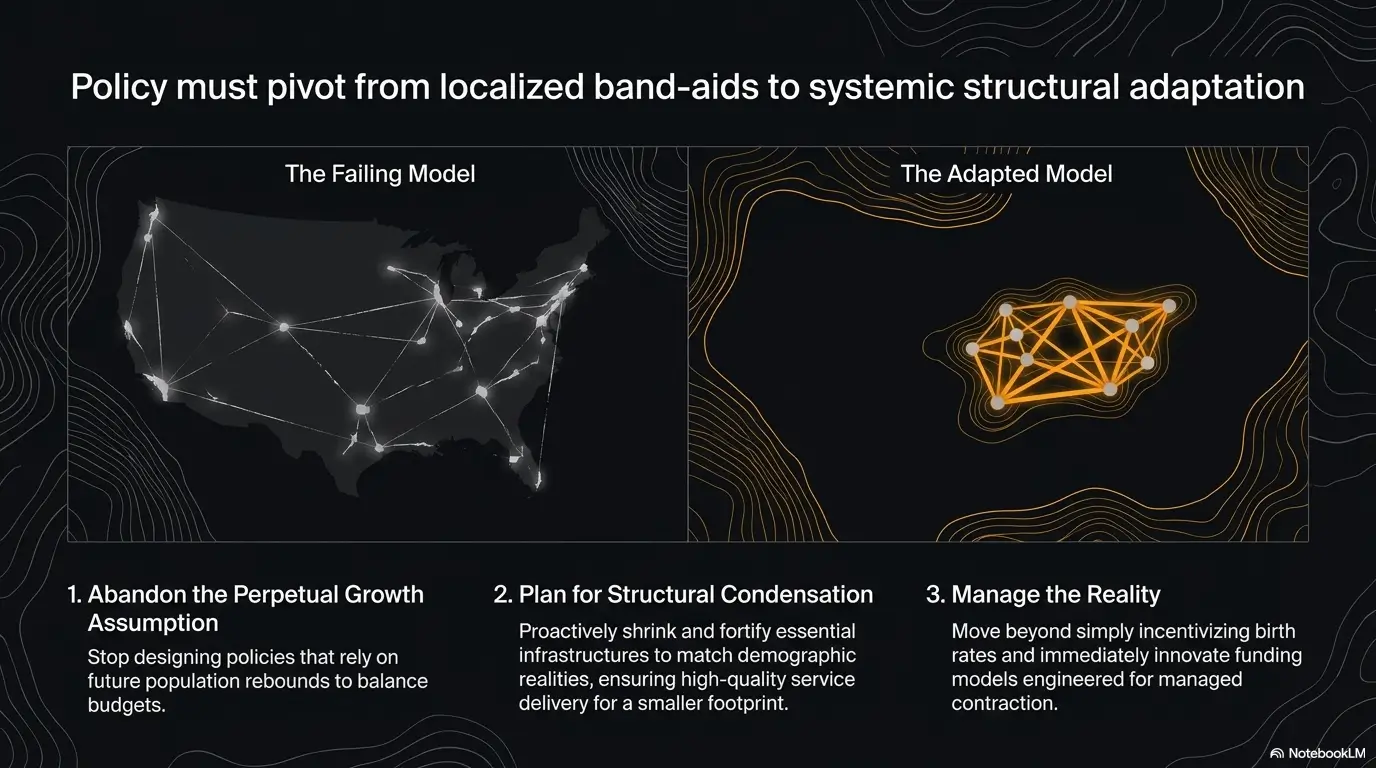
Next Step: One Concrete Action
Map the School’s Second Life Before the Last Bell
Choose one rural school case and make a simple community asset map. You do not need a fancy model. A notebook page is enough. Draw the school in the center and list every function it serves beyond classroom instruction.
Start with four questions:
- Who uses the school building besides students?
- Which local jobs or routines depend on the school?
- What services would disappear if the school merged or closed?
- What three reuse plans could protect the village if enrollment keeps falling?
This turns a vague debate into a practical map. It also keeps the conversation from shrinking into one tired question: “How many students are left?”
Quote-Prep List: What to Gather Before Comparing School Options
- Current enrollment by grade and 5-year trend
- Projected births and school-age population in the area
- Current and proposed commute times
- Services offered now versus after consolidation
- Community uses of the school building
- Reuse plan for the facility if closure occurs
Neutral action: Gather these six items before supporting or opposing a closure plan.
Conclusion
That first image of five children in a quiet classroom was never just about class size. It was about what remains when births fall, families move, services thin, and a village tries to keep its morning rhythm.
Korea’s shrinking class sizes show how education policy can become village policy. A small class can offer tenderness, attention, and deep teacher knowledge. It can also reveal loneliness, reduced opportunity, and a community wondering whether the next generation will stay.
The honest answer is not “keep every school open forever” or “close small schools quickly.” The honest answer is harder and better: measure the school as a whole civic system, protect children’s learning, count commute burdens, support teachers, and plan a second life for buildings before the last bell turns into an echo.
Your 15-minute next step: Pick one rural school, in Korea or near you, and sketch its community asset map. Write down the classroom function, the village function, the family function, and three possible futures. That single page will teach you more than a slogan ever could.
Last reviewed: 2026-05