
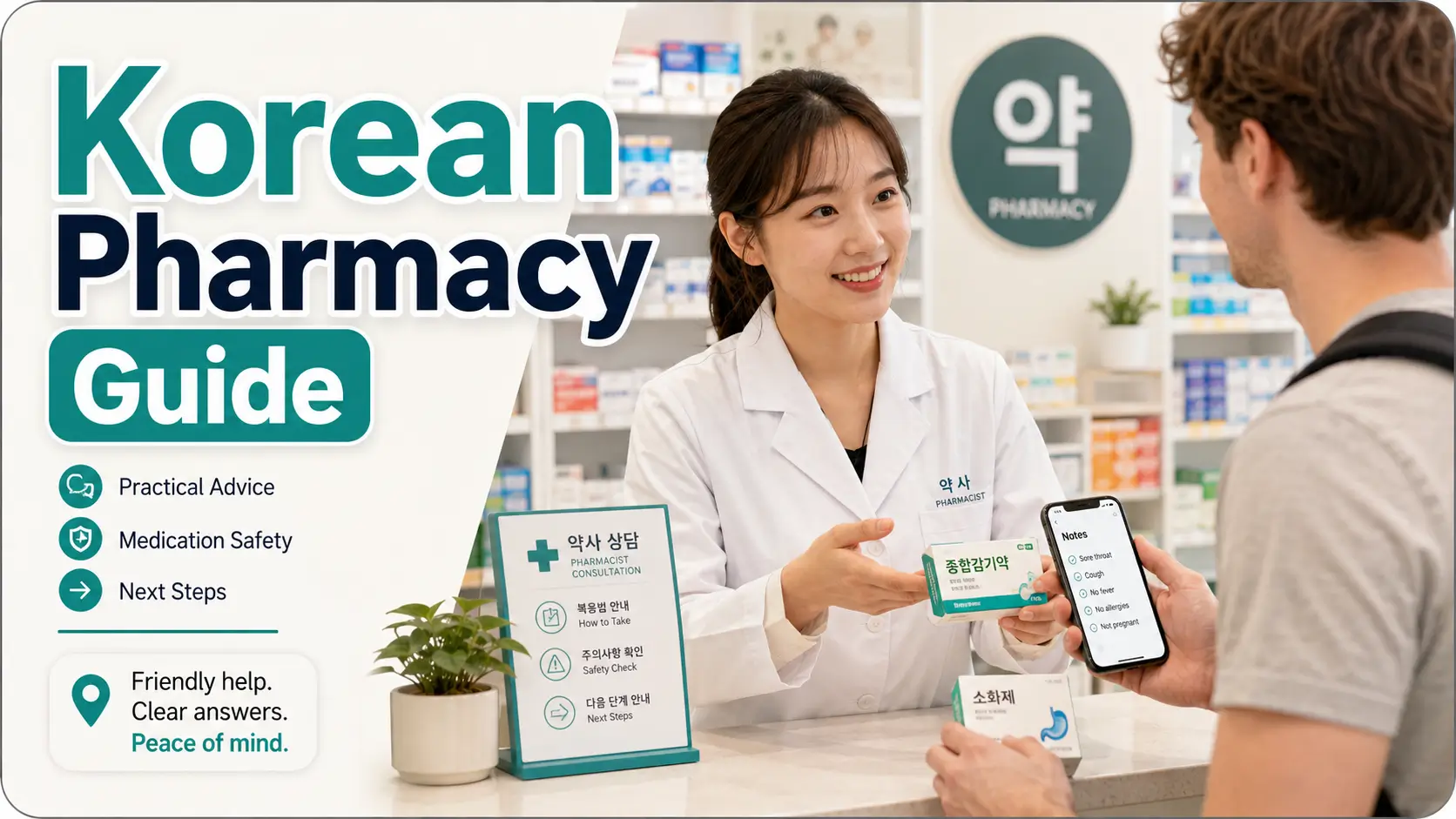
Korea travel health guide
Why Korean Pharmacies Sell More Practical Advice
Than Foreigners Expect
The first time a foreign visitor walks into a Korean pharmacy, the room can feel almost too small for the job it does. There may be no long canyon of cough syrups, no endless wall of antacids, no fluorescent maze of shampoo, vitamins, greeting cards, and suspiciously discounted snacks. Instead, there is often a counter, a pharmacist, a few shelves, and a quietly efficient question: what symptoms are you having?
That small shift changes everything. Korean pharmacies are not built only around browsing. They are built around conversation, triage, safe use, and practical matching. For travelers used to US or UK drugstores, this can feel oddly intimate at first, then deeply useful. You are not expected to recognize every local brand name while jet-lagged and sniffly. You can describe the problem, show a package, point to a rash photo, or use a translation app, then let the pharmacist help narrow the options.
This guide explains how that interaction works, where its limits are, what foreigners should prepare before walking in, and how to avoid the tiny medication mistakes that can turn a simple cold into a suitcase-sized headache. It is practical, cautious, and designed for real people: tired tourists, exchange students, remote workers, parents, medical visitors, and anyone who wants help without playing label roulette in a language they barely read.
Buy smarter
Learn why symptoms and ingredients beat foreign brand names at the counter.
Avoid risky overlap
Spot the common trap of doubling up on cold, pain, allergy, or sleep ingredients.
Know when to leave
Use clear red flags to decide when a clinic, hospital, or emergency call is safer.
Small note, big relief: a one-minute pharmacy note on your phone can save you from a very long evening. 💊
Snapshot
This article is for foreigners in Korea who need minor health help but do not know how Korean pharmacies work. You will learn what pharmacists can realistically help with, what information to show them, how OTC buying differs from US and UK habits, and when pharmacy advice is not enough.
Table of Contents
Safety First: What a Korean Pharmacy Can and Cannot Do
Korean pharmacies can be wonderfully practical for minor, familiar problems. They can help you choose an over-the-counter option, understand how to take it, avoid obvious ingredient overlap, and decide whether your symptoms sound too serious for pharmacy-only care.
They cannot diagnose you in the same way a doctor can. They cannot safely manage every chronic condition, replace emergency care, or fill every foreign prescription as if it were issued locally. That boundary matters. It is the guardrail on the mountain road.
Safety note
This article is educational travel-health guidance, not medical diagnosis. For chest pain, breathing trouble, severe allergic reaction, fainting, signs of stroke, serious injury, high or persistent fever, severe dehydration, worsening infection, or symptoms in babies, pregnancy, older adults, or medically fragile people, seek medical care instead of relying on a pharmacy visit.
Pharmacy help is real, but limited
The useful thing about Korean pharmacies is not that they magically solve every problem. The useful thing is that they often help you take the next safe step. For a mild sore throat, a small mosquito bite, a headache after a long flight, or an upset stomach after spicy stew, that step may be an OTC medicine and simple instructions.
For severe pain, fever that will not settle, breathing symptoms, a spreading rash, or anything that feels strange and frightening, the next step may be a clinic, hospital, or emergency service. A good pharmacist is not merely handing over tablets. They are also watching for the moment when tablets are the wrong answer.
Prescriptions are not travel souvenirs
A prescription from your home country may be useful information, but it may not work as a direct shopping ticket at a Korean pharmacy. A Korean medical provider may need to evaluate you and issue a local prescription for prescription-only medicine. This can be surprising for travelers who packed a photo of a prescription and assumed that would be enough.
The better approach is to bring the original medicine packaging, a written list of active ingredients, the dose, the reason you take it, and your doctor’s note when possible. That does not guarantee access, but it gives Korean medical staff something much clearer than “the small blue pill I usually take.”
The simple rule before you go in
Use a Korean pharmacy for mild, familiar, short-term issues. Use a clinic or emergency care for serious, unusual, worsening, or recurring symptoms. That sentence is not glamorous, but it is the kind of boring wisdom that saves trips.
Key takeaway:
Korean pharmacies are excellent for practical OTC guidance, but they are not a substitute for diagnosis, emergency care, or chronic-condition management.
The First Surprise: Smaller Stores, More Human Help
Many foreigners expect a pharmacy to feel like a supermarket with medicine attached. In Korea, the experience is often more compact and counter-centered. The shelves may be close, the aisle space modest, and the pharmacist physically central to the transaction.
That design can feel oddly exposing if you are used to quiet browsing. You may be accustomed to walking into a drugstore, staring at six brands of cough syrup, reading labels under harsh lighting, then deciding alone. In Korea, you may be invited into a shorter path: explain the symptoms, answer a few questions, receive a recommendation, and ask how to take it.
Less aisle browsing, more conversation
The first cultural adjustment is simple: do not wait for the store layout to solve the problem. The pharmacist is part of the layout. In many Korean pharmacies, especially smaller neighborhood ones, you may not see every medicine sitting out where you can compare boxes by yourself.
This does not mean medicine is unavailable. It means the buying process often begins with a person. You can say, “I have a sore throat,” “I have diarrhea,” “I have allergies,” or “I have a headache.” If Korean feels difficult, a translation app or short written note can do much of the work.
The pharmacist may then ask follow-up questions. How long has it been happening? Do you have a fever? Are you taking other medicine? Are you pregnant? Do you need something non-drowsy? These are not obstacles. They are the tiny gates that keep the wrong product from jumping into your bag.
Why Americans feel the difference quickly
US drugstores often bundle pharmacy services with retail convenience. You might buy allergy medicine, a phone charger, toothpaste, a birthday card, and a bag of chips in one trip. The pharmacist is available, but many shoppers start by self-selecting from shelves.
Korean pharmacies are usually more medicine-focused. This can make the visit feel less casual, but also less lonely. For a visitor who cannot read Korean labels well, a highly retail model can create a strange kind of freedom: you are free to choose, but also free to choose badly. A counter-based conversation can reduce that risk.
The quiet advantage for confused travelers
Imagine arriving in Seoul after a twelve-hour flight. Your throat is dry, your nose is running, and your brain is making dial-up noises. In a giant drugstore, you might compare cold medicines while wondering which ingredients overlap with the pain reliever already in your backpack.
In a Korean pharmacy, the more efficient move is often to describe the symptom set: sore throat, runny nose, no fever, no other medicine today. That gives the pharmacist a useful starting point. You do not need to perform a one-person pharmaceutical opera in aisle three.
Mini scenario: the tired traveler
Instead of asking, “Do you have NyQuil?” try: “I have a runny nose and sore throat. I do not have a fever. I need something I can take tonight.” That gives the pharmacist symptoms, severity, and timing in one neat bundle.
Advice Is Part of the Product, Not a Bonus
The most underrated thing Korean pharmacies sell is not on the shelf. It is the few minutes of interpretation between your messy human symptoms and the medicine that might fit them. That advice can feel surprisingly valuable when the packaging is unfamiliar and your body has chosen the least convenient day to be dramatic.
For minor issues, the pharmacist often acts as a symptom translator. You bring the everyday sentence: “My stomach feels bad after eating.” The pharmacist helps turn that into a practical question: indigestion, diarrhea, nausea, reflux, food poisoning concern, or something that needs a doctor?
The pharmacist becomes your symptom translator
Travel symptoms are rarely tidy. “Cold” might mean sore throat only, heavy congestion, cough, fever, chills, sinus pressure, or fatigue after poor sleep. “Stomach problem” might mean nausea, constipation, diarrhea, cramps, acid reflux, or a nervous belly before a bus ride.
A pharmacist cannot diagnose the whole medical story, but they can help narrow the OTC category. That is especially helpful in Korea because brand names may not match what you know from home. The Korean package may look sleek and clear to a local shopper, but to a foreigner it can look like a tiny cardboard riddle wearing a lab coat.
What advice usually covers
Useful pharmacy advice is often practical rather than grand. It may cover when to take the medicine, whether it should be taken after meals, whether it may cause drowsiness, whether you should avoid alcohol, and whether it overlaps with something you already took.
You may also be told when to stop self-treating. For example, a pharmacist may suggest a clinic if symptoms have lasted several days, if fever is present, if pain is severe, or if you have risk factors that make casual OTC use less safe.
The real value is error prevention
Many travelers think the goal is to find “strong medicine.” A better goal is to avoid wrong medicine. Strong but wrong is still wrong. It is a brass band playing in the wrong room.
The practical value of pharmacist advice is often invisible because nothing bad happens. You do not double up on acetaminophen. You do not take a sedating medicine before driving. You do not combine a cold product with alcohol because nobody told you not to. You do not waste money on a product that does not match the symptom.
Key takeaway:
A good pharmacy visit is not only about getting medicine quickly. It is about reducing the chance of buying the wrong medicine quickly.
Short Story: The 9 p.m. Cold Medicine Problem
Marcus landed in Busan with a throat that felt sandpapered and a head full of cotton. At home, he would have grabbed the familiar blue bottle from a drugstore shelf. In Korea, the boxes looked beautiful, efficient, and completely unreadable to him.
He almost asked for a brand from home, then stopped. Instead, he typed three lines into his phone: sore throat, runny nose, no fever. He added that he had taken a pain reliever four hours earlier.
The pharmacist checked the note, asked about drowsiness, and chose a product while explaining the timing. Marcus left with medicine, but the real gift was smaller: he did not accidentally stack ingredients after a long flight.
The lesson was plain. In a Korean pharmacy, the best sentence is not a brand name. It is an honest symptom report.
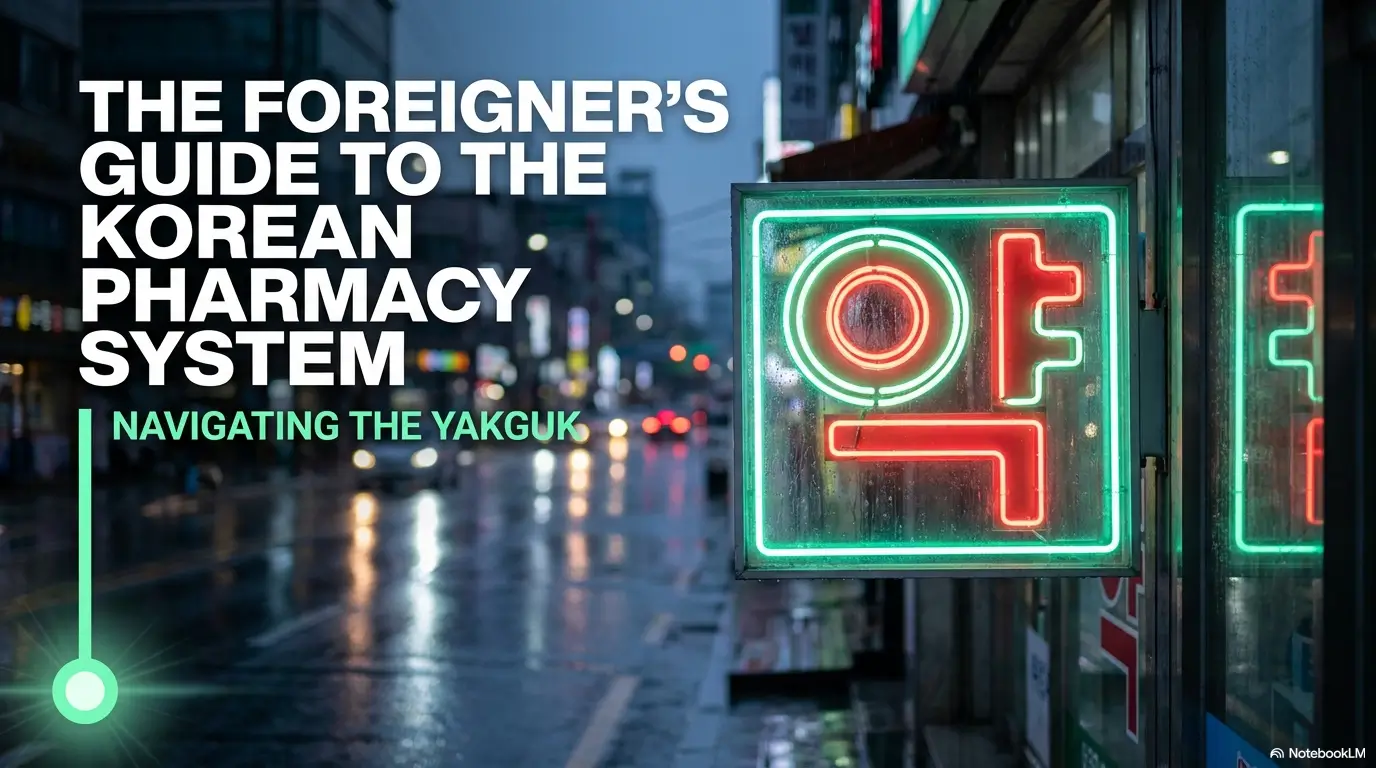
Korean OTC Medicine Feels Different Because the Buying Path Is Different
Over-the-counter medicine exists in Korea, but the path to it may not feel identical to the path back home. Some products may be visible. Others may be behind the counter or easier to request by symptom. The key is to stop thinking like a shelf detective and start thinking like a clear communicator.
This is where many visitors lose time. They try to translate a brand name, then search for the same-looking package, then wonder whether the domestic equivalent is safe. A symptom-first approach is usually calmer and more productive.
Some items are behind the counter for a reason
In many Korean pharmacies, common OTC products are not always arranged for long self-service comparison. The pharmacist may retrieve or suggest them after asking what you need. This can feel restrictive if you are used to browsing freely, but it can also prevent the most common tourist mistake: choosing based on package vibes.
Package vibes are not a medical category. A minty design does not always mean gentle. A sleepy-looking nighttime box may include multiple active ingredients. A pain medicine may overlap with a combination cold product. Asking first is not a failure of independence. It is a shortcut through fog.
Brand names may not travel well
Asking for “Advil,” “NyQuil,” “Benadryl,” “Pepto,” or “Tums” may or may not work depending on the pharmacy, available products, and local equivalents. Even when a pharmacist recognizes the brand, the exact formula may differ from what you expect. Brand names are cultural luggage. Some arrive safely. Some get lost between airports.
Active ingredients are more useful than brands. Symptoms are more useful than half-remembered packaging. If you know the ingredient name, show it. If you do not, describe the problem clearly and mention what you have already taken.
The better phrase: “I have…” plus symptoms
The phrase “I have…” is your tiny bridge. It works because it turns a shopping request into a health-use request. You are not saying, “Give me a product I recognize.” You are saying, “Help me match this mild problem to something appropriate.”
Traveler phrase card
- I have a headache.
- I have diarrhea.
- I have allergies.
- I have a sore throat.
- I have motion sickness.
- I have mosquito bites.
- I took this medicine today.
- I am allergic to this.
- I need something non-drowsy.
You can paste these into a translation app before you go. Keep the sentences short. Avoid poetry at the counter unless your pharmacist also happens to be a novelist with a quiet afternoon.
Show me the nerdy details
Why symptom-first requests work better than brand-first requests
A brand name carries several hidden assumptions: the country where it is sold, the formula version, the dose, the product category, and the shopper’s memory of how it was used. A symptom-first request strips away some of that noise. When you add duration, fever status, age, allergies, current medicine, and drowsiness preference, the pharmacist can make a safer OTC recommendation or redirect you to a clinic.
The Clinic Next Door Effect Changes Everything
One reason Korean pharmacies feel so practical is that they often sit near clinics. In many neighborhoods, the everyday rhythm is simple: visit a small clinic, receive a prescription if needed, walk to a nearby pharmacy, and pick up the medicine. It can feel like a relay race where everyone already knows the route.
For foreigners, this is one of the most useful patterns to understand. If your symptoms need medical evaluation, the answer may not be a long hospital odyssey. Depending on the situation, it may be a local clinic visit followed by a pharmacy stop a few doors away.
Pharmacies often sit near small clinics
In Korean commercial buildings, it is common to see several clinics clustered by specialty: internal medicine, dermatology, ENT, pediatrics, orthopedics, dentistry, or ophthalmology. A pharmacy nearby is not an accident. It is part of the everyday medical choreography.
This can be helpful for travelers because the pharmacist may recognize when your problem is better handled next door. If you have a fever, severe sore throat, worsening cough, infected wound, eye pain, or symptoms that have stretched beyond a short window, the practical answer may be, “Please see a doctor.”
Why this feels efficient to Americans
For Americans in particular, Korea’s clinic-pharmacy loop can feel surprisingly quick. In the US, even minor care may involve insurance checks, appointment delays, urgent care searches, and cost anxiety. Korea’s system has its own complexities, especially for visitors and residents with different insurance status, but the physical closeness of clinics and pharmacies often feels refreshingly logical.
That does not mean every visit is cheap, instant, or English-friendly. It means the everyday geography is often convenient. If you are staying near a busy neighborhood, university area, business district, or hospital zone, there may be a clinic and pharmacy combination within a short walk.
When the pharmacist may redirect you
A pharmacist may suggest a clinic if the symptom sounds outside ordinary OTC territory. That redirection is not poor service. It is good judgment. A pharmacy is not the right stage for every medical drama.
- Fever with worsening symptoms
- Shortness of breath or wheezing
- Chest pain or pressure
- Severe abdominal pain
- Swelling of the face, lips, or throat
- Signs of dehydration after vomiting or diarrhea
- Eye pain, vision change, or chemical exposure
- Wounds that are deep, dirty, or spreading redness
- Symptoms in infants, pregnancy, or medically fragile travelers
Official source for medication rules
For legal context on pharmacy and dispensing rules in Korea, use an official English legal database rather than travel rumors or forum scraps.
Read Korea’s Pharmaceutical Affairs ActFor related travel-health context, readers comparing clinics may also find why Korean clinics can feel so fast useful, especially when trying to understand the practical rhythm between clinics and pharmacies.
The Language Barrier Is Smaller Than the Label Barrier
Many foreigners worry that they cannot use a Korean pharmacy because they do not speak Korean. Language can be a challenge, of course. But in practice, the bigger problem is often the label barrier: unfamiliar brand names, Korean-only packaging, different product categories, and active ingredients hidden behind small print.
The good news is that pharmacy communication does not require a speech contest. It requires clean information. A clear phone note beats a brave but confusing monologue. A photo of your current medicine beats a half-pronounced brand name. A simple symptom timeline beats ten nervous adjectives.
Photos, translation apps, and symptoms help more than perfect Korean
If you already take medicine, show the package. If you have a rash, show a clear photo if appropriate and not intrusive. If you have an ingredient list, show that. If you are allergic to something, show it in writing. A pharmacist can often work with clean visual information even when conversation is limited.
Translation apps are helpful, but keep the sentences short. “I have had diarrhea since yesterday” is better than “My digestive system has entered a period of national emergency.” Accurate, plain, and slightly boring is the goal.
Prepare three facts before you walk in
Before you step through the door, prepare three facts: who the medicine is for, what the main symptom is, and what safety details matter. This is especially useful if you are buying medicine for a child, older parent, spouse, or travel companion who is waiting at the hotel.
Three-fact prep list
- Person: age, adult or child, pregnancy status if relevant.
- Problem: main symptom, when it started, whether fever is present.
- Safety: current medicines, allergies, chronic conditions, alcohol use, and whether drowsiness matters.
Tiny script, big relief
Use this script as a phone note template. It is intentionally plain. You can translate it into Korean with your preferred app and show both versions.
Pharmacy script template
Hello. I have [symptom]. It started [when]. I do / do not have a fever. I take [medicine]. I am allergic to [allergy]. I need something [non-drowsy / okay for nighttime / okay with my current medicine]. What can I take?
This script does two quiet miracles. It makes you calmer, and it makes the pharmacist’s job easier. Everyone wins. Even your jet lag sits down politely for a moment.
Common Mistakes Foreigners Make in Korean Pharmacies
Most pharmacy mistakes are not dramatic. They are small, ordinary, and understandable. A traveler is tired. A parent is worried. A student wants to get back to class. A digital nomad has a meeting in two hours and a nose that has become a weather event.
The goal is not to become a medicine expert overnight. The goal is to avoid the repeatable errors that create confusion or risk.
Mistake 1: Asking for a US brand instead of the symptom
Brand-first requests can work, but they often waste time. The pharmacist may not know the brand, may know a different formula, or may need to ask what you use it for anyway. A symptom-first request starts closer to the actual problem.
Instead of “Do you have Tums?” try “I have acid reflux after eating.” Instead of “Do you have NyQuil?” try “I have cold symptoms and want something for nighttime. I took a pain reliever earlier.” That extra context helps prevent overlap and mismatch.
Mistake 2: Buying two products with overlapping ingredients
Combination cold medicine is convenient, but it can be a sneaky trap. One product may contain a pain reliever, decongestant, antihistamine, cough suppressant, or other ingredient. Add another product on top, and you may accidentally double something.
This matters most when you already took medicine earlier that day. Always mention it. A tired traveler often remembers the symptom but forgets the tablet swallowed at breakfast. Your liver, stomach, blood pressure, and sleep schedule may care about that missing detail.
Mistake 3: Treating the pharmacy like urgent care
A pharmacy is a smart place for minor OTC guidance. It is not the place to manage chest pain, serious breathing trouble, severe allergic reaction, stroke symptoms, major injuries, or severe dehydration. If your body is ringing the alarm bell, do not ask the bell to lower its voice. Get medical help.
For less dramatic but still concerning symptoms, a clinic may be the better choice. This includes symptoms that are getting worse, returning repeatedly, affecting a child, or tied to a chronic condition.
Mistake 4: Forgetting allergies or existing medicine
Small missing details can change the recommendation. If you are allergic to a medication, pregnant, breastfeeding, taking blood thinners, managing high blood pressure, treating diabetes, or using psychiatric medication, say so. If you recently drank alcohol, say so. This is not about embarrassment. It is about safe matching.
Key takeaway:
The four biggest mistakes are brand-first requests, ingredient overlap, using a pharmacy for urgent symptoms, and forgetting to mention safety details.
| Mistake | Why it causes trouble | Better move |
|---|---|---|
| Asking only for a foreign brand | The product may not exist locally or may differ by formula. | Describe symptoms and show active ingredients if you know them. |
| Buying multiple cold products | Combination formulas can overlap. | Tell the pharmacist everything you already took today. |
| Ignoring fever or severe pain | Some symptoms need medical evaluation. | Ask whether a clinic is safer, or go directly if symptoms are serious. |
| Skipping allergy information | Recommendations depend on your safety profile. | Show a written allergy and medication list. |
What Korean Pharmacists May Ask Before Recommending Anything
Questions at the pharmacy counter are not an interrogation. They are the practical machinery of safe OTC use. If you understand why the pharmacist asks, the interaction feels less awkward and more cooperative.
You do not need a perfect answer to every question. You just need to be honest. “I am not sure” is better than guessing. “I took something, but I need to show you the photo” is better than pretending your memory is a certified medical device.
“How long has this been happening?”
Duration helps separate a short-term nuisance from something that needs evaluation. A mild runny nose since this morning is different from a worsening cough for ten days. Diarrhea after one questionable snack is different from several days of dehydration and fever.
Before you go in, choose a simple time phrase: since this morning, since yesterday, for three days, for one week, after eating, after hiking, after taking this medicine. That tiny timeline helps the pharmacist understand urgency.
“Do you have a fever?”
Fever changes the conversation because it can signal infection or illness that may need medical attention. If you measured your temperature, show the number. If you did not, say whether you feel chills, sweats, body aches, or worsening fatigue.
Do not hide a fever because you want a faster answer. That is like covering the warning light on a rental car with a receipt. It does not fix the engine.
“Are you taking anything else?”
This may be the most important question. The pharmacist is checking for overlap and interaction. Include prescription medicine, OTC medicine, supplements, sleep aids, allergy pills, pain relievers, and anything you took that day.
If you are unsure of the English ingredient name, show a photo of the package. If the medicine is from your home country, bring the box or bottle when possible. A clear photo can speak across languages with far less drama than memory.
“Do you need to stay alert?”
Some medicines may cause drowsiness. That matters if you are driving, working, caring for children, hiking, drinking alcohol, or trying to make a business meeting without looking like a haunted umbrella. Say whether you need a daytime option or whether nighttime relief is the goal.
Pharmacist question prep checklist
- When did the symptom start?
- Is it getting better, worse, or staying the same?
- Do you have a fever?
- Have you taken any medicine today?
- Do you have allergies?
- Do you need to avoid drowsiness?
- Are you pregnant, breastfeeding, elderly, or buying for a child?
The Practical Advice You Can Actually Expect
Pharmacy advice is usually concrete. It does not arrive as a grand medical lecture. It arrives as small usable instructions: take this after meals, do not drink alcohol, avoid driving if sleepy, do not combine it with that, seek care if it worsens.
For a traveler, these small instructions are gold. You may be crossing time zones, eating new foods, sleeping badly, walking more than usual, and guessing at labels. Practical advice cuts through that noise.
How to take it
Ask about dose timing, meal timing, and spacing from other medicine. “After meals” is common advice for some medicines because it may reduce stomach irritation, but do not assume. Ask. The difference between before food, after food, bedtime, and every several hours matters.
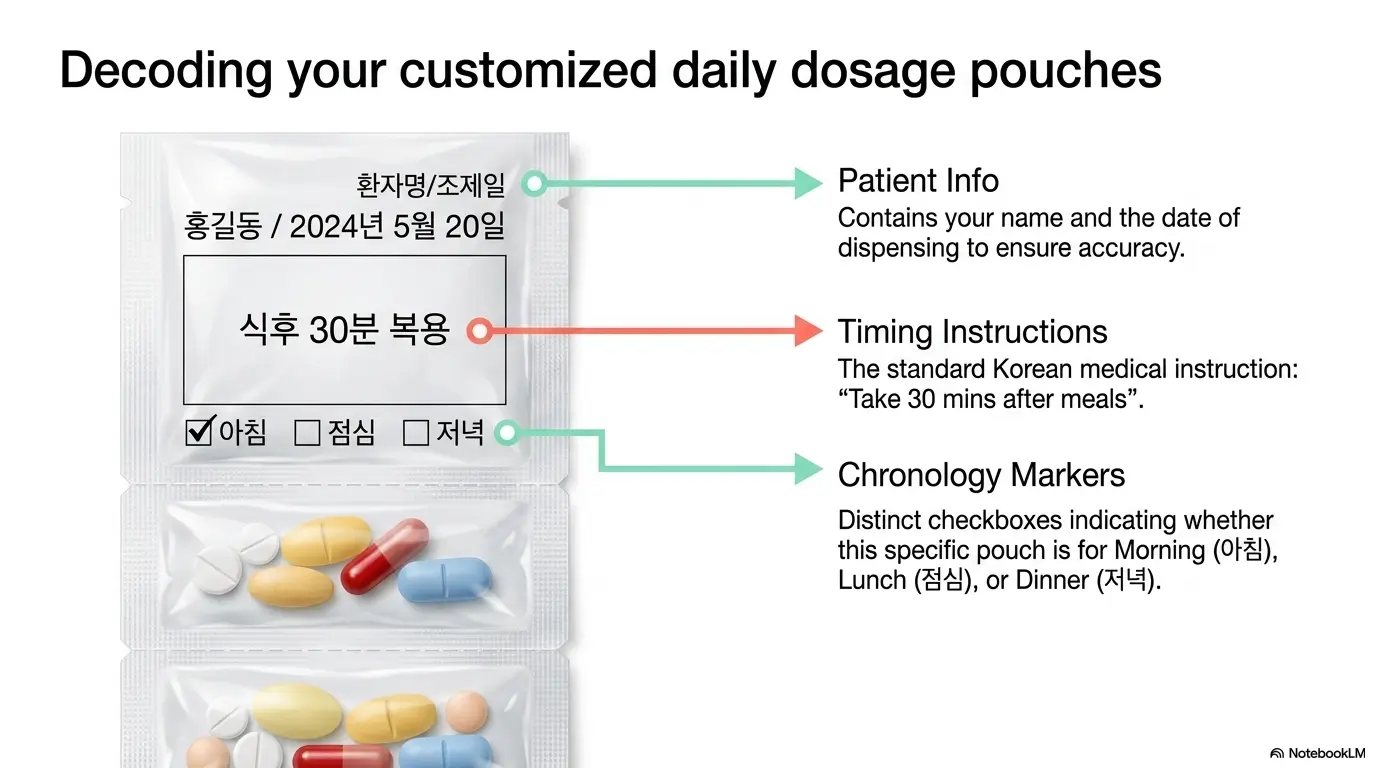
If you receive several packets or boxes, ask which one is for which symptom. In Korea, medicine may sometimes be dispensed in small packets after a clinic visit. If you are not sure what each packet contains, ask for clarification before leaving.
What to avoid
Common avoidances include alcohol, driving after sedating medicine, doubling up on similar ingredients, or mixing with existing prescriptions without checking. If you plan to drink, drive, hike, take a long bus ride, or work late, say so. The recommendation may change.
Travel has a way of making people behave unlike themselves. Someone who rarely drinks at home may try soju with dinner. Someone who never naps may pass out on a train. Someone who usually reads labels carefully may buy medicine while hungry and irritated. Build your real itinerary into the question.
When to stop and seek care
Ask the pharmacist what should trigger a clinic visit. This one question can prevent confusion later. You might ask, “If this does not improve, when should I see a doctor?” or “What symptoms mean I should go to a clinic?”
For example, worsening fever, breathing trouble, severe pain, dehydration, blood in stool, swelling, spreading rash, or symptoms lasting longer than expected should change your plan. The point is not to panic. The point is to know where the line is before you reach it.
Key takeaway:
Before leaving the pharmacy, know three things: how to take the medicine, what to avoid, and what symptoms mean you should seek medical care.
Korean Pharmacy Decision Flow
1. Describe
Say the main symptom, when it started, and whether fever or severe pain is present.
2. Disclose
Show current medicines, allergies, pregnancy status, and anything already taken today.
3. Decide
Use OTC guidance for mild issues, or go to a clinic if symptoms need evaluation.
4. Monitor
Watch for worsening symptoms, allergic reactions, dehydration, or breathing trouble.
If you are comparing broader health options in Korea, the article on Korean National Health Insurance for foreigners may help long-term residents understand the bigger system behind clinic and pharmacy visits.
When to Seek Help or Stop Using the Pharmacy Route
The safest pharmacy user knows when to walk away from the counter and toward medical care. This is not fear. It is navigation. A pharmacy is one door in the health system, not the whole building.
Use the pharmacy route when the problem is mild, familiar, and short-term. Stop using that route when symptoms are severe, unclear, worsening, recurring, or tied to a higher-risk situation.
Go to a clinic for gray-zone symptoms
Gray-zone symptoms are not obvious emergencies, but they are too uncertain for casual self-treatment. Examples include persistent fever, ear pain, worsening cough, urinary symptoms, possible infection, unusual abdominal pain, eye irritation that affects vision, or a rash that spreads.
For travelers, clinics can be especially useful because they can issue Korean prescriptions when appropriate. If you need more than OTC guidance, a clinic visit may be the cleanest path to proper medicine.
Use emergency help for red flags
Some symptoms should bypass the pharmacy entirely. Chest pain, severe breathing trouble, signs of stroke, severe allergic reaction, major injury, fainting, confusion, severe dehydration, or a rapidly worsening condition deserves urgent medical help.
In Korea, 119 is the emergency number for fire and ambulance services. If you are unsure and symptoms feel urgent, err on the side of getting help. Your itinerary can be repaired. Your body is not a replaceable SIM card.
Emergency information for Seoul visitors
For urgent situations, check official visitor guidance on emergency medical help, including 119 service information.
See Seoul emergency medical guidanceHigher-risk travelers should plan more
If you are pregnant, traveling with a baby, caring for an older parent, managing a chronic illness, taking multiple medicines, or recovering from surgery, do not rely on improvisation. Prepare medicine lists, doctor notes, insurance details, and clinic options before you need them.
Medical tourists should be even more careful. If you are coming for dermatology, surgery, dental work, hair transplant care, fertility care, or another planned procedure, ask your clinic how prescriptions, aftercare medicine, side effects, and emergency contact procedures will work. For related context, see this guide to Korean skin clinics if your trip involves cosmetic or dermatology appointments.
Key takeaway:
When symptoms are severe, strange, worsening, or connected to a higher-risk person, skip the clever pharmacy strategy and seek medical care.
| Situation | Pharmacy may be enough? | Safer next step |
|---|---|---|
| Mild headache after travel fatigue | Often, if familiar and no red flags | Describe symptoms and current medicine |
| Runny nose with no fever | Often | Ask for non-drowsy or nighttime option |
| High fever and worsening cough | No | Clinic or urgent medical care |
| Shortness of breath | No | Emergency help |
| Child with persistent vomiting | No | Medical evaluation |
| Minor mosquito bites | Often | Ask for itch relief and warning signs |
FAQ
Can foreigners buy medicine at Korean pharmacies?
Yes. Foreigners can buy many OTC medicines at Korean pharmacies. Prescription medicines generally require proper Korean medical channels, so do not assume a foreign prescription can be filled directly.
Do I need to speak Korean to use a pharmacy?
Not always. Translation apps, photos, packaging, and short symptom notes can help. Tourist-heavy areas and larger pharmacies may be easier for English communication, but clear written details help anywhere.
Can I use a US prescription in Korea?
Usually not as a direct pharmacy order. Bring the prescription information, packaging, and ingredient details, but expect that a Korean doctor may need to evaluate you and issue a local prescription.
Are Korean cold medicines stronger?
Do not rely on broad “stronger” or “weaker” claims. Formulas differ by product. The safer question is what ingredients are included, whether they overlap with anything you took, and whether drowsiness or alcohol warnings apply.
Can pharmacists diagnose my condition?
No. Pharmacists can help with OTC selection, medication counseling, and safe-use guidance. Diagnosis belongs with medical professionals, especially for serious, unclear, or recurring symptoms.
What should I show the pharmacist?
Show your symptoms, current medicines, allergies, age, pregnancy status if relevant, and photos of medicine labels or affected skin when useful. Keep the information short and concrete.
Are pharmacies open late in Korea?
Some are, especially near hospitals, transport hubs, or busy neighborhoods, but hours vary. Search locally before you need one, and do not assume every neighborhood pharmacy stays open late.
What should I do in an emergency?
Do not wait at a pharmacy. Seek emergency medical help immediately. In Korea, 119 is the emergency number for ambulance and fire services.
Make a One-Minute Pharmacy Note Before You Travel
The best Korean pharmacy strategy is not complicated. Before your trip, create a phone note titled “Korea pharmacy info.” It should be short enough to show at a counter and complete enough to prevent confusion when you feel unwell.
This is the final practical loop: Korean pharmacies can be surprisingly helpful because the pharmacist is part of the buying process. But the better your input, the better the guidance. You do not need perfect Korean. You need clear facts.
Write your medicine facts plainly
List your regular medicines, doses, allergies, chronic conditions, and emergency contact. If you have a condition that changes medication safety, include it. If you are traveling with children or older relatives, make a separate note for each person.
Then translate the note into Korean with an app, but keep the English version too. Machine translation can be imperfect. Showing both versions gives the pharmacist more ways to understand the original meaning.
Save photos of your usual medication labels
Take photos of the front label, active ingredients, dose instructions, and prescription label if relevant. Do this before travel, not while standing in a pharmacy with a fever and 6 percent phone battery.
If you are preparing a longer Korea stay, you may also want to review how health checkups in Korea work, because routine care and pharmacy visits often connect in practical ways for residents.
The 15-minute next step
Open your notes app now and create the pharmacy note. Add your allergies, current medications, chronic conditions, emergency contact, and three common phrases: “I have a headache,” “I have allergies,” and “I took this medicine today.” Save photos of your medicine labels in the same folder.
Korea pharmacy info note template
- Name:
- Age:
- Emergency contact:
- Allergies:
- Current medicines and doses:
- Chronic conditions:
- Pregnancy or breastfeeding status, if relevant:
- Medicines already taken today:
- Need to avoid drowsiness? Yes / No
Official Seoul medical support information
For foreign residents and visitors who need broader medical-service guidance in Seoul, use official city information as your starting point.
Check Seoul medical facilities guidanceThat small note is not glamorous. It will not sparkle in your travel photos. But if you wake up with a sore throat in Daegu, a stomach problem in Jeonju, or itchy mosquito bites after a river walk in Seoul, it may become the most useful thing on your phone.
Korean pharmacies often surprise foreigners because they sell more than medicine. They sell a short moment of practical interpretation. Walk in with clear symptoms, honest safety details, and a calm sense of the limits, and the counter becomes less intimidating. It becomes what travelers quietly need most: a small, bright checkpoint between discomfort and better judgment.
Key takeaway:
Your best next step is simple: make a pharmacy note before you need it. Clear facts turn a stressful counter visit into a manageable conversation.
Last reviewed: 2026-06