
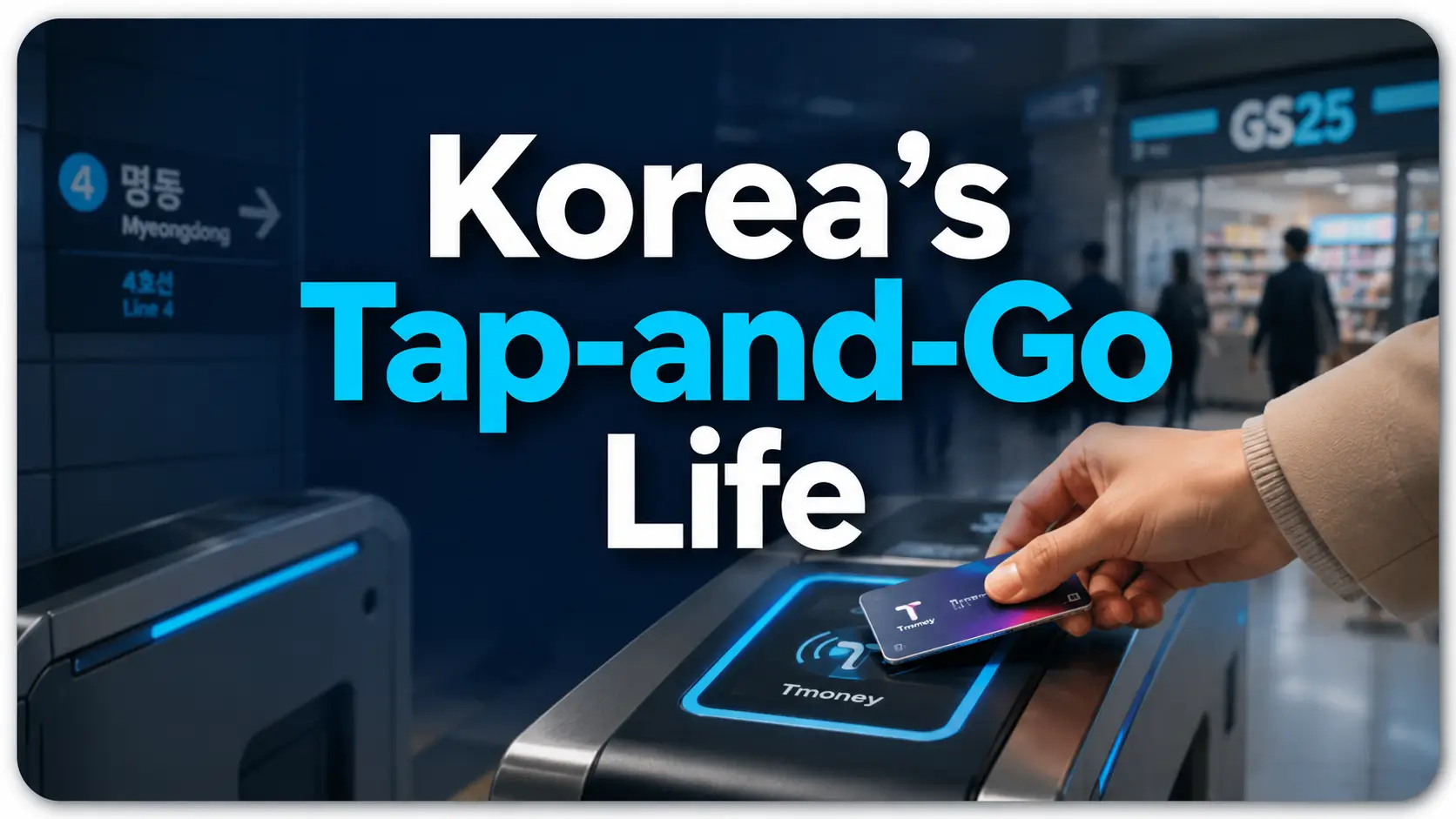
Korea Daily Life Guide
How T-Money, Mobile Pay, and Transit Convenience
Changed Korean Daily Life
A small tap can look almost boring from the outside. Card to gate, phone to reader, beep, move. Yet in Korea, that tiny sound became one of the quiet engines of modern daily life. It changed how people catch buses, buy triangle kimbap, meet friends after work, pay for taxis, and move through a city without carrying a pocketful of little worries.
For US and UK readers, the useful lesson is not simply “buy a transit card.” It is that T-Money and mobile pay sit inside a dense rhythm of subways, buses, convenience stores, phones, apps, and social expectations. Korea’s payment culture feels smooth because it is practiced thousands of times a day by millions of people, until convenience becomes almost invisible.
This guide explains what changed, why it matters, where travelers usually stumble, and how to build a simple two-payment plan before your first subway gate moment. No panic, no fare-machine theater, no standing in the rush-hour stream wondering which glowing rectangle wants your money.
Move faster
Understand why one tap can simplify buses, subways, taxis, and small purchases.
Avoid tourist snags
Know where first-time visitors get confused before the line forms behind them.
Read the city
See payment convenience as culture, infrastructure, and daily choreography.
✨ Main promise: by the end, you will know how Korea’s tap-and-go habit works, why it feels so natural, and how to use it without becoming a human traffic cone.
Snapshot: This article is for Korea travelers, expats, study-abroad students, urban-planning readers, and anyone curious about why Korean daily life can feel so fast without feeling chaotic. You will learn how T-Money, mobile pay, convenience stores, and transit habits work together, then leave with a practical payment setup you can test before your first busy commute.
Table of Contents
The Tiny Tap That Rewired Korean Routines
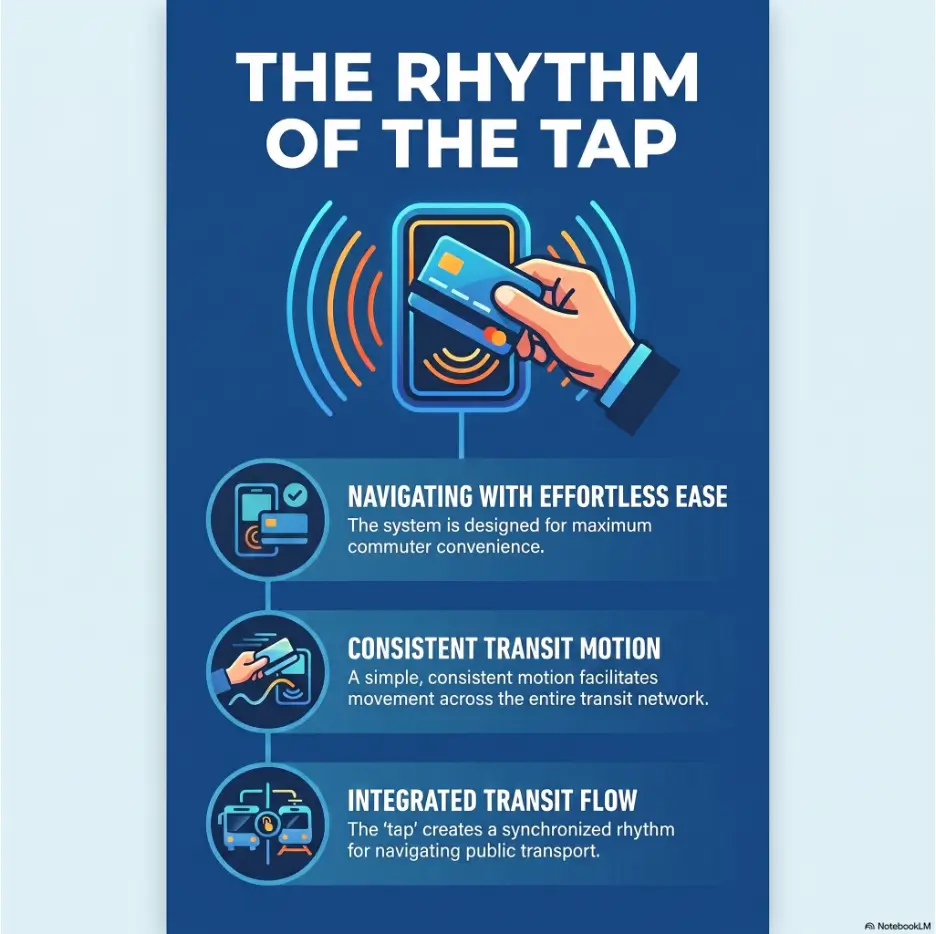
T-Money looks modest: a prepaid transit card, often tucked behind a phone case or carried in a wallet. Mobile pay looks even more ordinary: a phone touches a reader, a small confirmation appears, and the person keeps moving. But in Korea, those gestures became part of the grammar of daily life.
The change was not only about speed. It was about removing little interruptions. A commuter no longer has to count coins. A student can leave a hagwon, tap onto a bus, grab a drink at a convenience store, and keep the evening moving. A visitor can cross Seoul with less fear of choosing the wrong ticket at the wrong machine while a line quietly judges their life choices.
This is why T-Money is best understood as more than a tourist card. It is one of the small tools that helped Korea’s urban rhythm become smoother, more predictable, and more forgiving.
Why T-Money became more than a transit card
At its simplest, T-Money helps people pay for buses, subways, and other transport without buying a ticket each time. That alone matters. In a dense city, a fare payment is not a private moment. It is part of a shared public rhythm.
When thousands of people enter a station during the morning rush, every second at the gate becomes a tiny public resource. Tap-and-go payment protects that resource. It lets movement continue without each person becoming a small administrative project.
The same logic extends beyond stations. Once a card or phone is trusted for transit, it becomes psychologically easier to use it for small purchases. A payment tool that begins at the subway gate can follow you into a convenience store, a taxi, a vending machine, or a quick snack stop.
Key takeaway: T-Money did not simply reduce the need for cash. It reduced the number of tiny decisions people had to make while moving through the city.
From subway gates to convenience stores: the one-card habit
Habits become powerful when they travel across settings. If a card only works in one station, it is useful. If it works across buses, subways, taxis, and affiliated retail points, it starts to become part of a lifestyle.
Korean convenience stores helped make this habit feel natural. They are everywhere, they are fast, and they already sit at the edge of transit life. A commuter exits a station, buys bottled tea, recharges a card, picks up a meal, and walks out in minutes. The counter becomes a small urban control room.
For a foreign visitor, this may feel unusually integrated. In many US cities, transit cards, bank cards, store apps, parking apps, and ride-hailing platforms can feel like separate islands. In Korea, the everyday experience often feels more stitched together.
The daily-life shift US readers may miss at first
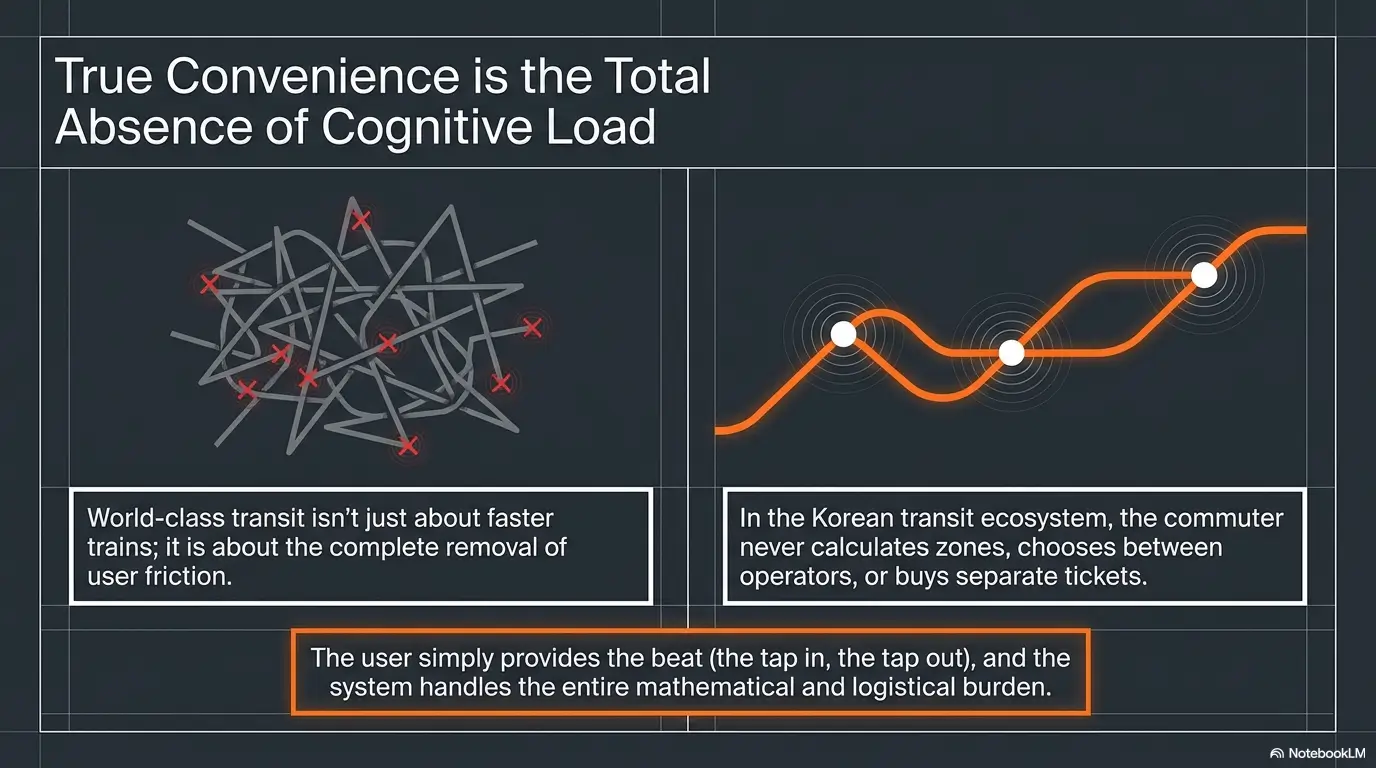
The most important shift is emotional. Payment convenience lowers the mental temperature of the day. People still get tired, late, hungry, and annoyed by crowded trains. Korea has not invented a magic cloud made of perfect commuting. But a good payment system removes one more source of friction.
When payment is predictable, movement feels safer. When recharging is easy, mistakes feel fixable. When small purchases are fast, the city seems to offer more options within the same amount of time.
That is the real cultural change. T-Money and mobile pay did not merely modernize transactions. They changed what people expect from an ordinary day.
Before the Tap: What Korean Transit Used to Demand
To appreciate a smooth system, it helps to remember what friction feels like. Before tap-based payment became part of the daily routine, transit often required more cash handling, more ticket buying, and more attention at exactly the wrong moment: when people were trying to move.
Older systems were not necessarily broken. People used them, adapted to them, and built routines around them. But they demanded more from each rider. You had to know the fare, prepare change, understand transfer rules, and sometimes pause your whole body in a place where everyone else wanted to keep flowing.
Cash fares, paper tickets, and the old small-friction economy
Cash is simple until it is not. It works, but it asks for small acts of preparation: bills, coins, counting, change, and pockets. In a quiet shop, that may be fine. On a bus with people boarding behind you, cash turns into theater.
Paper tickets carry a similar burden. They make sense for occasional trips, but they add steps. Buy ticket. Keep ticket. Insert ticket. Retrieve ticket. Do not lose ticket. Do not fold it into oblivion next to an old receipt and a mint that has become a geological artifact.
Tap-based cards compressed those steps into one motion. That compression matters because public transportation is repetitive. A small improvement repeated twice a day, five days a week, across millions of people becomes a major civic upgrade.
Why transfer anxiety mattered more than people remember
Transfers are where transit systems either feel friendly or punishing. When a rider moves from bus to subway, subway to bus, or bus to bus, they need confidence that the system recognizes the journey. Without that confidence, every transfer can feel like a small gamble.
Modern transit cards helped make transfers feel less mysterious. The rider does not need to calculate everything in the moment. The system handles much of the fare logic in the background, while the user focuses on the next platform, exit, or bus stop.
For city life, that is enormous. A transit network becomes more useful when people feel comfortable combining modes. The bus is not just the bus. The subway is not just the subway. Together, they become one larger mobility fabric.
The hidden cost of just a few extra seconds
A few seconds may sound trivial until they collect in a crowd. At a fare gate, one person hesitating is normal. Twenty people hesitating becomes congestion. A bus boarding slowly becomes a delayed route. A delayed route becomes a missed transfer. A missed transfer becomes a late arrival.
This is the quiet mathematics of convenience. Good payment systems do not only save time for the person paying. They protect the rhythm of everyone behind that person.
| Old friction point | What it required | Tap-and-go improvement |
|---|---|---|
| Cash fare | Correct bills or coins | One stored balance or linked payment action |
| Paper ticket | Purchase, keep, insert, retrieve | Tap once at entry and follow the system rules |
| Transfer uncertainty | Manual understanding of fare logic | More automatic recognition across supported routes |
| Retail stop after transit | Separate cash or card moment | Quick small payment where accepted |
T-Money’s Real Superpower: Predictable Movement
The magic of T-Money is not that it makes every ride exciting. Quite the opposite. Its strength is that it makes payment boring in the best possible way. You tap, the gate opens, the bus reader beeps, and the city continues.
Predictability is one of the most underrated comforts in a foreign country. When you know how to pay, you have more attention left for the platform sign, the bus direction, the exit number, and the fact that Exit 8 somehow feels farther away than your entire childhood.
Subway, bus, taxi, repeat
Korea’s daily movement often blends several modes. Someone may take a neighborhood bus to a subway station, ride across the city, transfer lines, then take a taxi late at night. A single payment habit makes that blend less intimidating.
For residents, this becomes muscle memory. For visitors, it becomes confidence. The first successful tap teaches the body something the travel guide cannot: you can do this. The city is not asking you to solve a puzzle at every turn.
That confidence spreads into other choices. People are more willing to explore neighborhoods, accept dinner invitations farther away, or take a bus instead of defaulting to a taxi.
How transfer convenience changed commuting behavior
Transfer convenience changes how people imagine distance. A place does not feel far only because it is physically far. It feels far when the path has too many uncertain steps.
When payment and transfer logic become easier, people start thinking in routes rather than obstacles. A restaurant two lines away becomes reasonable. A workplace reachable by subway plus bus becomes normal. A weekend museum trip with children becomes less like a campaign and more like a plan.
This is where payment technology touches urban design. A fare card does not build a subway line, but it helps people use the network as one connected system.
Commuter confidence checklist
- You know which card or phone method you will use before reaching the gate.
- You have enough balance for the first trip and a small buffer.
- You know where you can recharge near your hotel, school, or workplace.
- You understand that buses, subways, taxis, and stores may not all behave the same way.
- You have one backup payment method that is not trapped inside a dead phone.
Predictability feels like freedom
There is a special relief in knowing that the basic mechanics will work. You may still get on the wrong train. You may still exit on the side of the road where your cafe is visible but spiritually unreachable. But at least payment is not the problem.
This matters for students, tourists, parents, workers, and older adults. A predictable payment system lowers the entry barrier to the city. It gives people permission to move with less planning and less embarrassment.
In that sense, T-Money’s greatest achievement is not speed. It is trust.
Mobile Pay Took the Wallet Out of the Story
Once people became comfortable tapping a card, the next natural question arrived: why carry the card separately at all? Mobile pay did not replace every payment situation for every person, but it changed the mental checklist before leaving home.
Keys, phone, wallet used to be the classic leaving-home chant. In Korea, the phone absorbed more of the wallet’s job. That does not mean a visitor should rely on a phone alone, especially when foreign cards, app availability, and local setup rules can vary. It means the culture around payment became more phone-centered.
How phones became fare cards, wallets, and backup plans
The smartphone is not just a device in Korea. It is often a map, messenger, translator, reservation tool, banking screen, delivery menu, ID-related helper, and payment instrument. Adding transit payment to that stack made sense.
For daily life, this creates a practical advantage: fewer objects to remember. If you can ride, pay, message, navigate, and confirm plans from the same device, the phone becomes the day’s remote control.
But that convenience comes with a caveat. Phones run out of battery. Apps update. Foreign visitors may not have the same access as local residents. A physical card still has a quiet dignity. It does one job and does not ask for a software update while you are standing at the gate.
Why mobile payment fits Korea’s dense city rhythm
Korea’s major cities reward compact, repeated actions. Tap at the gate. Scan at the cafe. Pay at the convenience store. Confirm a reservation. Message a friend. Check the bus arrival screen. This is not a slow Sunday stroll through paperwork. It is a city doing percussion.
Mobile payment fits that rhythm because it reduces switching. The same object in your hand can guide you, pay for you, and help you coordinate. The fewer times you dig through a bag, the smoother the day feels.
For travelers, the lesson is simple: mobile pay can be helpful, but it should not be your only plan. Your best setup is a practical mix: one transit-first method, one general payment method, and a little cash for awkward corners of reality.
Key takeaway: Mobile pay made the wallet less central, but smart travelers still keep a backup. Convenience is sweetest when it has a spare tire.
The quiet upgrade: fewer objects to remember
There is a deeply human benefit in carrying fewer things. Less checking. Less patting your pockets. Less “did I leave it on the counter?” dread.
For residents, this becomes ordinary. For newcomers, it can feel startling. A city where the phone, transit card, and convenience store counter work together can make daily errands feel lighter.
Still, the goal is not to worship convenience. The goal is to use it wisely. When the phone helps, use the phone. When the physical card is simpler, let the little rectangle do its humble work.
Convenience Stores Became Mini Payment Hubs
To understand Korean transit convenience, do not look only at subway stations. Look at the convenience store glowing at the corner. It may sell coffee, umbrellas, socks, lunch, parcel services, phone accessories, late-night comfort, and, crucially, payment help.
Korean convenience stores are not merely retail spaces. They are urban service nodes. They sit between home, station, school, office, and nightlife. That location makes them perfect partners in the T-Money habit.
Why Korean convenience stores matter in the T-Money ecosystem
For many travelers, the most reassuring fact is that transportation cards can often be purchased or recharged at convenience stores. That means you are not dependent only on station machines. If you pass a store, you may have a practical fix nearby.
This changes the emotional experience of transit. A low balance is not a crisis. It is an errand. A card setup question is not an impossible bureaucratic riddle. It is something a store clerk may have handled countless times.
For a deeper look at how these stores work as daily-life support systems, your related guide on Korean convenience store culture fits naturally with this topic.
Charging, snacking, paying, moving
The convenience store stop often does several jobs at once. You recharge a transit card. You buy water. You grab a breakfast triangle kimbap. You ask where the bus stop is, using a translation app and a face that says “I am trying my best.”
This multi-purpose quality matters. In a fast city, errands become more manageable when they can be stacked. One counter, several needs, back to the sidewalk.
That is why convenience stores feel so central to Korea’s daily rhythm. They compress small urban tasks into a space that is bright, familiar, and usually close.
Mini decision table: where should you solve a payment problem?
| Situation | Best first move | Why it helps |
|---|---|---|
| You need a basic transit card | Try a convenience store or transit sales point | These are common places travelers already pass |
| Your balance is low | Recharge before rush hour | You avoid becoming the pause in the line |
| Your phone payment fails | Use a physical card or cash backup | A second method keeps the day moving |
| You are unsure what is accepted | Look for the payment logo or ask simply | Acceptance can vary by place and method |
The convenience store is Korea’s urban loading dock
Every city has hidden infrastructure. Some of it is underground. Some is digital. Some is a cashier counter next to instant noodles and iced coffee.
The Korean convenience store works as a loading dock for everyday life. People refuel themselves, recharge cards, solve small problems, and rejoin the current. It is not glamorous, but it is beautifully useful.
For visitors, this means your payment plan should include the nearest convenience store to your hotel. That one small note can save you from a surprising amount of sidewalk confusion.
Who This Guide Is For and Not For
This guide is written for people who want practical cultural fluency, not just a list of fare-card facts. The mechanics matter, but the bigger win is understanding how payment convenience shapes behavior.
That said, not every reader needs the same level of detail. A two-day visitor, a semester-abroad student, and an urban planner are reading the same tap from different angles.
Good fit: US travelers planning Korea without payment panic
If you are visiting Korea for the first time, this article helps you avoid the classic payment trap: assuming your usual card or phone setup will behave exactly as it does at home.
You do not need to memorize every technical detail before landing. You do need a simple plan: how you will ride transit, how you will recharge, how you will pay for non-transit purchases, and what you will use if your first method fails.
Good fit: expats, students, and digital nomads
Longer stays change the equation. If you live in Korea for months, payment convenience becomes part of your daily identity. The question is no longer “How do I get from the airport to Seoul?” It becomes “How do I make Tuesday less annoying?”
Students may care about school commutes, late study sessions, and convenience store meals. Digital nomads may care about phone setup, cafe workdays, taxi backups, and airport transfers. Expats may need a more stable mix of local banking, mobile payment, and transit habits.
Your related guide on Korean phone plans for Americans can pair well with this topic because mobile payment often depends on phone access, app setup, and local usability.
Good fit: urban-design readers studying frictionless city behavior
For urban-design readers, T-Money is a case study in how small tools shape public behavior. Payment is not separate from mobility. It affects boarding speed, transfer willingness, retail patterns, and how confidently people use the network.
One card does not explain Korea’s entire urban success, of course. Transit frequency, density, safety norms, signage, station design, bus networks, and app culture all matter. But the payment layer helps connect those pieces in daily practice.
Not ideal: readers looking only for NFC specifications
If you want a narrow engineering breakdown of NFC standards, secure elements, or app architecture, this article will feel too human. It talks about behavior, travel, and city life more than circuitry.
Still, the technical layer matters enough that we will include one nerdy explainer later. It will be plain English, mercifully short, and free of jargon fog.
The Tourist Learning Curve: Easy, But Not Magic
Korean transit is often very visitor-friendly, especially in major cities. But “easy” does not mean “identical to home.” The system rewards a little preparation. Think of it less like studying for an exam and more like learning where the light switches are in a guesthouse.
The main tourist challenge is not that T-Money is hard. It is that payment assumptions travel badly. A US visitor may expect credit cards, contactless bank cards, and mobile wallets to work everywhere in the same way. Korea may be highly convenient, but the convenience is organized around local systems.
Where first-time visitors usually get confused
First-time visitors often confuse three different questions: What can I use for transit? What can I use for store payments? What can I set up easily as a foreign visitor?
Those questions overlap, but they are not the same. A method that works at a convenience store may not be your best transit method. A mobile option that works for residents may be harder for short-term tourists. A foreign credit card may work well for many purchases but not solve every transit moment.
The safest mindset is modular: transit method, general spending method, emergency backup. When one layer fails, the other layers keep the day from turning crunchy.
Physical card vs mobile pay: what travelers should compare
The physical card wins on simplicity. It is easy to understand, easy to hand over at a counter for recharge help, and not dependent on phone battery. For many short-term visitors, that simplicity is gold.
Mobile pay wins on minimalism when it is properly supported. It can reduce what you carry and may fit naturally if you already use your phone for navigation, messaging, and translation.
The best choice depends on your trip length, phone setup, comfort with local apps, and tolerance for troubleshooting. If you are arriving tired after a long flight, the physical card may feel like a warm blanket made of plastic.
| Option | Best for | Possible drawback | Smart backup |
|---|---|---|---|
| Physical T-Money-style card | Short visits, simple transit use, families | Needs recharge and can be misplaced | Cash or general payment card |
| Mobile payment | Longer stays, tech-comfortable users, light packers | Setup may vary for foreign visitors | Physical transit card |
| Foreign credit card | Hotels, many stores, larger purchases | May not solve every transit or small-payment need | Transit card plus cash |
| Cash | Backup, small edge cases, recharging in some situations | Slower and less convenient | Stored-value card or phone pay |
Why “works everywhere” is the wrong mental model
The phrase “works everywhere” is where travel plans go to acquire bruises. Payment systems have edges. Cards have acceptance rules. Apps have setup limits. Terminals have moods. Humans have lunch breaks.
Instead of asking whether one method works everywhere, ask whether your full payment plan covers the situations you are likely to face: airport arrival, subway entry, bus ride, taxi, convenience store, restaurant, cafe, hotel, and one late-night “I need water and bandages” moment.
That approach is calmer because it accepts reality. You are not building a perfect system. You are building a resilient one.
Common Mistakes That Make Korean Transit Feel Harder
Most Korean transit mistakes are small. The problem is that they happen in public, quickly, and often while people behind you are moving with the focused energy of migrating birds.
The good news: these mistakes are easy to avoid. A few minutes of planning can make your first day feel dramatically smoother.
Mistake 1: Assuming a US credit card solves every small payment
Your US credit card may be useful in Korea, especially at hotels, many restaurants, and larger retailers. But it should not be your only plan for transit and everyday small payments.
Transit systems often have local rules and local payment habits. Even when a country is highly card-friendly, that does not mean every transport gate will welcome your usual setup with open arms and a tiny orchestra.
Bring a payment card with no foreign transaction fee if possible, but pair it with a transit-first option.
Mistake 2: Forgetting that transit convenience depends on local systems
Korea’s transit convenience is not random. It depends on local card infrastructure, station readers, bus systems, retail partners, recharge points, and user habits.
Visitors sometimes interpret a smooth system as a universal system. It is better to see it as a local ecosystem. Once you enter that ecosystem with the right tool, it can feel wonderfully easy.
This is also why local transit apps matter. If you are using buses heavily, your related guide on Korea bus arrival apps can help readers understand the timing side of the same convenience story.
Mistake 3: Treating T-Money as only a subway tool
Many visitors first encounter T-Money through the subway. That makes sense. Subway gates are visible, iconic, and slightly dramatic when you are new. But the card’s daily-life value is broader.
Think buses, taxis where accepted, convenience stores, and other affiliated locations. The more you understand the card as a small-payment tool within a larger routine, the more useful it becomes.
The practical move: look for accepted-payment signs and do not assume every place is identical. Use the logo, the reader, and local instructions as your guide.
Mistake 4: Waiting until rush hour to figure out recharging
Recharging during rush hour is not a crime. It is just a poor gift to your future self. The station is busier, your brain is louder, and every machine seems to have developed a personal philosophy.
Recharge when the stakes are low. Do it near your hotel, after lunch, or before your first serious commute. Once you have done it once, the fear dissolves.
Mistake checklist: avoid the slow-down spiral
- Do not enter transit with a nearly empty balance if you can avoid it.
- Do not rely on only one payment method for your entire trip.
- Do not test a new app setup for the first time in a crowded station.
- Do not block a bus entrance while searching for your card.
- Do not assume store payment acceptance equals transit acceptance.
How Transit Convenience Changed Korean Social Time
Payment convenience does not only affect errands. It affects relationships. When people can move through the city more easily, plans become more flexible. A quick coffee after work feels less risky. Dinner across town feels less like an expedition.
In Korea, social time often lives inside tight schedules: school, work, commuting, family obligations, study sessions, late buses, last trains. Small improvements in movement can change what people are willing to say yes to.
Faster payments made meetups feel more flexible
When transit is predictable, people can make softer plans. “I can be there in 25 minutes” becomes more believable because the path is familiar. Payment is not the uncertain part. The city has taught the body how to move.
This affects ordinary social life: meeting friends near a station, joining coworkers for dinner, getting to a date, visiting family, or bringing a child to an after-school activity.
Convenience does not create friendship, but it lowers the effort required to maintain it. That is no small thing.
Why “I’ll be there soon” became more believable
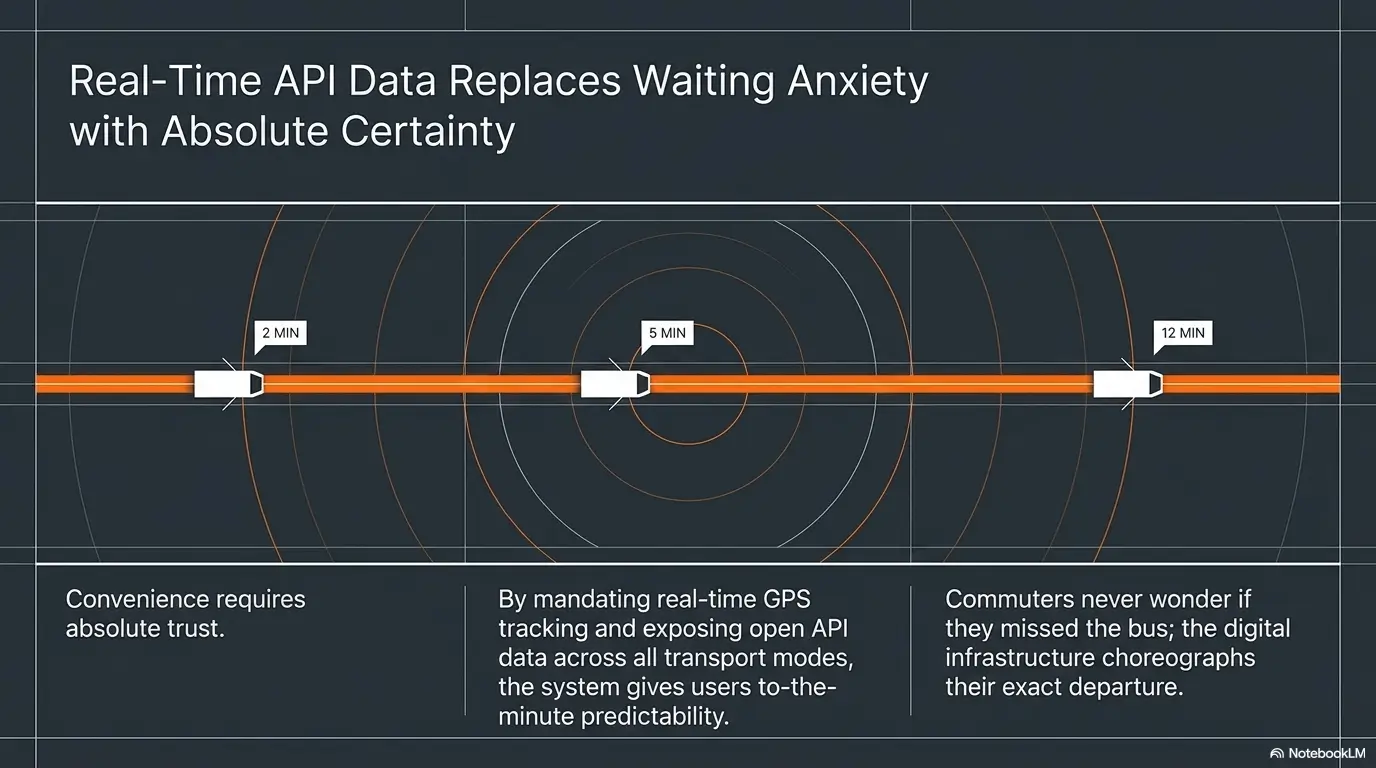
In a city with strong transit tools, “soon” has a practical basis. Bus arrival information, subway frequency, transfer familiarity, and fast payment all make arrival times easier to estimate.
Of course, traffic still exists. Crowds still exist. The last train still has the power to turn adults into Olympic walkers. But the everyday expectation is that movement can be measured and managed.
This shapes social trust. If someone says they are on the way, the system gives that sentence more weight.
Short Story: The bus card and the quiet rescue
Mina arrived in Seoul for a semester abroad with three bank cards, two translation apps, and the confidence of someone who had watched seven travel videos at midnight. On her first morning, she tried to board a bus using the wrong card. The reader rejected it. The line behind her tightened like a shoelace.
An older woman tapped her own card, pointed gently toward the convenience store across the street, and said a few words Mina did not fully understand. The meaning was clear enough: go there, fix this, try again.
Ten minutes later, Mina had a transit card, a coffee, and a new respect for boring preparation. The next bus ride was uneventful. That was the victory.
The lesson stayed with her all semester: in Korea, smooth days often begin with tiny systems set up before you need them.
Key takeaway: The best transit setup is the one you prepare before the stressful moment. Boring preparation is travel kindness aimed at your future self.
Why Korea’s Payment Culture Feels So Seamless
To many Americans, Korea’s payment culture can feel unusually seamless. But that feeling is not produced by one technology. It comes from density, repetition, infrastructure, retail habits, and social expectations working together.
A tap is not just a tap. It is a contract between a person, a reader, a network, a store, a bus, a station, and the crowd behind them. When that contract works often enough, people stop noticing it. That is when convenience becomes culture.
Density makes convenience more valuable
Dense cities amplify small improvements. In a spread-out place where most errands require driving, shaving seconds off a payment interaction may feel nice but not life-changing. In Seoul or Busan, where people may combine walking, subway, bus, taxi, and convenience store stops in one day, the savings compound.
Density also makes retail access more useful. A convenience store near a station is not just a shop. It is part of the movement system. Its location makes it a support point for commuters and travelers.
That is why payment culture cannot be separated from city form. Korea’s tap-and-go habits make the most sense when you see the sidewalks, stations, stores, apartment blocks, schools, and office towers around them.
Repetition turns payment tech into muscle memory
The first time you use a system, you think. The fiftieth time, your hand moves before your thoughts finish putting on shoes.
That is muscle memory. Korea’s payment convenience works partly because people repeat the same actions constantly. Card ready. Tap. Move. Phone ready. Scan. Leave. The body learns the sequence and the city flows around it.
Visitors can borrow this rhythm by practicing during low-pressure moments. Buy or recharge a card before rush hour. Take one simple subway ride before attempting a multi-transfer mission. Use the system when you are calm, so it is familiar when you are tired.
The Korea Tap-and-Go Framework
1
Choose
Pick a transit-first method before your first serious ride.
2
Test
Try it during a quiet time, not in rush-hour thunder.
3
Stack
Use stations, buses, taxis, and stores as one daily routine.
4
Backup
Keep one spare method for dead batteries and odd terminals.
The bigger story: infrastructure quietly teaches behavior
People often talk about technology as if it arrives from the sky and changes everything by itself. Real life is quieter. Infrastructure teaches behavior one repeated action at a time.
When the gate opens after a tap, it teaches trust. When the bus accepts the same habit, it teaches continuity. When the convenience store helps recharge the card, it teaches recoverability. When millions of people do this daily, the system becomes social knowledge.
This is why Korea’s payment culture can feel so natural once you are inside it. The city is not explaining itself in paragraphs. It is teaching through repetition.
When to Pause, Ask, or Use a Backup
This topic is low-risk, but travel friction can still cost time, money, and patience. The goal is not to make you nervous. The goal is to help you recognize the moments when forcing your first plan is less efficient than switching methods.
In Korea, asking for help is often more effective than silently wrestling with a machine while your confidence leaks out through your shoes. Keep your request simple. Use translation if needed. Point to the card, the machine, or the reader. Most payment problems are not dramatic. They are just unclear.
Pause when the system rejects your payment twice
One failed attempt may be a placement issue. Two failed attempts are a signal. Step aside if you are blocking a gate, bus entrance, or counter. Give yourself room to think.
This is not failure. It is good public etiquette. You are protecting the flow while you troubleshoot.
Ask when recharge rules are unclear
Recharge rules can depend on location, machine type, payment method, and card type. If the machine is confusing, a staffed counter or convenience store may be easier.
Prepare one simple phrase in your translation app: “I want to recharge this transportation card.” That sentence can do a surprising amount of work.
Key takeaway: If a payment method fails twice, stop performing courage for the crowd. Step aside, switch methods, or ask. Calm is faster than panic.
Use a backup when your phone is the weak link
Phone-based convenience is wonderful until the battery is at 2 percent and your charger is back in the hotel enjoying its private vacation. If your phone is your map, translator, messenger, and payment tool, it is carrying too much responsibility.
A physical transit card gives your phone one less job. A small amount of cash gives you one more escape hatch. A general payment card gives you another route through the day.
This is not old-fashioned. It is resilient. Even very modern cities reward people who keep one analog toe on the ground.
Traveler backup scorecard
| Backup item | Why it matters | Good enough target |
|---|---|---|
| Physical transit card | Works without phone battery | Loaded before first busy ride |
| General payment card | Useful for stores, hotels, and larger purchases | No foreign transaction fee if possible |
| Small cash reserve | Helpful for awkward edge cases | Enough for recharge, snack, or taxi support |
| Power bank | Protects navigation and translation | Charged before long sightseeing days |
Show me the nerdy details
T-Money-style systems rely on stored-value and contactless reader interactions, but the user experience is intentionally simple. The important daily-life point is not the chip itself. It is the network around the chip: compatible readers, recharge channels, fare rules, transfer recognition, merchant acceptance, and user education.
When those pieces align, payment becomes a low-attention action. That is why a transit card can change behavior without most people thinking about the technology. The visible interface is a beep. The invisible achievement is coordination.
FAQ
Can tourists use T-Money in Korea?
Yes. Tourists commonly use transportation cards such as T-Money-style cards for public transportation in Korea. The easiest approach for many short-term visitors is to buy a physical card, load value, and test it before a busy ride.
Is T-Money only for Seoul?
No. T-Money is strongly associated with Seoul, but transportation cards are used across many parts of Korea. Availability, acceptance, and card options can vary, so check local signs and official guidance for the city you are visiting.
Can I use T-Money on Korean buses and subways?
In many major areas, yes. Transportation cards are widely used on buses and subways. Always tap correctly when boarding and, where required, when exiting so the system can process the ride properly.
Can T-Money be used outside public transportation?
It can be used at some affiliated retail locations, including many convenience-store settings where accepted. Look for the payment logo and do not assume every merchant or terminal supports the same method.
Is mobile pay better than a physical T-Money card?
Not always. Mobile pay is convenient when setup is smooth and your phone is charged. A physical card is often simpler for short-term tourists because it is easy to understand, easy to recharge, and independent of phone battery.
Do US credit cards work for Korean transit?
Do not rely on a US credit card as your only transit plan. It may work well for many purchases in Korea, but transit payment often depends on local systems. Carry a transit-first option and a backup.
Where can travelers recharge a T-Money card?
Common recharge points include station machines and many convenience stores. Recharge before rush hour and keep a small balance buffer so you are not solving the problem at the gate.
What happens if my balance is too low?
You may be unable to enter or complete a ride until you recharge. Step aside, find a recharge point, and use your backup payment or cash if needed. The fix is usually simple if you do not wait until the most crowded moment.
Build a Two-Payment Korea Plan in 15 Minutes
The calmest way to use Korea’s transit convenience is to avoid treating it as a single magic object. Build a two-payment plan: one method for transit, one backup for everything else. Add a small cash reserve and you have a practical travel safety net.
This plan does not require perfection. It requires fifteen focused minutes before your first serious travel day. Your reward is a trip that feels less like a payment experiment and more like a city opening its doors.
Step 1: Pick your transit-first method
For many visitors, the simplest transit-first method is a physical transportation card. Buy it, load it, and place it somewhere easy to reach. Do not bury it under receipts, lip balm, and a museum ticket from three cities ago.
If you are staying longer and want to use mobile payment, research setup before arrival. Make sure your phone, app access, card support, and local requirements fit your situation.
Step 2: Create one backup payment layer
Your backup can be a general payment card, a second card, or cash. The exact mix depends on your trip, but the principle is stable: do not let one failed payment method control your day.
If you are traveling with family, consider spreading methods across adults. One person’s dead phone should not become the group’s transportation crisis.
Step 3: Test your setup before rush hour
Take one simple ride. Recharge once. Buy one small item where your method is accepted. The goal is to make the system familiar while nothing urgent is happening.
If you are using the subway often, also learn how station exits work. Payment gets you into the system, but exits get you to the right side of the street. Korea’s exit numbers are your quiet allies.
For mishaps, your related guide on Korea subway lost and found is useful because transit convenience also means people carry important things through busy systems every day.
Your 15-minute Korea payment setup
- Choose your transit-first option: physical card or properly supported mobile method.
- Find the nearest recharge point to your hotel, school, or apartment.
- Load enough value for the next day plus a small buffer.
- Put one backup payment card or cash reserve in a separate pocket.
- Test one simple ride or small purchase before the busiest part of the day.
The beauty of Korea’s transit convenience is not that it removes every possible problem. It removes enough small problems that daily movement feels lighter. The tap is tiny, but the relief behind it is large.
So before your next Korea day begins, do one humble thing: prepare the payment method before the crowd appears. Then step through the gate, listen for the beep, and let the city teach your feet the rhythm.
Last reviewed: 2026-06