
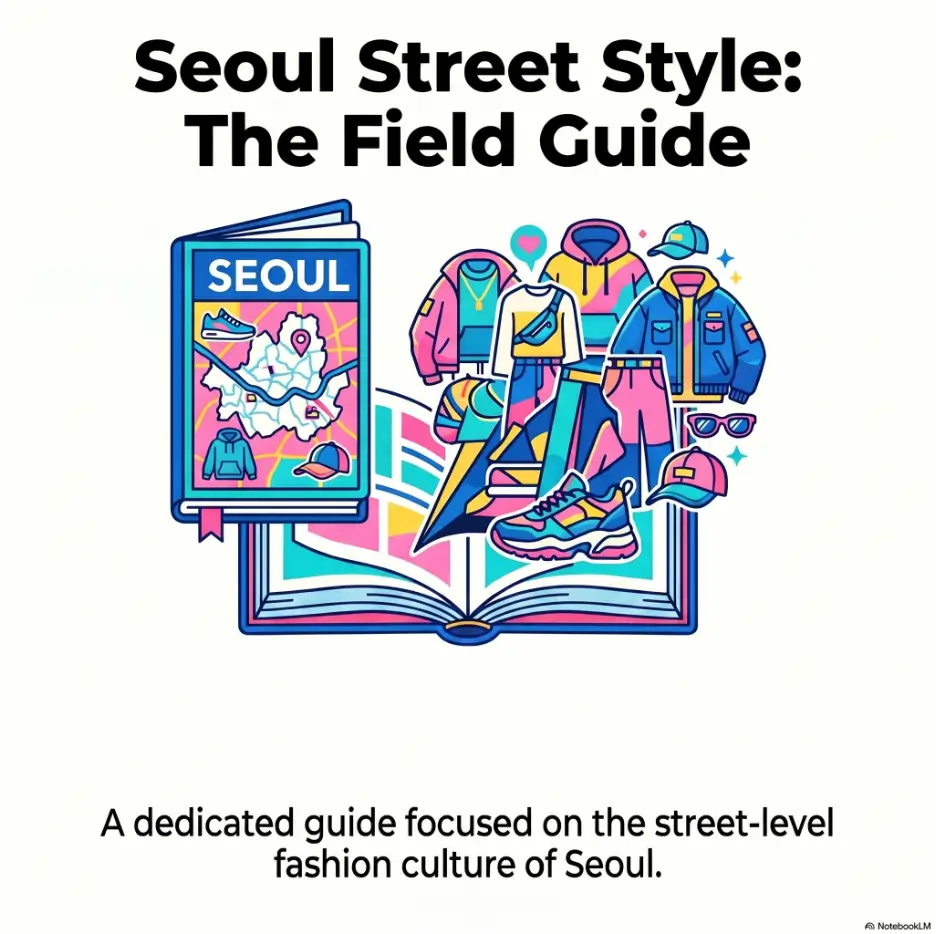
Seoul Street Style Field Guide
How Seasonal Fashion Micro-Trends Spread Through Seoul
Faster Than Foreigners Expect
On Friday evening, a silver bag charm appears outside a Seongsu pop-up. By Sunday, variations are dangling from handbags in Hongdae. A week later, the same glint is visible in Gangnam department stores, underground shopping centers, short-form videos, and online product grids. To a visitor, it can look as though everyone received the same secret wardrobe memo.
The real story is more interesting. Seoul does not merely produce trends. It compresses the journey from unusual to familiar. Dense neighborhoods, public transit, camera-ready cafés, rapid retail response, celebrity imagery, and highly searchable shopping platforms turn a small styling detail into a repeated public signal. What appears to be a stable seasonal look may actually be a micro-trend already approaching its brightest and briefest moment.
This guide will help you read that system without reducing Seoul to a fashion stereotype. You will learn where trends gather momentum, how digital and physical spaces reinforce one another, why foreign eyes often misjudge popularity, and how to borrow a wearable idea without rebuilding your suitcase around a fifteen-second Reel.
What looks like instant conformity is often a fast-moving conversation conducted through shoes, color, proportion, and tiny objects. 👟
Snapshot: This article is for travelers, expats, fashion writers, photographers, and curious shoppers who want to understand why Seoul street style seems to change at remarkable speed.
By the end, you will be able to compare neighborhood signals, estimate where a micro-trend sits in its life cycle, and choose a Seoul-inspired detail that still works after the algorithm moves on.
Table of Contents
Seoul’s Trend Clock Runs on Days, Not Seasons
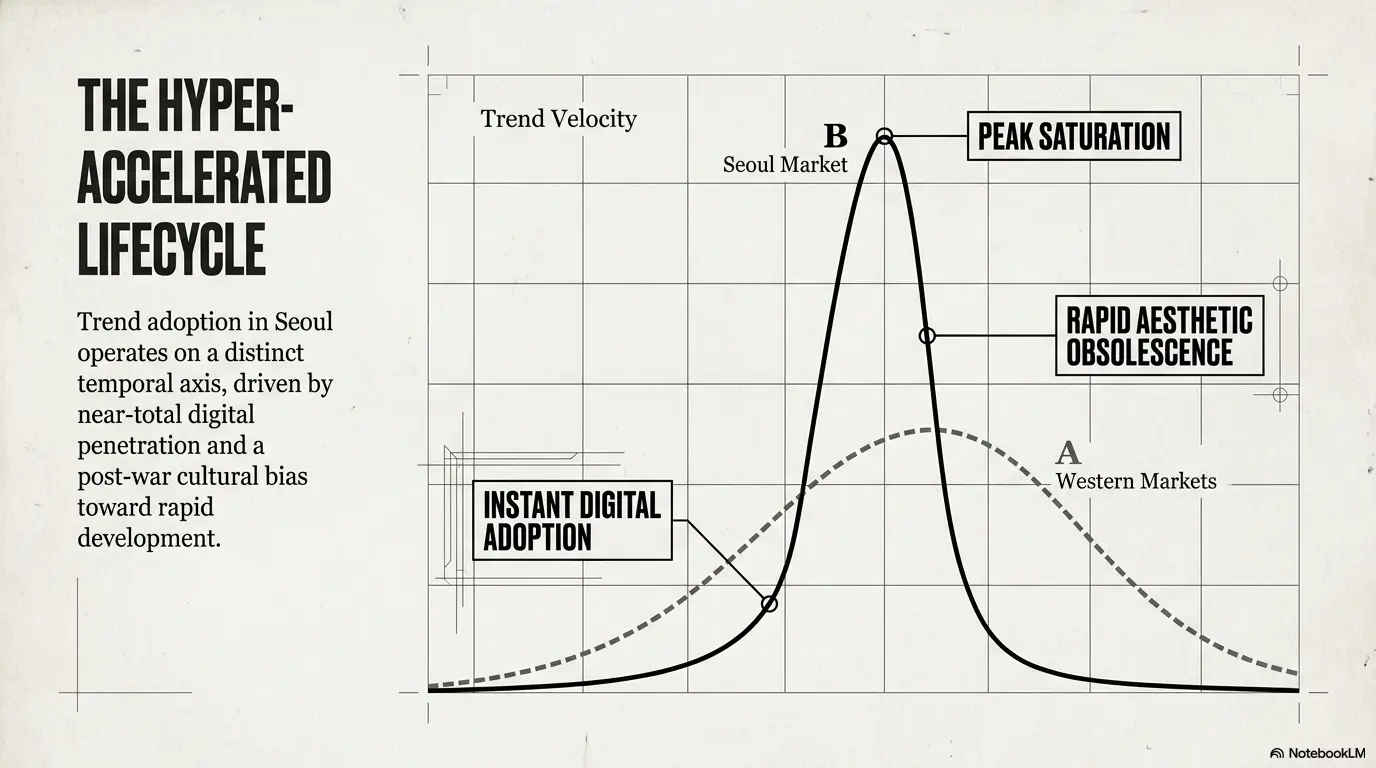
Traditional fashion coverage speaks in large calendar blocks: spring collections, summer wardrobes, fall layers, winter coats. Seoul certainly has seasonal dressing, but the city also contains much smaller clocks ticking inside those familiar seasons.
A particular ribbon, loafer shape, sock height, jacket proportion, phone accessory, or color pairing may emerge, become recognizable, and begin fading while the broader season remains unchanged. This is the first reason foreign visitors can feel disoriented. They arrive expecting four fashion seasons and encounter dozens of overlapping visual weather systems.
Why a “new” look may already be halfway through its life cycle
Visitors usually notice a trend when repetition becomes obvious. That is useful for recognition, but it is a poor measure of newness. By the time a shoe appears on several people during one afternoon, it may already have passed through stylists, creators, early shoppers, small retailers, and recommendation feeds.
Think of visibility as light from a distant star. You are seeing evidence of activity that began earlier. The more effortless and universal a trend looks, the more likely it is to have moved beyond its experimental stage.
This does not mean the trend is “dead.” It means its social meaning may be changing. Early adopters use a detail to create distinction. Later adopters use it to signal awareness. At peak visibility, the same detail may function as a safe default rather than a daring choice.
Weather can flip the city’s wardrobe overnight
Seoul’s seasonal transitions can feel abrupt. A warm afternoon may be followed by a sharply cooler morning, and the city’s clothing responds with impressive coordination. Lightweight trench coats, padded jackets, breathable shirts, umbrellas, or sun-protective layers can suddenly dominate public space.
Some apparent trends are therefore practical migrations. People are not necessarily copying one another in a deep cultural sense. They may simply be solving the same weather problem with similar products sold by the same major retailers.
The distinction matters. If every commuter is wearing a dark padded coat during a cold snap, you are observing climate, retail availability, commuting needs, and social preference at once. Calling the coat a micro-trend would miss most of the picture.
Seasonal trend or two-week micro-trend?
| Signal | Broader seasonal trend | Fast micro-trend |
|---|---|---|
| Duration | Several months or recurring yearly | Days to several weeks |
| Typical items | Outerwear, fabric weight, practical footwear | Charms, colors, styling tricks, novelty shapes |
| Reason for spread | Weather, seasonal retail cycles, routine | Visual novelty, creator repetition, rapid copying |
| How it fades | Weather changes or inventory clears | Overexposure, parody, replacement by a new detail |
| Buying risk | Usually lower if the item suits your life | Higher if the item has only one obvious styling use |
Key takeaway: High visibility tells you that a look is socially legible. It does not tell you that the look is new, durable, or worth buying.
Here’s what no one tells you: visibility is not longevity
A micro-trend may be photographed more often than it is actually worn. It may also be worn frequently in one district, by one age group, on one type of social outing. The resulting content can make a narrow behavior look like a citywide dress code.
Before declaring that “everyone in Seoul is wearing” something, ask three questions: Did you see it on weekdays? Did you see it outside destination neighborhoods? Did you see people adapting it in different ways?
If the answer is no, you may be looking at a highly photogenic cluster rather than a broad social shift.
The Seoul Neighborhood Relay: Where Trends Gain Momentum
Seoul should not be treated as one enormous runway with a single aesthetic director. Its neighborhoods have different commercial rhythms, audiences, price points, architectures, and reasons for attracting visitors.
A trend may be introduced in one place, photographed in another, made affordable somewhere else, and finally normalized in a district that appears more conservative. The city behaves less like a spotlight and more like a relay race.
For a wider cultural explanation of how districts develop recognizable personalities, see this guide to Seoul neighborhood identity. Fashion is one of the quickest ways those identities become visible, but it is never the whole story.
Seongsu turns niche styling into a visible social signal
Seongsu is unusually effective at making small details noticeable. Former industrial textures, polished retail interiors, large cafés, pop-ups, and queues create a setting in which people expect to look and be looked at.
The district’s role is not simply to “start trends.” That phrase is too neat. Seongsu often gathers brand activity, curious shoppers, creators, design-conscious visitors, and weekend crowds into spaces where an emerging detail can be seen repeatedly within a short walk.
Repetition in such a concentrated environment gives a styling choice social weight. A pair of unusual sneakers seen once is personal taste. Seen twelve times near several pop-ups, it begins to look like a movement.
Hannam and Apgujeong add polish, scarcity, and aspiration
Hannam and Apgujeong can give a rising look a different kind of authority. Here, the trend may appear through designer boutiques, carefully edited stores, premium beauty spaces, galleries, restaurants, and luxury-adjacent styling.
The detail is often quieter. Instead of a loud novelty item, you may notice a precise trouser break, controlled color palette, structured bag, narrow eyewear shape, or deliberate absence of visible branding.
Scarcity also matters. A trend can gain desirability when it feels difficult to access, even if affordable reinterpretations are already forming elsewhere. The expensive version does not always originate the idea, but it may make the idea look settled, desirable, and worthy of imitation.
Hongdae and Yeonnam accelerate playful interpretations
Hongdae and Yeonnam are useful places to observe experimentation that is less dependent on luxury. Students, performers, tourists, small-shop customers, musicians, and young workers overlap, producing a broad field of price points and visual references.
A polished look seen elsewhere may become brighter, more layered, more ironic, or more affordable here. Accessories multiply. Vintage pieces enter the conversation. A trend that felt exclusive can become cheerful, messy, or theatrical.
This is also where observers must be careful. Weekend destination dressing can be more expressive than weekday life. People may dress specifically for a concert, café route, date, photo session, club, or shopping trip. The outfit is real, but the context is not ordinary commuting.
Gangnam converts experimentation into a commercial uniform
When a trend appears across office-adjacent streets, malls, beauty districts, restaurants, and transit corridors in Gangnam, it may be entering a broader, more commercially stable phase.
The styling often becomes cleaner and easier to reproduce. An exaggerated runway proportion may be softened. A strange color combination may become a single accent. A playful shoe may be offered in black, cream, and silver.
This translation is important. Most citywide trends do not spread because everyone adopts the boldest version. They spread because retailers and wearers reduce the idea to a manageable unit.
The Seoul Neighborhood Relay
1. Experiment
A niche detail appears among stylists, creators, small labels, or highly engaged shoppers.
2. Photograph
Pop-ups, cafés, and destination streets make the detail easy to notice and share.
3. Adapt
Different districts alter the price, mood, color, and degree of exaggeration.
4. Normalize
Retailers and everyday wearers turn the original idea into a repeatable formula.
Reading rule: The same item can mean experimentation in one district and safe participation in another.
One Outfit, Thousands of Screens: The Digital Replication Engine
A Seoul micro-trend does not travel through streets alone. It moves through a feedback loop in which physical sightings create digital content, digital content directs people toward physical places, and retail links convert recognition into purchase.
This loop is fast because the visual idea is often simple. A complete outfit can be difficult to copy, but a silver shoulder bag, cropped cardigan, translucent glasses frame, or burgundy accent is searchable within seconds.
Short-form video compresses the discovery cycle
Short videos can present a trend as a complete package: where it was seen, how it moves, which café provides the background, what music belongs to the mood, and where a similar item can be purchased.
The viewer does not need to decode a magazine spread or wait for a seasonal shopping guide. A creator can turn street observation into a searchable formula before the viewer finishes breakfast.
Video also rewards movement. Swinging charms, wide trousers, layered skirts, glossy fabrics, and reflective accessories gain power because they animate well on a phone screen. Static elegance can be overlooked while a small moving detail becomes unforgettable.
“Seen today, bought tonight” changes the meaning of influence
The distance between inspiration and purchase has narrowed. A shopper can pause a video, identify the item category, compare several sellers, read reviews, and place an order without leaving the platform ecosystem for long.
This favors items that are easy to name. “Cream fisherman sandals,” “burgundy mini shoulder bag,” or “silver oval glasses” travel more efficiently than a subtle attitude or complex tailoring method.
Searchability becomes part of style. A detail that can be described in five words is easier to reproduce than one requiring knowledge of construction, fabric behavior, and proportion.
Outfit accounts teach viewers how to copy a look piece by piece
Many fashion accounts do more than inspire. They disassemble. They identify the jacket category, shoe family, skirt length, bag shape, and beauty details that create a recognizable result.
This modular approach lowers the cost of joining a trend. A viewer may already own the trousers and jacket. Buying one scarf or pair of shoes completes the visual sentence.
Modularity is one reason accessories spread so quickly. They allow participation without requiring a new body silhouette, expensive coat, or complete wardrobe change.
Algorithms reward recognizable repetition more than originality
A platform needs signals it can classify and serve to an audience likely to respond. Repeated visual elements help it understand what belongs together. Once you pause on several similar outfits, the system may deliver enough related content to make the trend appear nearly universal.
This is not proof of manipulation. It is a reminder that your feed is not a neutral window. It is a room whose furniture rearranges itself whenever you look at something for slightly too long.
Key takeaway: When a fashion detail appears everywhere on your screen, ask whether the city is repeating it or whether the platform has learned that you keep watching it.
Cafés, Pop-Ups, and Subway Platforms Function as Fashion Media
Fashion media used to mean magazines, billboards, campaigns, and runway photography. In Seoul, everyday commercial spaces often perform the same editorial work.
A café entrance frames an outfit. A pop-up creates scarcity. A subway platform supplies a continuous stream of comparison. A university district places hundreds of low-cost experiments within walking distance. The city does not merely host style. It edits, repeats, and distributes it.
Why Seoul cafés act like rotating editorial backdrops
Many Seoul cafés are designed as destinations rather than simple beverage stops. Their architecture, seasonal menus, packaging, furniture, mirrors, lighting, and outdoor waiting areas create a visual setting with a temporary theme.
Visitors often dress for that setting. A monochrome industrial café invites one kind of styling; a soft, decorative dessert café invites another. Clothing becomes part of the outing’s composition.
The result is a mutual amplification. The outfit makes the place look desirable, while the place makes the outfit look intentional. Readers planning these visits may also find this guide to Seoul café etiquette useful, particularly when busy spaces are serving simultaneously as businesses, social rooms, and photography sets.
Pop-up stores turn limited access into urgent social proof
A pop-up has a deadline, and deadlines sharpen attention. Visitors know the installation will disappear. That temporary quality encourages photography, posting, queuing, and rapid recommendation.
Fashion objects displayed inside inherit some of that urgency. A bag charm is no longer merely a bag charm. It becomes evidence that the wearer entered the right place during the right week.
Even when the product remains available online, the event gives it a story. Stories help objects travel.
Subway transfers expose commuters to hundreds of visual references
Seoul’s transit system creates repeated, close-range encounters among strangers. On a busy transfer, a commuter may see office clothing, student outfits, uniforms, leisurewear, travel clothing, hiking gear, beauty trends, and nightlife styling within minutes.
These encounters are brief but cumulative. A detail that appears on three unrelated passengers can gain credibility without any person consciously deciding to promote it.
Transit also reveals adaptation. The person wearing an expressive outfit may still choose comfortable shoes, a weatherproof layer, and a bag suited to stairs. This is often a more useful guide for travelers than a carefully posed street-style photograph.
University districts are low-cost laboratories
Students tend to have tighter budgets but strong incentives to experiment, socialize, photograph, and distinguish themselves within peer groups. This encourages clever combinations rather than uninterrupted luxury spending.
Secondhand pieces, inexpensive accessories, beauty changes, customized bags, and altered proportions can spread quickly because the financial commitment is manageable.
A micro-trend often becomes culturally interesting at this stage. It stops being a product and becomes a method. People reinterpret it, exaggerate it, combine it with older ideas, or wear it with affectionate irony.
Street-reading checklist
- Notice whether people are dressing for the destination or for an ordinary errand.
- Look for comfortable adaptations such as sneakers, tote bags, and practical outer layers.
- Separate the café’s visual theme from the clothing trend itself.
- Check whether the same detail appears outside queues and photo-heavy streets.
- Observe how age, occupation, weather, and time of day change the styling.
Celebrity Spark, Street-Level Fire: How Influence Changes Hands
K-pop, actors, models, athletes, and online creators matter enormously to fashion visibility. Yet celebrity influence is often described too simply, as though a famous person wears an item and the public immediately obeys.
The actual process involves translation. Stylists create a high-definition image. Media accounts isolate details. Influencers identify obtainable substitutes. Retailers adjust inventory. Ordinary wearers test whether the idea works in elevators, offices, classrooms, buses, and cafés.
Airport fashion introduces highly copyable details
Airport looks are effective because they combine aspiration with apparent practicality. The outfit is associated with travel, movement, and celebrity access, but it often includes recognizable categories such as caps, oversized jackets, sunglasses, knitwear, sneakers, and large bags.
The viewer may not copy the entire outfit. Instead, one manageable element survives: a scarf tied to a bag, a particular cap shape, a roomy leather jacket, or a monochrome color plan.
That surviving element is the seed most likely to spread. Full looks are admired. Portable details are adopted.
Drama wardrobes normalize colors and silhouettes
A television wardrobe has time on its side. Viewers see a character wear related silhouettes across multiple episodes, locations, emotional scenes, and social situations.
This repetition can make an unfamiliar shape feel natural. A coat that seemed dramatic in a promotional still begins to look practical after appearing during commutes, dinners, arguments, and rainy walks.
Drama styling also broadens the age range of influence. The audience is not limited to people following fashion accounts. A color or bag shape can reach viewers who would never search for trend reports.
Influencers translate luxury styling into accessible shopping lists
The influencer’s most valuable function is often not discovery but translation. A luxury campaign may present an atmosphere. A creator explains how to reproduce that atmosphere with a jacket category, an affordable shoe, a certain hem length, and a beauty choice.
Once the atmosphere becomes a list, retail can respond. The trend no longer requires access to a fashion house. It requires a search bar and enough visual similarity to trigger recognition.
Ordinary commuters make the look feel socially safe
A trend becomes powerful when it appears on people who are not performing influence professionally. Seeing an unusual shoe on an idol creates desire. Seeing it on someone buying groceries creates permission.
This is the handoff from image to habit. The item has survived contact with normal life. It can be worn while carrying a laptop, standing on a crowded train, meeting a friend, or collecting a delivery.
At this point, the trend may no longer feel daring, but its commercial potential is stronger.
Key takeaway: Celebrities create attention, but everyday wearers create social permission. The second step is often what turns a visible item into a city habit.
Fast Retail Without the Long Wait
A micro-trend cannot spread widely if it remains difficult to buy. Seoul’s fashion speed is therefore not only a media story. It is also a production, wholesale, platform, and inventory story.
Retailers observe what receives attention, estimate how much commitment the trend requires, and produce or source versions suited to different budgets. The most successful adaptation may not be the most faithful one. It is usually the easiest one to wear.
Local supply networks shorten the distance from observation to production
Fashion districts, wholesalers, manufacturers, online sellers, small brands, and buyers operate within a tightly connected commercial environment. A detail that demonstrates demand can inspire rapid sourcing and adaptation.
This does not mean every product is created overnight or locally manufactured. It means information travels quickly among businesses whose survival depends on noticing demand before it becomes stale.
The result is a retail ecosystem able to offer multiple versions of an idea while public curiosity is still warm.
Online marketplaces respond before seasonal calendars catch up
Traditional fashion calendars require planning, orders, campaigns, and coordinated delivery. Smaller online sellers can act with less ceremony. They can test a limited quantity, watch clicks and reviews, then adjust.
This testing culture favors micro-trends. A seller does not need to believe a style will remain relevant for six months. The seller needs enough demand during the next several weeks.
For shoppers, this creates abundance but also confusion. Search results can make a trend look larger than it is because dozens of visually similar products appear at once.
Small brands test limited runs instead of making long commitments
A limited run reduces inventory risk and preserves a feeling of scarcity. It also allows a brand to participate in a fast signal without rebuilding its entire identity around that signal.
This can produce more interesting design. A small label may interpret a trend through its own materials, hardware, or proportions rather than offering a direct copy.
For the buyer, limited availability can be exciting, but urgency should not replace judgment. “Only a few left” is information about stock, not evidence that the item belongs in your life.
The fastest-moving item is often not the coat, but the detail
Coats, tailored jackets, and high-quality shoes require sizing, materials, manufacturing, and a meaningful budget. Charms, clips, socks, scarves, eyewear, hair accessories, and phone decorations can move faster because they demand less commitment.
They are also easier to gift, collect, photograph, and combine. One person may own several versions, increasing the number of appearances without increasing the number of wearers.
Show me the nerdy details
A micro-trend spreads efficiently when it has four qualities: high visual recognizability, low adoption cost, easy search language, and enough flexibility to fit existing wardrobes.
A bright charm may score well on all four. It is visible in photographs, inexpensive compared with a coat, easy to describe, and attachable to a bag the buyer already owns.
This helps explain why small accessories can achieve denser public repetition than more expensive garments, even when the garments receive more editorial attention.
Tiny Signals Matter More Than Full-Body Transformations
Most people do not wake up and replace their aesthetic. They add, subtract, shorten, soften, clip, tie, or recolor. Fashion change is often incremental, especially among people with jobs, budgets, dress codes, children, long commutes, or limited storage.
That makes small signals central to Seoul’s trend speed. A detail can travel through people who would never adopt the full look associated with it.
Bag charms, flats, and eyewear can carry an entire micro-trend
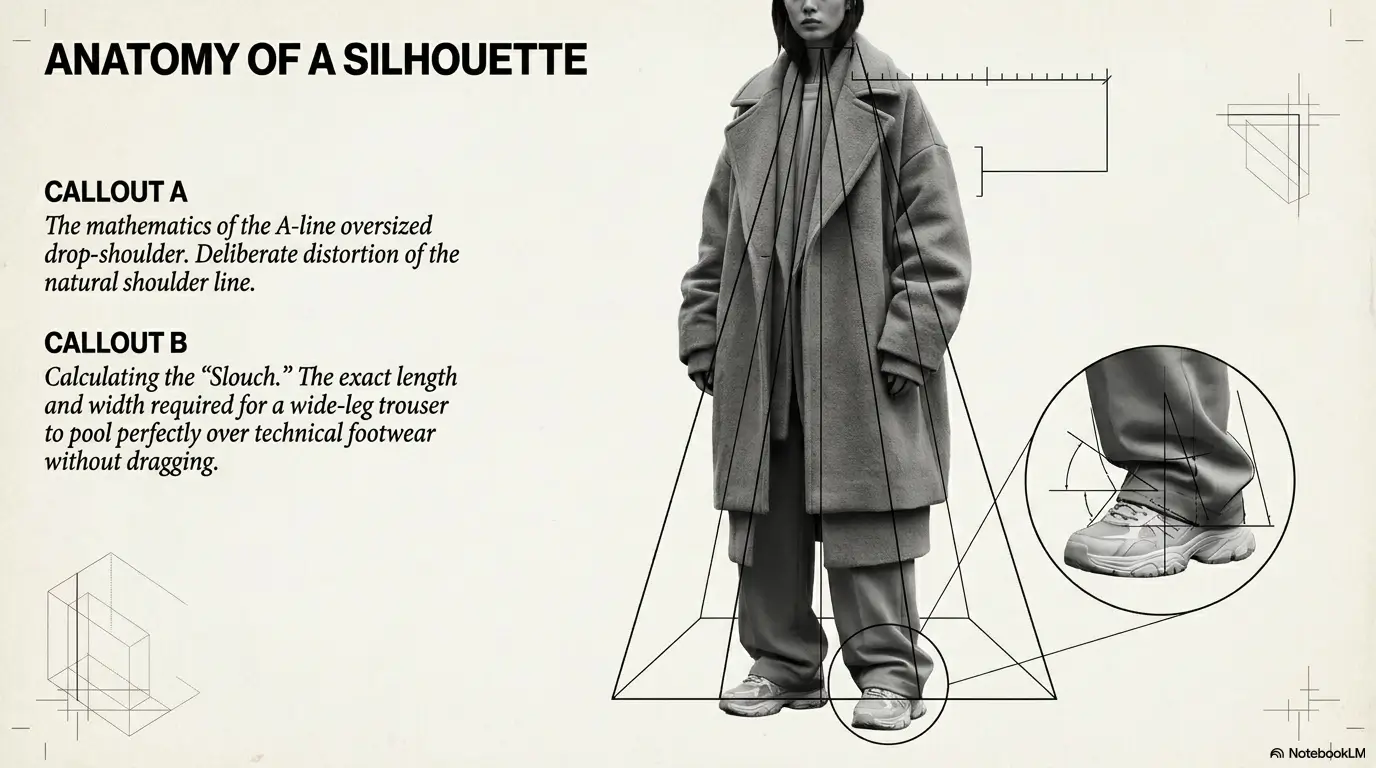
A bag charm can introduce playfulness into office clothing. A ballet flat can soften wide trousers. Narrow glasses can shift the perceived decade of an otherwise ordinary outfit.
These items are visually efficient. They change the message without requiring the wearer to change every garment.
They also create conversation. Small objects invite questions: Where did you buy it? Is that character new? Are those shoes comfortable? Social explanation helps the trend move beyond passive observation.
Color combinations spread faster than complicated silhouettes
A silhouette may depend on height, fit, tailoring, body preference, and confidence. A color pairing is easier to borrow. Burgundy with gray, powder blue with chocolate brown, or silver with black can be reproduced using pieces the wearer already owns.
Color also crosses product categories. A rising shade may appear in bags, nails, knitwear, phone cases, sneakers, and café packaging. That cross-category repetition makes the trend feel larger than clothing alone.
Hair, makeup, grooming, and phone accessories reinforce the clothing signal
Fashion is read as a complete surface. Hair volume, brow shape, lip color, nail finish, phone decoration, and even earbud cases can strengthen the impression created by clothing.
A visitor who focuses only on garments may therefore miss the trend’s strongest components. The jacket could be ordinary while the eyewear, hair texture, and bag treatment create the contemporary effect.
Men’s styling follows the same principle. Clothing, haircut, skincare, fragrance, brows, and accessories increasingly operate as one presentation system. The article on Korean men’s grooming culture provides useful background for readers who want to understand that broader visual coordination.
Wait, is that actually the same trend?
Two outfits may share a silver bag but communicate very different ideas. One may be minimalist, another nostalgic, another sporty, and another intentionally cute.
Observers often group these appearances because the object is easy to notice. The wearers may not understand themselves as participating in the same aesthetic at all.
When tracking a trend, record both the repeated object and the styling context. Otherwise, you may mistake one popular product for one unified cultural message.
The one-detail shopping test
- Choose the smallest element that creates the effect you like.
- List three outfits you already own that could include it.
- Check whether it works in your weather and walking routine.
- Wait one day before purchasing a novelty-only version.
- Prefer an item you would still wear after the trend loses its name.
Short Story: The Silver Charm That Almost Became a New Wardrobe
Emma noticed silver charms on three bags during her first hour in Seongsu. By lunch, her feed was showing charm-covered totes, metallic sneakers, and silver nail art. She decided Seoul had moved into a complete “silver season.”
That evening in a residential neighborhood, she saw fewer decorative bags. Commuters carried simple backpacks and work totes. Silver still appeared, but mostly as a zipper, phone strap, or small piece of jewelry.
Instead of buying a metallic jacket she would struggle to wear at home, Emma chose one removable charm from a local maker. It worked on her everyday black bag and weighed almost nothing in her suitcase.
The practical lesson was not that her first impression had been wrong. It had been incomplete. The trend was real, but its most wearable form was smaller than the version selected by her screen.
Foreign Eyes Often Misread What They See
Travel sharpens attention but distorts proportion. New details glow because the observer has not yet learned which sights are ordinary, which are seasonal, and which belong to one social scene.
Foreign visitors may also arrive with a prewritten story: Seoul is futuristic, appearance-conscious, coordinated, trend-obsessed, or shaped by K-pop. Each idea contains fragments of truth, but any one of them can become a filter that edits out contradiction.
Tourists notice concentrated fashion districts, not the whole city
Visitors spend disproportionate time in neighborhoods selected for shopping, culture, cafés, nightlife, and visual interest. These areas naturally contain more destination dressing and commercial experimentation.
Meanwhile, ordinary residential streets, logistics zones, hospitals, public offices, industrial areas, and morning school routes remain outside the travel feed.
The resulting sample is real but biased. A crowded Saturday in Seongsu tells you what a particular crowd wore in a trend-sensitive place. It does not tell you how ten million residents dress.
Trend-sensitive age groups are more visible online
Young adults and teenagers often appear more frequently in street-style content because they gather in recognizable destinations, experiment with affordable items, and post more public imagery.
Older residents, parents handling errands, night-shift workers, tradespeople, caregivers, and people uninterested in fashion are less likely to become visual symbols of the city, despite being equally present in daily life.
This imbalance can turn one generation’s leisure style into an imagined national uniform.
Commuter practicality limits experimentation
Seoul requires walking, stairs, transfers, crowded trains, weather adaptation, and carrying personal items through long days. Fashion must negotiate with this physical reality.
Many stylish outfits contain quiet compromises: a beautiful coat over heat-retaining basics, formal trousers with sneakers, a statement bag containing an umbrella, or a delicate top protected by a practical outer layer.
Visitors who copy only the visible surface may miss the hidden logistics that make the outfit sustainable.
Seasonal uniforms can reflect convenience, not conformity
When many people buy from overlapping retailers and face the same weather, commute, workplace expectations, and available color palettes, visual similarity is unsurprising.
Calling this conformity can be too dramatic. Sometimes beige coats are simply available, useful, easy to coordinate, and acceptable across many settings.
The interesting question is not why people look identical. It is how individuals create small distinctions inside a shared practical framework.
Key takeaway: Your itinerary is a sampling method. A fashion-focused route will produce fashion-focused evidence, just as a museum route produces an unusually art-filled version of the city.
Common Mistakes When Reading Seoul Fashion Micro-Trends
Most fashion-reading errors come from moving too quickly from observation to conclusion. You see a repeated object, attach a cultural explanation, and begin shopping before testing whether the pattern survives outside one street or screen.
The following mistakes are especially common among first-time visitors, content creators under deadline, and shoppers eager to bring home something that feels unmistakably “Seoul.”
Mistake 1: Assuming repetition means permanence
A detail can be intensely visible precisely because it is near its peak. Retail availability, creator attention, and public familiarity align for a short interval, producing the impression of stability.
Before buying, imagine the item without its current social energy. Would you still like the shape, color, material, and function?
Mistake 2: Treating Seoul as one uniform fashion market
A look seen near a university may not carry the same meaning in an office district. A luxury-coded detail in Apgujeong may become humorous or nostalgic in Hongdae.
Always record location, time, apparent activity, and age range. Without context, your notes describe objects rather than fashion behavior.
Mistake 3: Copying a full outfit without considering climate or routine
The outfit that looks perfect during a two-hour café route may fail during an eight-hour walking day. Delicate shoes, tiny bags, heavy layers, and restrictive silhouettes can become expensive luggage decorations.
Borrow the principle rather than the costume. If you like the layered effect, reproduce it with breathable pieces. If you like the color palette, use it in a scarf or shirt suitable for your home climate.
Mistake 4: Confusing sponsored visibility with organic popularity
A product may appear repeatedly because a campaign sent it to many creators at once. That does not make the item fake or undesirable, but it changes what the repetition means.
Look for unscripted adaptation. Are people wearing the item outside promotional content? Are they combining it with older clothing? Are secondhand versions or inexpensive substitutes appearing?
Mistake 5: Buying several pieces before testing one adaptable detail
Novelty creates urgency. A visitor may fear that leaving Seoul without the trend means missing a cultural moment.
That fear produces duplicate purchases: the trendy shoe, matching bag, matching top, and accessory. Back home, the complete look can feel too specific to repeat.
Micro-Trend Mistake Checklist
- I have seen the item only in one neighborhood.
- Most examples came from sponsored or highly edited content.
- I cannot name three outfits I would wear with it.
- The item conflicts with my climate, commute, or dress code.
- I like the social meaning more than the object itself.
- I feel pressure to buy before I have compared quality.
- I am purchasing several coordinated pieces at once.
If four or more statements are true, pause. The trend may be borrowing your excitement before earning your money.
The Trend Peak Trap: By the Time You Notice It, Is It Already Over?
Fashion does not die on a clear date. A trend changes function. It moves from discovery to recognition, from recognition to safety, and from safety to saturation. After saturation, it may disappear, become ordinary, or return in an altered form.
Your goal is not to predict an exact expiration date. It is to identify which stage best matches your reason for participating.
Early adopters wear combinations before retailers name them
At the earliest stage, the trend may not be searchable. Several people are making related choices, but the choices have not yet been packaged into a named aesthetic or shopping category.
This stage is difficult for visitors to detect because it looks like individual taste. It becomes visible only in hindsight.
Peak visibility arrives when affordable versions become easy to find
At the peak, recognition and access meet. Shoppers know what the item is, creators know how to style it, and retailers can supply versions at several prices.
This is a good stage for cautious buyers who want social proof and product choice. It is less attractive to people seeking rarity.
Saturation begins when the same formula appears across unrelated districts
A trend is nearing saturation when the styling becomes predictable. The same item appears with the same colors, proportions, and companion pieces across many contexts.
Saturation is not failure. It can mark the moment when an unusual idea becomes useful to a broad public. White sneakers, oversized shirts, and crossbody bags all survived periods of intense trend status because they solved practical problems.
Decline starts quietly through mutation
The next trend often grows inside the current one. A popular bag becomes smaller. A dominant color shifts warmer. A wide trouser narrows slightly. A cute accessory becomes deliberately strange.
People rarely announce that they have abandoned the old look. They adjust it until the original formula no longer feels current.
| Life-cycle stage | What you may notice | Best response |
|---|---|---|
| Emerging | Unusual details in small clusters, few obvious product labels | Observe before shopping |
| Rising | Creators explain the look, small shops offer versions | Test one flexible element |
| Peak | Many price points, repeated styling formulas, high visibility | Buy for usefulness, not rarity |
| Saturated | Similar versions across unrelated districts and retailers | Choose quality or wait for discounts |
| Mutating | Changed proportions, ironic styling, new color accents | Watch the altered detail |
Key takeaway: Being “late” is not always bad. Peak-stage shopping often offers better choice, reviews, pricing, and wearability than early adoption.
How to Observe Seoul Fashion Without Chasing Every Look
The best fashion observers are not the people who buy the most. They are the people who compare carefully, tolerate uncertainty, and notice how clothing changes with context.
You do not need access to private showrooms or professional trend software. A notebook, several neighborhoods, and a willingness to look beyond the loudest outfit can reveal the pattern.
Compare weekday commuting with weekend destination dressing
Weekday mornings reveal practical clothing under time pressure. Weekend afternoons reveal expressive clothing selected for social activity. Neither is more authentic. They answer different needs.
A useful trend should survive both settings in some form. The dramatic version may belong to Saturday, while a smaller color or accessory appears during the workweek.
Record recurring details, not isolated statement outfits
A spectacular outfit is memorable but statistically weak. Instead, note repeated shoe shapes, bag positions, sock lengths, layering methods, and color pairings.
Respect privacy. You can photograph shop displays, your own notes, product arrangements, or public streets without targeting identifiable strangers. Written observations are often more useful than hurried photographs.
Check whether the same idea appears at luxury, midrange, and budget levels
Cross-price repetition is one of the strongest indicators that a trend has moved beyond a niche. The exact product will differ, but the defining feature remains recognizable.
For example, a curved bag silhouette may appear first in a designer store, then in a small label’s leather version, and later in synthetic materials at a budget retailer.
This does not prove who originated the idea. It shows that the idea has become commercially transferable.
Choose one portable idea, not a complete identity
A portable idea is small enough to enter your existing life. It may be a color combination, a new way to tie a scarf, a softer trouser proportion, a bag accessory, or a layering technique.
The question is not “Can I look like Seoul?” Seoul contains too many people and styles for that question to make sense. Ask instead, “What useful styling idea did I notice in Seoul, and how can I translate it honestly?”
Three-Neighborhood Observation Card
Seongsu
What looks newly staged, highly photographed, or connected to a pop-up?
Hongdae
How is the idea made younger, cheaper, brighter, stranger, or more playful?
Gangnam
Has the look become cleaner, commercially available, and easy to repeat?
Write down: item, color, wearer context, nearby stores, styling variations, weather, and whether the detail appears functional or decorative.
FAQ About Seoul Fashion Micro-Trends
Why do fashion trends seem to spread so quickly in Seoul?
Seoul combines dense commercial districts, frequent public-transit encounters, highly visual social media, rapid online shopping, pop-up culture, celebrity imagery, and retailers that respond quickly to demand. These systems allow a small styling detail to become visible across several channels within days.
Which Seoul neighborhoods are most influential for street style?
Seongsu, Hongdae, Yeonnam, Hannam, Apgujeong, and Gangnam are useful observation points, but they play different roles. Seongsu concentrates pop-ups and visual experimentation, Hongdae encourages playful adaptation, Hannam and Apgujeong add premium polish, and Gangnam often reveals broader commercial normalization.
Does everyone in Seoul follow the same fashion trends?
No. Clothing varies by age, occupation, neighborhood, budget, weather, commute, personal taste, and social setting. Visitors often spend time in trend-sensitive districts, which can make one visible group appear more representative than it is.
How much influence does K-pop have on everyday clothing?
K-pop can introduce colors, accessories, silhouettes, and styling combinations to a large audience. Everyday adoption usually happens after creators, retailers, and ordinary shoppers simplify those ideas into more practical and affordable forms.
Are Seoul micro-trends different from Japanese street-fashion trends?
They develop within different retail systems, neighborhood cultures, media environments, and fashion histories. Direct comparisons can be useful, but broad claims about “Korean style” and “Japanese style” usually flatten considerable diversity within both places.
How can travelers dress stylishly in Seoul without looking overdone?
Prioritize fit, clean layers, comfortable shoes, weather-appropriate outerwear, and one intentional detail. A coordinated color accent or practical accessory usually looks more natural than copying a complete viral outfit.
Why do certain accessories suddenly appear everywhere?
Accessories are relatively affordable, easy to search, simple to photograph, and compatible with existing wardrobes. One person may also own several versions, producing more public appearances than the number of individual adopters suggests.
How long does a typical Seoul fashion micro-trend last?
There is no fixed duration. A highly specific novelty may rise and fade within weeks, while a useful shape or color can remain for months and gradually become ordinary. Watch for cross-district repetition, mass availability, predictable styling, and subtle changes in proportion or color.
Run a Three-Neighborhood Trend Check in 15 Minutes
You do not need to become a professional forecaster. You need one detail and a disciplined way to compare it.
Choose a visible element you have noticed more than once: a bag shape, shoe, accent color, eyewear frame, charm, hem length, or layering method. Then spend five minutes reviewing your own notes, photographs of shop displays, saved posts, or memories from Seongsu, Hongdae, and Gangnam.
Do not count appearances alone. Write one sentence for each neighborhood describing how the detail changed.
- Seongsu: Was the detail connected to a pop-up, creator crowd, unusual display, or carefully staged destination?
- Hongdae: Did the detail become more playful, affordable, colorful, customized, or mixed with vintage clothing?
- Gangnam: Did the detail appear cleaner, more conventional, easier to purchase, or suitable for work and mainstream leisure?
- Digital check: Are your saved posts showing varied interpretations, or the same formula repeated by similar accounts?
- Personal check: Can the idea improve three outfits you already wear?
If the detail appears in only one district and one type of content, treat it as a niche experiment. If it changes form across districts and price points, it is probably rising. If it appears everywhere in nearly identical combinations, it may be near saturation.
Your final step is wonderfully small: choose one translation, not one costume. Save the color pairing. Try the scarf method. Add the removable charm. Adjust the trouser proportion. Let Seoul sharpen your eye without asking it to replace your wardrobe.
The city’s fastest trends leave a useful clue
The most durable lesson is rarely the exact object. It is the method beneath it: noticing proportion, repeating a color, adapting an idea, and allowing one small detail to change the rhythm of familiar clothes.
Last reviewed: 2026-06