
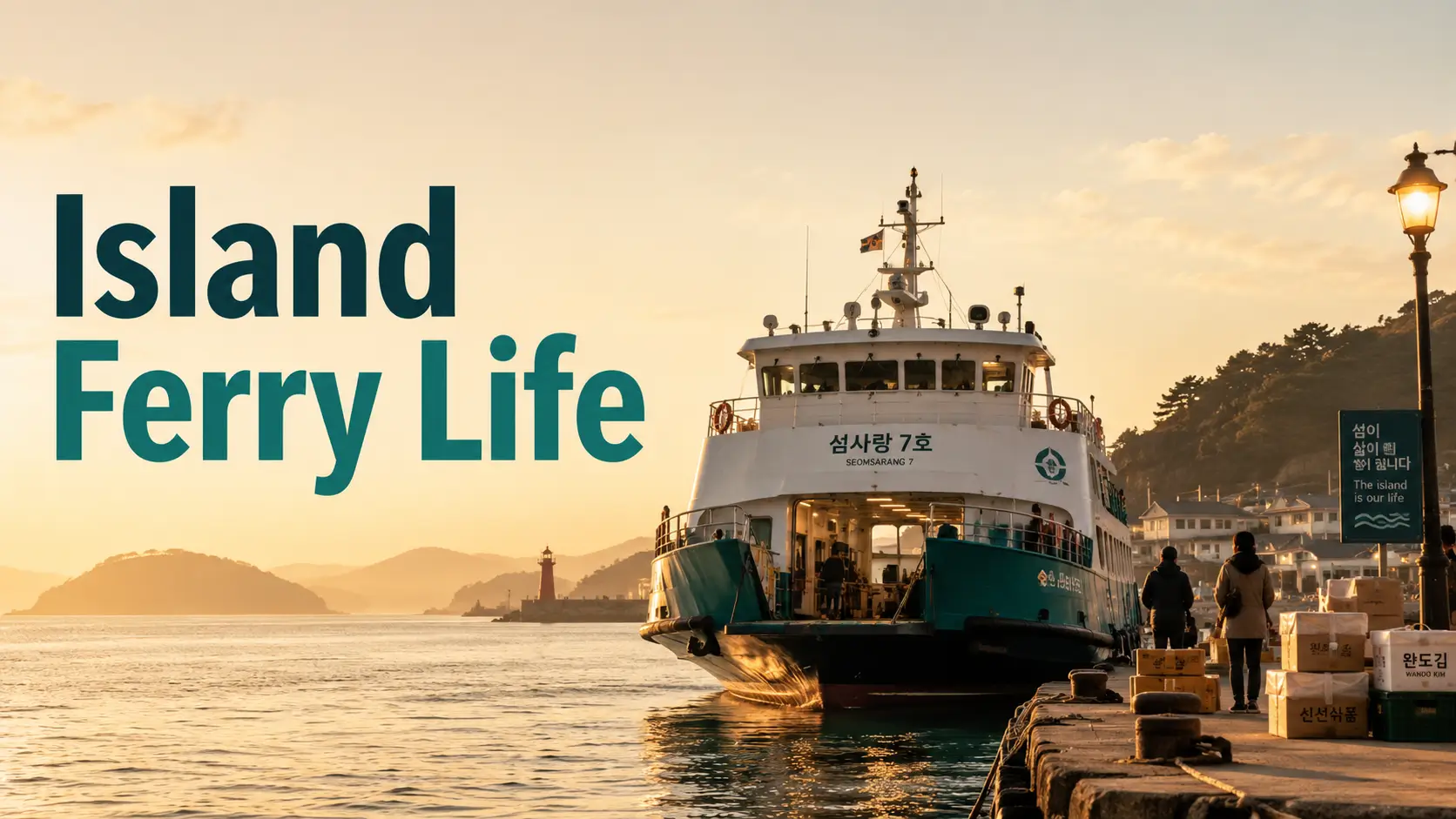
South Korea cultural travel guide
How Island Ferry Life Shapes
Small Community Culture in South Korea
On a Korean island, the ferry is rarely just a way to move from one pier to another. It is the morning bell, the grocery corridor, the school bus with sea spray, the weather report made visible, and the place where strangers slowly become familiar by standing in the same wind.
For travelers, expats, study-abroad readers, and slow-travel planners, this matters because island culture can be misunderstood when viewed only through pretty harbor photos. A ferry schedule can explain why a shop closes early, why a grandmother checks the sky before answering a simple question, and why missing one boat can ripple through a whole day.
This guide reads the ferry as social infrastructure: part transport, part community clock, part floating noticeboard. You will learn how boat routes shape food, school life, medical access, tourism manners, local trust, and the quiet emotional mathematics of arriving home.
Read the rhythm
Understand why ferry time becomes village time.
Avoid easy myths
See islands as living communities, not nostalgic scenery.
Travel better
Learn what respectful visitors notice before taking photos.
The big idea: on many Korean islands, the ferry is the moving front porch of the community. 🛳️
Snapshot
This article is for culturally curious travelers, Korea expats, study-abroad readers, diaspora readers, and writers who want to understand South Korean island life beyond the postcard. You will learn how ferries shape daily habits, local trust, food supply, tourism etiquette, and the practical art of planning around weather, time, and community memory.
Ferry Time Is Island Time, And That Changes Everything
On the mainland, time often feels private. You miss a bus, call a ride, change a meeting, or shrug and try the next train. On a small South Korean island, time becomes more public. A ferry timetable can sit behind decisions about school, groceries, hospital visits, part-time work, family events, and whether a visitor can stay for one more bowl of noodles.
That is why island ferry life shapes small community culture so deeply. A boat route does not simply connect two points. It organizes a day. It teaches people to read wind, waves, holidays, crowds, cargo, and the mood of the harbor.
Why the ferry schedule becomes the village clock
Ferry schedules create a shared rhythm because everyone is negotiating the same constraint. The first boat may decide when fresh produce arrives. The last boat may decide when a visitor must leave. A mid-afternoon sailing may determine whether an errand on the mainland is realistic or foolishly optimistic.
For a traveler, this can feel charming for about eight minutes. Then it becomes practical. You begin to understand why a café owner checks the timetable before promising dinner, why a guesthouse host asks about your return boat, and why local conversations often include the weather before the destination.
Key takeaway
A ferry schedule is not just travel information. On many islands, it becomes a soft operating system for daily life.
Weather delays as a shared social experience
Bad weather does not merely inconvenience one passenger. It can pause deliveries, postpone appointments, delay guests, and turn a harbor waiting room into a temporary village square. People compare forecasts, call relatives, check ferry offices, and exchange the special look that means the sea has the final vote.
This produces a different emotional habit. Mainland travel often rewards speed. Island travel rewards patience, backup planning, and the ability to accept limits without dramatizing them. That is not passivity. It is a practical intelligence sharpened by repetition.
The quiet cultural difference between “late” and “impossible today”
One of the most important ferry-life lessons is the difference between being late and being unable to go at all. In a city, late can mean irritation. On an island, “impossible today” can be nobody’s fault.
That distinction changes tone. People may still be annoyed. They may lose money, time, or sleep. But the cause is often communal and visible: fog, wind, waves, mechanical issues, or safety rules. The situation becomes less about individual failure and more about shared adjustment.
Traveler move
When visiting a Korean island by ferry, plan your return as carefully as your arrival. The last ferry is not a suggestion with a cute hat.
Who This Is For / Not For
This guide is not trying to turn island ferry life into a romantic watercolor. Korean island communities are beautiful, yes, but they are also practical places where people raise children, run businesses, manage health needs, maintain homes, care for elders, and deal with weather that does not care about travel aesthetics.
The best way to understand the culture is to treat the ferry as a daily system, not a scenic accessory.
For travelers who want to understand island life beyond pretty harbor photos
If you are planning a slow trip through Korea, the ferry can help you read a place more honestly. Watch who boards first, what cargo appears, how residents greet each other, and what happens when the schedule changes. These observations teach more than a rushed list of “top things to do.”
For Korea culture readers interested in daily systems, not stereotypes
Korean island life touches many broader themes: public infrastructure, family duty, local reputation, food logistics, school access, aging communities, tourism pressure, and the tension between convenience and belonging. Ferries make those themes visible because everyone must pass through the same narrow gate.
Not for readers looking for a simple tourist checklist
You will not find a ranked list of the prettiest islands here. Those lists have their place. This article is more interested in the cultural machinery behind the photo: the timetable, the dock, the cargo cart, the auntie checking the wind, the student counting minutes before class.
Not for romanticizing isolation without noticing inconvenience
Island life can be peaceful without being easy. Quiet does not erase logistical pressure. A beautiful sea view does not automatically make missed appointments, weather cancellations, or limited services feel poetic. Respect begins when we let a place be both lovely and inconvenient.
| Reader type | What to notice | What to avoid |
|---|---|---|
| Slow traveler | First and last ferry, harbor waiting habits, weather talk | Treating the island as a day-trip backdrop only |
| Expats in Korea | How services depend on mainland connections | Assuming city convenience applies everywhere |
| Study-abroad reader | How transport shapes school, family, and work routines | Flattening island life into “traditional Korea” |
| Travel writer or blogger | Logistics, ethics, resident perspective, everyday details | Turning difficulty into decorative scenery |
Before You Plan, Write, Or Photograph Ferry Life
This is a low-risk cultural travel topic, but there is still a responsibility baked into it. Ferries are public spaces used by residents, workers, elders, children, delivery staff, and visitors. A traveler’s curiosity should not become a spotlight shoved into ordinary life.
This article can help you understand patterns, ask better questions, and travel with more care. It cannot replace current ferry schedules, official safety notices, local guidance, or your own judgment when weather, health, mobility, or time-sensitive plans are involved.
Check official information before you go
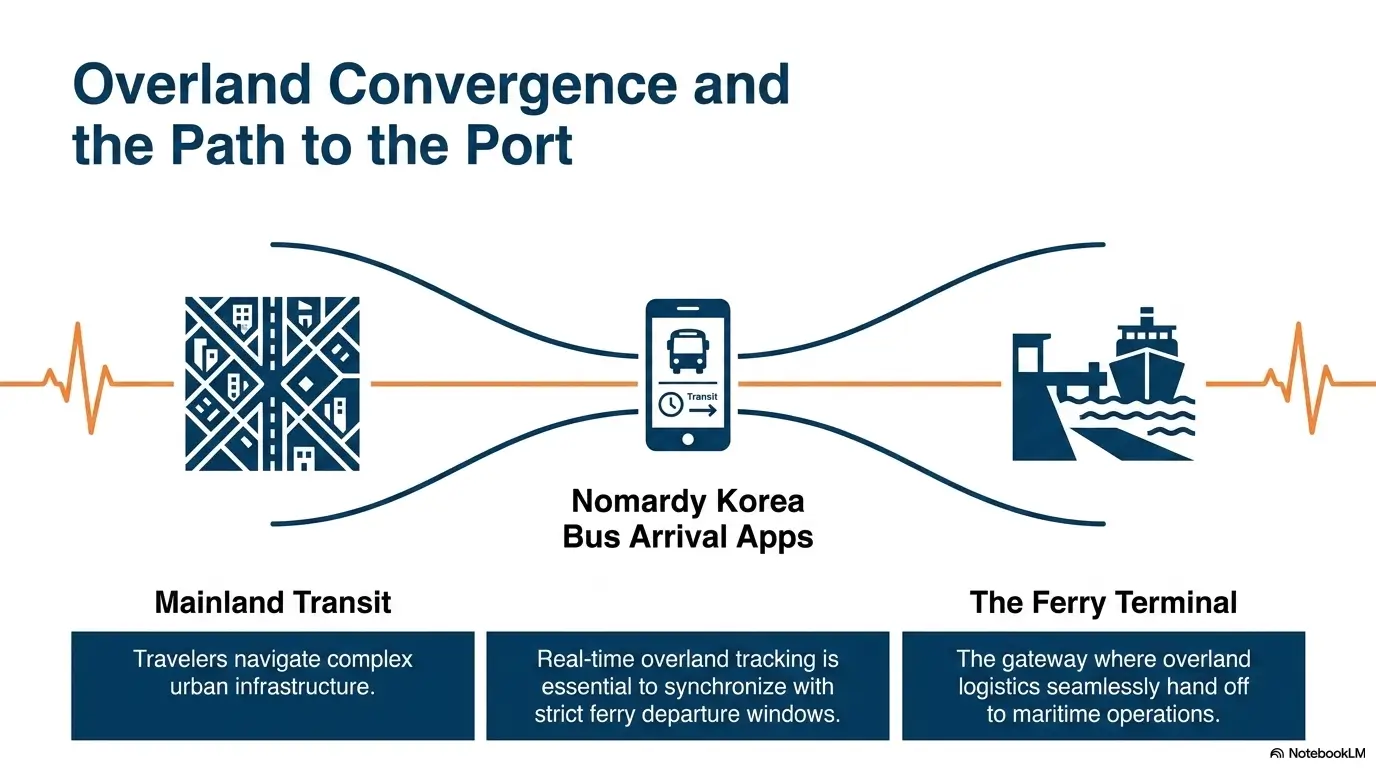
Ferry routes, departure times, seasonal service, and weather-related cancellations can change. Before paying for lodging or planning a tight return, confirm details with the ferry operator, local tourism office, port terminal, or a trusted official travel resource.
Useful official starting points: use these for broader travel planning and weather awareness before narrowing down a specific island route.
Visit Korea Official Travel Site Check Korea Weather Updates
Ask before photographing people
Harbors and ferry decks are visually irresistible: ropes, gulls, orange life rings, stacks of boxes, elderly hands gripping railings, children leaning toward the sea. But real people are not atmosphere. If a person is identifiable, especially in a quiet village context, ask before photographing them or choose a wider, less intrusive frame.
Build flexibility into your budget
Island travel can become more expensive when plans are too tight. A missed last ferry may mean another night of lodging, changed transport on the mainland, missed reservations, or extra taxi costs. Budget-conscious travelers should leave cushion time rather than spending the whole trip like every minute is nailed to the floor.
| Planning choice | Low-cost approach | When paying more may be worth it |
|---|---|---|
| Return timing | Take an earlier ferry and keep the evening flexible | Book mainland lodging near the port if weather looks uncertain |
| Route research | Use official tourism and terminal information | Use a local guide for multi-island routes or limited Korean language ability |
| Food plan | Carry snacks and water, especially off-season | Reserve meals or lodging with dinner included on smaller islands |
| Photography | Use landscape and detail shots | Hire a local guide or translator for documentary-style work |
The Ferry Is More Than Transport, It Is Social Infrastructure
Infrastructure usually sounds cold: terminals, schedules, ticket counters, safety rules. But on an island, infrastructure gathers emotion. A ferry can carry medicine and gossip in the same crossing. It can carry a college student leaving home, a box of vegetables, a tourist with a camera, a repair worker, and an elderly neighbor returning from a clinic visit.
That mixture is why the ferry becomes social infrastructure. It supports relationships as much as movement.
How neighbors recognize each other before introductions happen
Repeated crossings create recognition. You may not know someone’s name, but you know they take the early boat on Mondays. You know who travels with fish boxes, who visits the mainland clinic, who brings grandchildren during school breaks, and who always sits near the window.
This kind of familiarity is quieter than friendship but still meaningful. It creates a low-level social accountability. In a small route, anonymity thins out. People remember faces, habits, and small kindnesses.
Why cargo, gossip, medicine, and groceries often travel together
A ferry deck can reveal what the island needs that day. Boxes of produce, seafood containers, household supplies, parcels, pharmacy bags, repair parts, and luggage all tell a story about dependence and exchange.
For a visitor, these details are easy to miss because they do not announce themselves as “culture.” But culture often lives inside repeated practical acts. How people load, wait, help, complain, and adapt says as much as a festival performance.
Here’s what no one tells you: the boat has a memory
The boat itself seems to remember. Not literally, of course. But the route holds stories. A delayed wedding guest. A student leaving for the mainland. A relative returning for ancestral rites. A typhoon season everyone still mentions. A captain who knows which passengers get nervous when the waves rise.
When the same crossing carries life events again and again, it becomes more than logistics. It becomes part of local memory.
Show me the nerdy details
A small ferry route works like a cultural compression chamber. It concentrates time, repetition, risk, service access, supply chains, and social recognition into one shared public routine.
- Temporal compression: people plan around fixed departures instead of flexible movement.
- Social compression: repeated crossings reduce anonymity.
- Economic compression: goods, services, visitors, and workers move through a narrow channel.
- Emotional compression: departures and arrivals become ritualized because they are visible to others.
Small Harbors Teach A Different Kind Of Belonging
A small harbor is not just a place where boats stop. It is a waiting room, a weather station, a reunion point, a soft marketplace, a noticeboard, and sometimes the only stage where the whole island briefly appears together.
In cities, belonging can be hidden inside apartment elevators and group chats. In harbor communities, belonging is often performed in small, public gestures: saving a seat, lifting a box, asking if someone ate, noticing who did not arrive.
The port as waiting room, market, noticeboard, and reunion point
Ports gather people who may otherwise live scattered across hills, coves, and small roads. This gives the harbor a special social charge. A short wait can become a news exchange. A delayed boat can become a community meeting with no agenda and no minutes.
For writers and travelers, the temptation is to describe only the scenery. But the real story may be in who waits without impatience, who checks on whom, and who knows the ferry staff by name.
Why repeated departures create stronger arrival rituals
When leaving requires a boat, coming back can feel ceremonial. The return is not swallowed by traffic or hidden inside a subway exit. It appears at the pier. People see luggage, faces, boxes, and the posture of someone returning from the mainland.
This visibility gives arrivals emotional weight. A person does not simply come back. They re-enter the island’s field of recognition.
How island children learn geography through schedules, not maps
For island children, geography may begin as time. The mainland is not an abstract shape. It is “the place after the 8:20 boat,” “where the hospital is,” “where older siblings go to school,” or “where relatives arrive before holidays.”
This schedule-based geography can make distance feel emotional. A place may be close on a map but far when the sea is rough, the boat is full, or the last departure has already left.
Ferry life framework
One route, six cultural ripples
1. Time
The schedule becomes the shared clock.
2. Supplies
Food, parcels, tools, and medicine arrive by rhythm.
3. Services
Clinics, schools, offices, and errands depend on crossings.
4. Trust
Repeated encounters turn faces into social knowledge.
5. Tourism
Visitors learn the island through limits, not just views.
6. Memory
Departures and returns become part of local story.
Related guides you may want to read next:
Don’t Mistake Quiet Islands For Empty Islands
One of the easiest mistakes outsiders make is treating quiet as absence. A small island may have fewer people, fewer shops, and fewer visible events than a mainland city. That does not mean the community is weak, sleepy, or waiting to be discovered by visitors with linen shirts and weekend bags.
Quiet can be full. It can contain work, grief, habit, neighborly obligation, old conflicts, careful hospitality, and a dense map of who belongs to whom.
Why low population does not mean weak community
Small communities often rely on relationship density rather than population size. One person may be a neighbor, cousin, shopkeeper, ferry passenger, committee member, and childhood classmate all at once. Roles overlap. Reputation travels quickly because the community has fewer walls between social worlds.
The ferry strengthens this density. It repeatedly gathers people who might otherwise remain separated by geography, work, age, or family routine.
How seasonal visitors can misread silence as loneliness
Tourists often arrive during a narrow slice of island life: sunny weekends, festival days, peak seafood seasons, or quiet off-season afternoons. Each moment can distort the whole. A lively summer pier may hide winter difficulty. A quiet weekday may hide a strong network that activates when someone needs help.
A respectful visitor asks, “What am I not seeing?” That single question can save a travel story from becoming polished nonsense.
Let’s be honest: the ferry line knows more than the brochure
Brochures show highlights. Ferry lines show reality. They reveal who is carrying supplies, who is returning from the mainland, who is worried about the weather, who is traveling for work, and who seems to know every other passenger.
For a culture-focused traveler, the waiting line may be more informative than the viewpoint. The trick is to observe without treating people as exhibits.
Observation checklist
- Who is carrying goods rather than luggage?
- Do people greet ferry staff casually or formally?
- Where do residents wait compared with first-time visitors?
- What changes when the weather looks uncertain?
- Who checks the timetable, and who already knows it by heart?
Food Culture Follows The Boat, Then Becomes Local
Korean island food culture is often described through seafood, and seafood matters enormously. But the ferry adds another layer. It shapes when staples arrive, how households plan meals, which ingredients feel precious, and how hospitality works when supply is not endless.
Food is never only taste. It is timing, storage, weather, money, labor, and the pride of giving something good even when getting it took effort.
How seafood, staples, and delivery rhythms shape household meals
Island meals often balance what the sea offers, what the household already has, and what the ferry can bring. Rice, vegetables, fruit, packaged goods, cooking gas, restaurant supplies, and delivery parcels all depend on transport rhythms.
This does not mean island food is primitive or limited in a simplistic way. It means food planning has a stronger awareness of route, storage, weather, and season. A mainland shopper may ask, “What do I want tonight?” An island household may also ask, “What came in, what will last, and what if the next boat is delayed?”
Market-day timing and the emotional life of fresh supplies
Fresh supplies can carry emotional weight when they are tied to a boat. A box of fruit from the mainland may feel different when it arrives after weather delays. A guest bringing bakery items, medicine, or specialty groceries can become unexpectedly beloved.
This is one reason hospitality can feel especially sharp on islands. Sharing food is never only generosity. It can also be a small victory over distance.
Why scarcity can sharpen hospitality instead of shrinking it
Scarcity does not always make people closed. Sometimes it makes sharing more meaningful. A bowl of soup, a plate of fish, a few mandarins, or a ride from the pier can carry the weight of someone choosing to include you despite inconvenience.
For visitors, the right response is not performance-level gratitude. It is attentiveness. Notice effort. Do not waste food. Do not assume everything can be replaced quickly. And when possible, bring something useful rather than merely decorative.
| Food moment | What it may reveal | Respectful visitor response |
|---|---|---|
| A limited menu | Ingredient supply, season, staffing, ferry timing | Order simply and do not complain like a city reviewer |
| Fresh seafood emphasis | Local labor, pride, seasonality | Ask politely what is fresh today |
| Closed shop before evening | Last ferry, family duties, low off-season demand | Carry snacks and plan ahead |
| Host offers extra food | Hospitality, relationship-building, care | Accept thoughtfully or decline gently |
Confirm the ferry and the last connection on the island
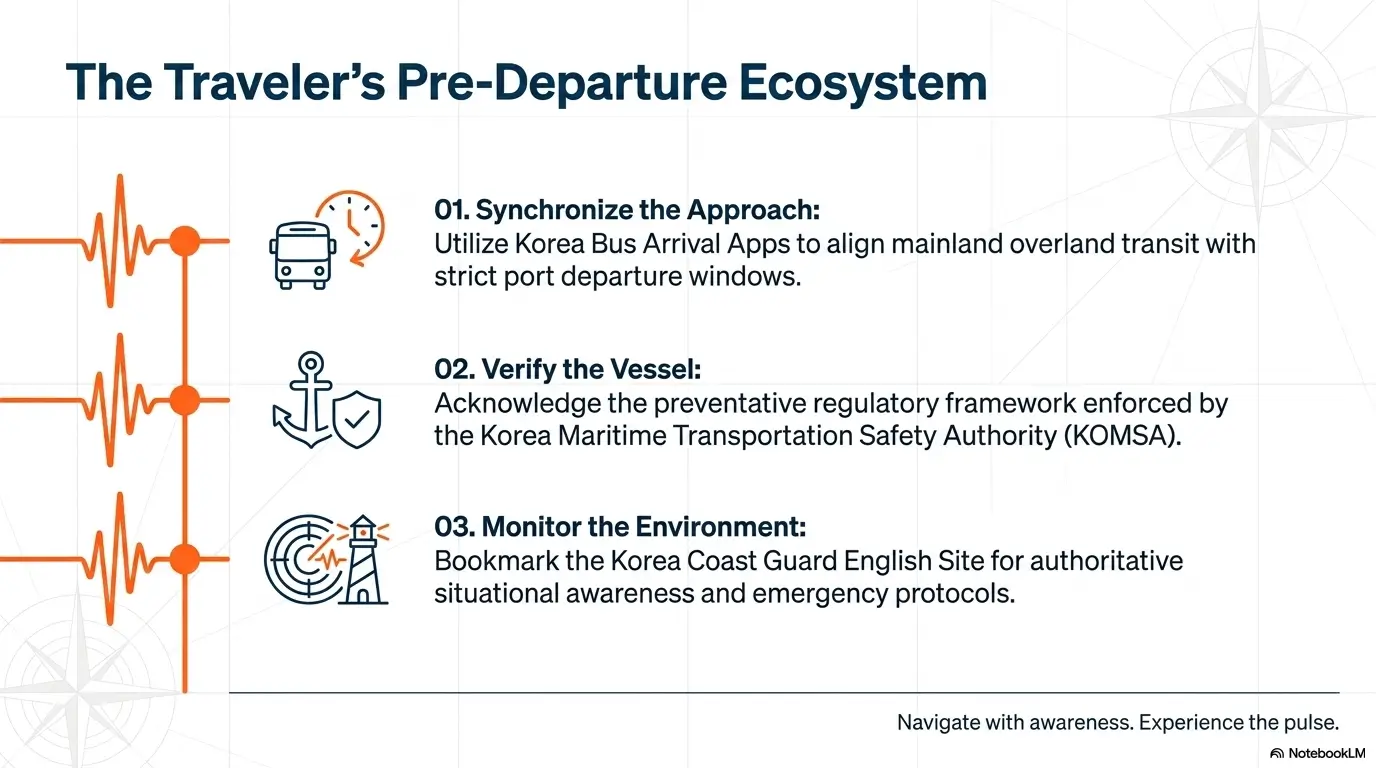
Check the operator, exact port, sailing date, boarding requirements and current service notice before travel. Include the journey from the arrival port to your destination and the return sailing. Weather or operational changes can affect plans, so ask what happens to your booking if a service changes and keep a feasible alternative. A tourism page or an old timetable does not confirm that a particular sailing is operating today.
| Focus | What to check |
|---|---|
| Sailing | Date, operator, ports and current notices. |
| Access | Boarding rules and transport at both ends. |
| Fallback | Change terms and a workable return alternative. |
A reader question: Can I plan a same-day visit from the advertised crossing time alone?
Include check-in, port access, local transport and a realistic return plan. Confirm the actual services rather than treating sailing duration as the whole journey.
The Hidden Cost Of Missing The Last Ferry
For tourists, missing the last ferry may sound like an inconvenience with a story attached. For residents, a missed boat can be far more serious. It can affect school, work, elder care, hospital appointments, family duties, deliveries, and income.
This is where ferry life becomes a teacher. It teaches people to plan without pretending they control everything.
Why one missed boat can change school, work, care, and appointments
Imagine a mainland dental appointment that runs long, a prescription pickup delayed by a line, or a work meeting that ignores ferry reality. If the last boat leaves, the problem is not simply “arrive later.” The person may need lodging, a new appointment, help with children or elders, and a revised plan for the next morning.
That pressure shapes culture. It rewards punctuality, practical communication, and a certain respect for limits. People learn to ask about the last ferry the way others ask about parking.
How island residents build backup plans into ordinary life
Backup planning can become nearly invisible because residents do it so often. They may leave earlier than seems necessary, combine errands into one mainland trip, keep extra household supplies, ask someone to pick up medication, or plan appointments around safer weather windows.
Visitors can learn from this. The best island itinerary is not the fullest one. It is the one that can bend without snapping.
The cultural skill of planning without pretending to control everything
There is a calm wisdom in planning carefully and still leaving room for the sea. This is not fatalism. It is a disciplined humility. You check the schedule, watch the weather, ask locals, carry what you need, and accept that some days the crossing will not happen on your terms.
15-minute planning checklist
- Find the first and last ferry for your route.
- Check whether the schedule changes by season, weekend, or holiday.
- Look at weather and wind before booking a tight connection.
- Identify one backup lodging option near the port.
- Carry water, snacks, medication, and a charged phone.
- Ask your host or local contact what visitors most often misunderstand.
Tourism Changes The Ferry, But The Ferry Also Trains Tourists
Tourism changes small ferry routes. Weekend crowds alter the mood of the terminal. Cameras appear. Cafés adjust hours. Guesthouses prepare. Residents may welcome income while also feeling the strain of noise, crowding, careless photography, or visitors who treat the island as a temporary theme park.
But the ferry also trains tourists, if they are willing to be trained. It slows them down. It makes them wait. It reminds them that the island was already alive before they arrived.
How weekend visitors alter the mood of a small island route
A ferry full of residents feels different from a ferry full of weekend visitors. The resident route may be practical, subdued, and familiar. The tourist route can be louder, brighter, and more restless. Neither is automatically bad, but the shift is real.
For small communities, tourism can bring revenue while also putting pressure on waste systems, food supply, ferry capacity, and local privacy. Good visitors spend money, yes, but they also spend attention carefully.
Why respectful travelers learn the rhythm before taking the photo
Before photographing a harbor, stand still for a few minutes. Notice whether people are working, waiting, resting, or dealing with a delay. Notice whether your camera makes someone uncomfortable. Notice whether the scene is public in a legal sense but private in an emotional one.
This small pause changes the photograph. It may not make the image prettier, but it makes the traveler wiser.
The subtle line between curiosity and intrusion
Curiosity asks, “What can I learn without taking too much?” Intrusion asks, “What can I capture?” The difference may sound delicate, but residents can feel it quickly.
Ask permission when appropriate. Keep your voice low in waiting areas. Do not block boarding lines. Avoid treating local inconvenience as content. Buy from local businesses when it makes sense, but do not act as if one purchase gives you ownership over the place.
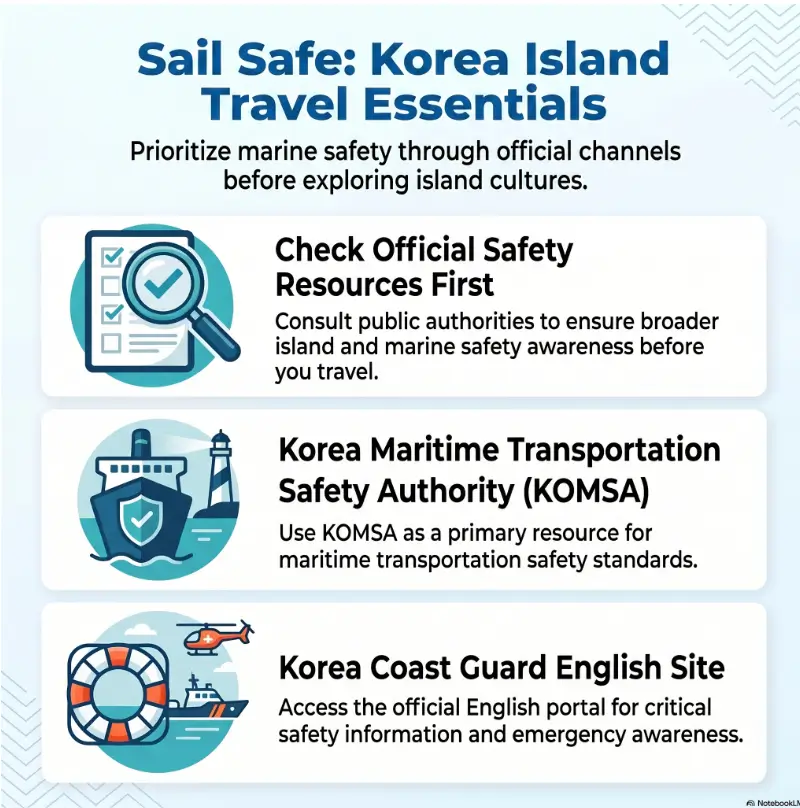
For broader island and marine safety awareness, official public resources are worth checking before you travel.
Korea Maritime Transportation Safety Authority Korea Coast Guard English Site
Common Mistakes When Writing About Korean Island Ferry Life
Writing about island communities is tricky because beauty can seduce the sentence. The harbor glows, the boat horn sounds, gulls stitch the air, and suddenly the writer forgets that people are trying to get groceries home before dinner.
Good travel writing keeps the light, but it also keeps the labor.
Treating islands as frozen in the past
Some island writing makes small communities sound untouched by modern life. That is rarely fair. Korean islands may have smartphones, delivery apps, public services, school concerns, pension worries, tourism strategies, and young people negotiating whether to stay or leave.
A ferry does not prove a place is old-fashioned. It proves that geography still matters.
Turning hardship into scenery
Weather delays, limited access, aging populations, and service gaps can look atmospheric to outsiders. For residents, they may be expensive, stressful, or ordinary in a tired way. Do not polish inconvenience until it sparkles falsely.
Ignoring government services, schools, clinics, and logistics
Small communities are not made only of tradition, seafood, and sunset. They are made of clinic access, school enrollment, road repairs, waste collection, ferry subsidies, seasonal work, and administrative systems. These details may sound less romantic, but they often explain the culture better than a dramatic adjective.
Writing “remote” when you really mean “less convenient for outsiders”
Remote is a loaded word. For residents, the island may be the center of the world. The mainland is the outside place. A writer who calls an island remote should ask, “Remote from whose life?”
| Common mistake | Why it weakens the article | Stronger alternative |
|---|---|---|
| “A forgotten island” | Erases residents and current systems | Describe specific transport and service patterns |
| “Time stands still here” | Turns living people into nostalgia | Show how ferry time structures the day |
| “Simple island life” | Ignores planning pressure and economic complexity | Explain trade-offs clearly |
| “Hidden gem” | Frames the place around outsider discovery | Focus on respectful access and local rhythm |
| “Locals are so friendly” | Flattens people into a travel compliment | Describe concrete acts of help or etiquette |
Illustrative Scenario: The Last Boat
A traveler once arrived at a small Korean harbor with the confidence of someone whose phone still had battery. She had eaten late, wandered slowly, and taken forty-seven photographs of ropes, gulls, and blue plastic crates.
At the ticket window, the clerk shook his head. The last ferry had left twenty minutes earlier. Not delayed. Not negotiable. Gone.
A woman from the island noticed her panic and called a guesthouse. The room was plain, the blanket warm, the dinner simple. Over soup, the owner asked why she had not checked the return time first.
The question was not scolding. It was instruction. By morning, the traveler understood the island differently. The ferry was not an accessory to the trip. It was the grammar of the place.
What Ferry Life Reveals About Korean Community Values
Ferry life does not explain all of Korean culture, and it should not be forced into a grand national theory. South Korea is too varied for that. Still, small island ferry routes reveal certain values with unusual clarity: patience, reputation, reliability, careful hospitality, and the practical importance of showing up when others depend on you.
Collective patience as a practical survival habit
Patience on an island is not always gentle. Sometimes it is irritated, tired, and forced. But shared constraints can still produce shared patience. When the boat cannot go, everyone must wait. The waiting becomes a social fact.
Over time, this can build a culture that understands delay differently. People may complain, but they also know when complaint changes nothing. The distinction is its own form of wisdom.
Reliability, reputation, and why repeated encounters matter
In small ferry communities, repeated encounters make behavior visible. The person who helps carry a box is remembered. The visitor who blocks the boarding path is remembered too. Reputation does not need a microphone when people share the same route every week.
This gives ordinary acts more weight. Being considerate is not just politeness. It is a contribution to the shared crossing.
How small acts become culture when everyone shares the same crossing
Culture is often described through big symbols: holidays, food, language, clothing, music. Ferry life reminds us that culture also lives in small repeated acts. Waiting. Checking. Helping. Noticing. Making room. Calling ahead. Bringing something back from the mainland.
None of these acts looks dramatic alone. Together, they become the social fabric of the island.
Good / Better / Best cultural reading
| Approach | What it looks like | Result |
|---|---|---|
| Good | You check the ferry schedule and arrive on time. | You avoid preventable stress. |
| Better | You notice how residents use the ferry differently from tourists. | You understand the island beyond the itinerary. |
| Best | You connect schedule, weather, supplies, services, and social behavior. | You read the ferry as culture, not just transport. |
FAQ
How do ferries affect daily life on South Korean islands?
Ferries affect school schedules, work trips, medical visits, family gatherings, grocery supply, parcel delivery, tourism, and emergency planning. On small islands, the ferry schedule can become the shared clock that residents use to organize the day.
Why are ferry schedules so important for island communities?
Ferry schedules matter because missing a boat can mean more than waiting a few minutes. It can affect appointments, deliveries, school attendance, work timing, and whether someone can return home that night.
Do people commute by ferry in South Korea?
Yes, some people use ferries for work, school, errands, medical care, family visits, and business on the mainland or nearby islands. The pattern varies by island, route, season, and available services.
How does bad weather affect island culture in Korea?
Bad weather can delay or cancel ferry service, which makes weather awareness part of daily culture. Residents often build backup plans into ordinary life, from stocking supplies to scheduling mainland appointments carefully.
What role do ferries play in food and supplies?
Ferries help move groceries, seafood, restaurant supplies, household goods, parcels, medicine, and repair materials. This affects menus, market timing, hospitality, and how households prepare for delays.
Are Korean island communities isolated?
Some islands are less convenient to reach than mainland neighborhoods, but “isolated” can be misleading. Many island communities are deeply connected through ferry routes, family networks, tourism, public services, digital tools, and regular mainland travel.
How should tourists behave on small Korean island ferries?
Tourists should arrive early, avoid blocking boarding areas, keep noise respectful, ask before photographing identifiable people, follow crew instructions, check return times, and remember that the ferry is daily infrastructure for residents.
Why do harbors matter so much in island villages?
Harbors matter because they gather people, goods, news, services, and emotions in one place. A harbor can function as a waiting room, reunion point, informal market, weather station, and social noticeboard.
Next Step: Watch One Ferry Route Like A Local
The fastest way to understand island ferry life in South Korea is not to visit five islands in three days. It is to study one route carefully. Give the crossing your attention. Watch the first boat, the last boat, the cargo, the waiting habits, the weather talk, and the small gestures that keep the day moving.
Within 15 minutes, you can do this: choose one island route you might visit, look up the day’s first and last ferry, check the weather, and write down three questions. Who depends on this boat? What does it carry besides passengers? What happens if it does not run?
That small exercise changes the whole map. The ferry stops being a line between mainland and island. It becomes a pulse. And once you can hear that pulse, the harbor is no longer just a place to pass through. It is where the community breathes.
Final field note
Before writing, visiting, or photographing a Korean island, follow the ferry for one full day on paper. The schedule will show you where convenience ends, where community begins, and where the sea quietly edits everyone’s plans.
Last reviewed: 2026-07
Practical example and reader question added October 20, 2026. Existing source dates are retained; this addition is not a fresh verification of every earlier claim.