
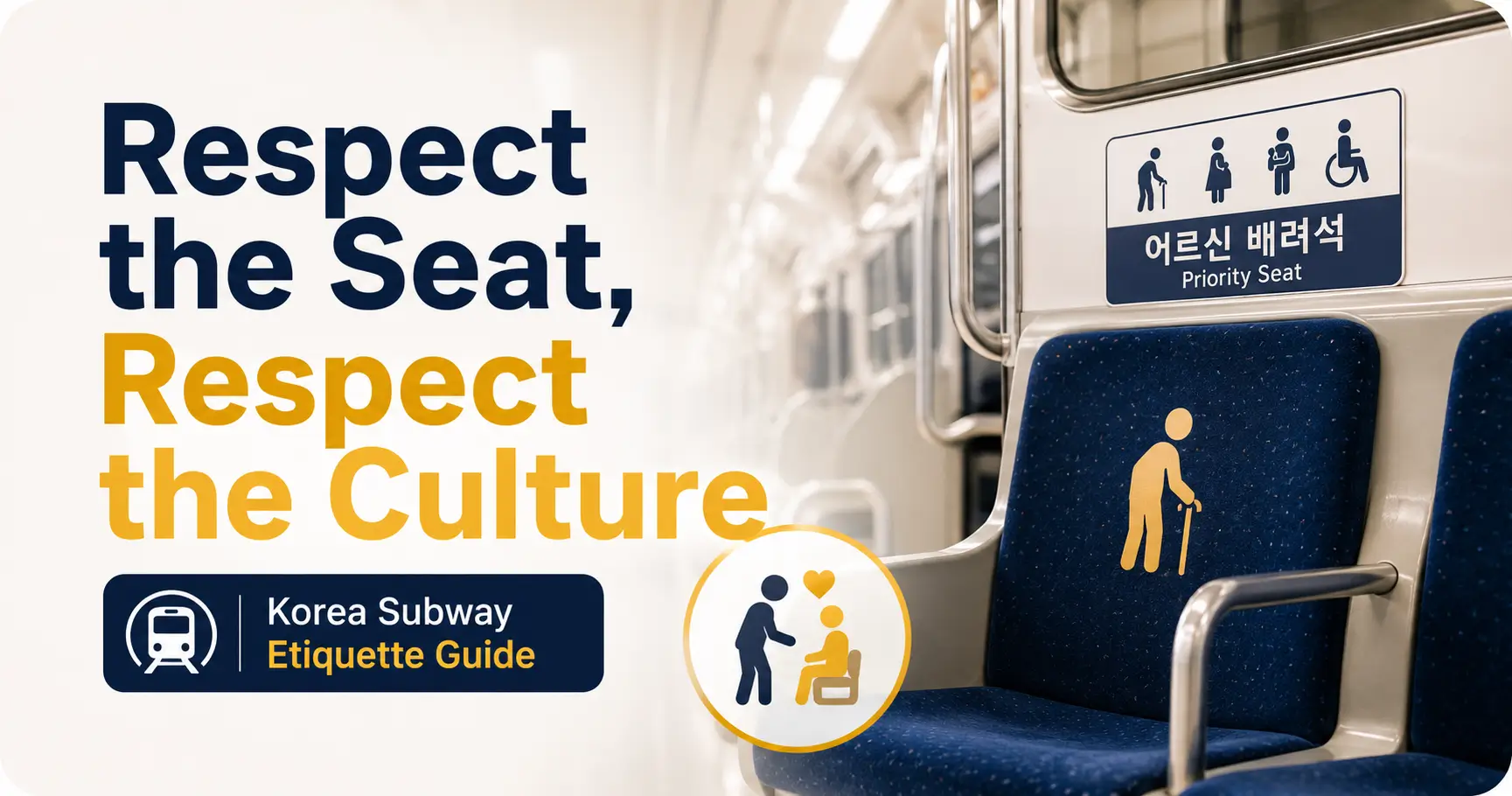
Korea subway etiquette guide
Why Elderly Priority Seats in Korea
Carry More Social Weight Than Foreigners Expect
A subway seat can look harmless after a long day in Seoul. Your feet ache, your phone battery is fading, and the train car offers one quiet square of vinyl at the end of the carriage. Then you notice the sign. Elderly priority seating. In many American or British cities, that might mean, “Sit for now, move when someone needs it.” In Korea, the meaning can feel heavier, almost ceremonial.
The issue is not that Korean subway riders are waiting to scold visitors. Most people are simply trying to get home, folded into their phones and tote bags like tired origami. But priority seats sit inside a larger code of age respect, public harmony, and unspoken awareness. The sign is small. The social message is not.
This guide turns that awkward little travel riddle into a practical habit. You will learn why empty does not always mean available, when marked seats differ, what to do if you accidentally sit down, and how to ride Korean subways with the calm confidence of someone who can read the room before the room reads them.
Avoid awkward stares
Know when standing is the smoother choice.
Read seat colors better
Separate elderly, pregnancy, and accessibility cues.
Recover gracefully
Handle a mistake without turning it into theater.
🚇 Simple travel spell: when the seat is marked and you are unsure, stand. It is small courtesy with a very long cultural shadow.
Snapshot
This article is for first-time Korea travelers, exchange students, expats, and culture-curious subway riders who want to avoid a small but public etiquette mistake. By the end, you will know how to spot priority seating, why many locals leave it open, how pregnancy seats differ, and what to do during crowded rides without overthinking every passenger.
Table of Contents
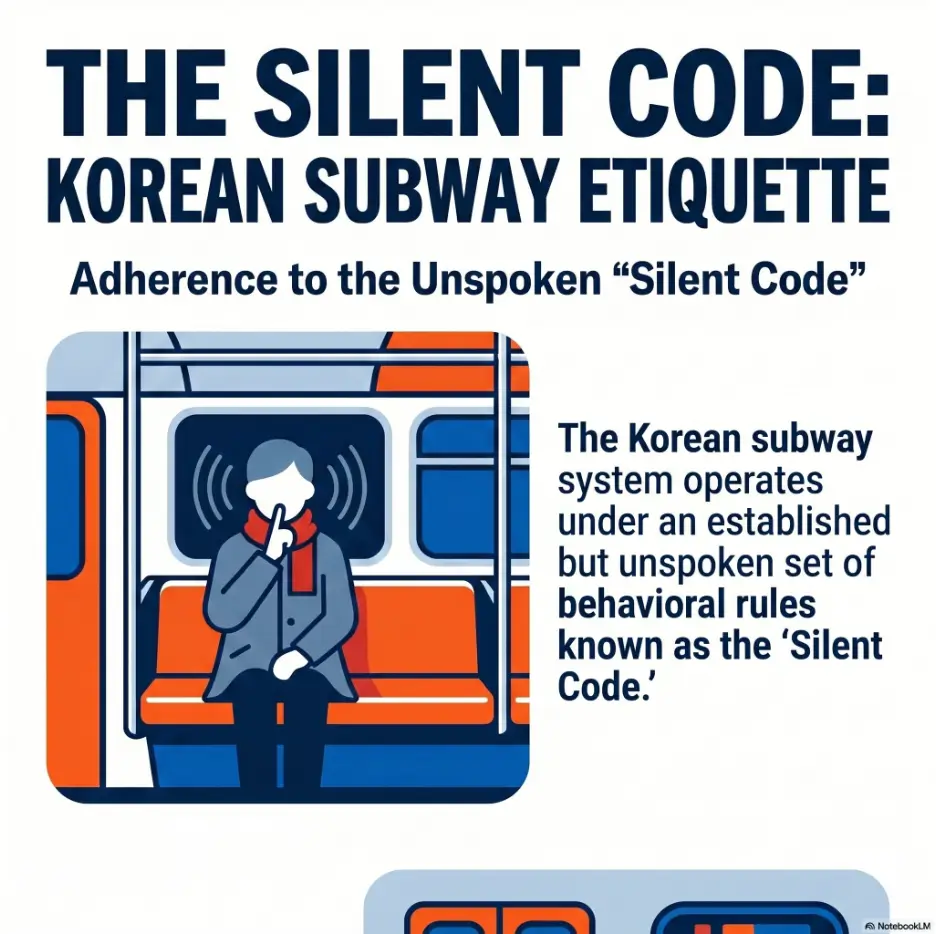
Priority Seats Are Not Just Seats
On a Korean subway, priority seats are easy to spot once you know what to look for. They are usually placed at the ends of the car, near the doors or connecting areas, and marked with signs for older adults, passengers with disabilities, pregnant passengers, injured passengers, or people who need extra physical support.
The harder part is not finding the seats. It is understanding the silence around them.
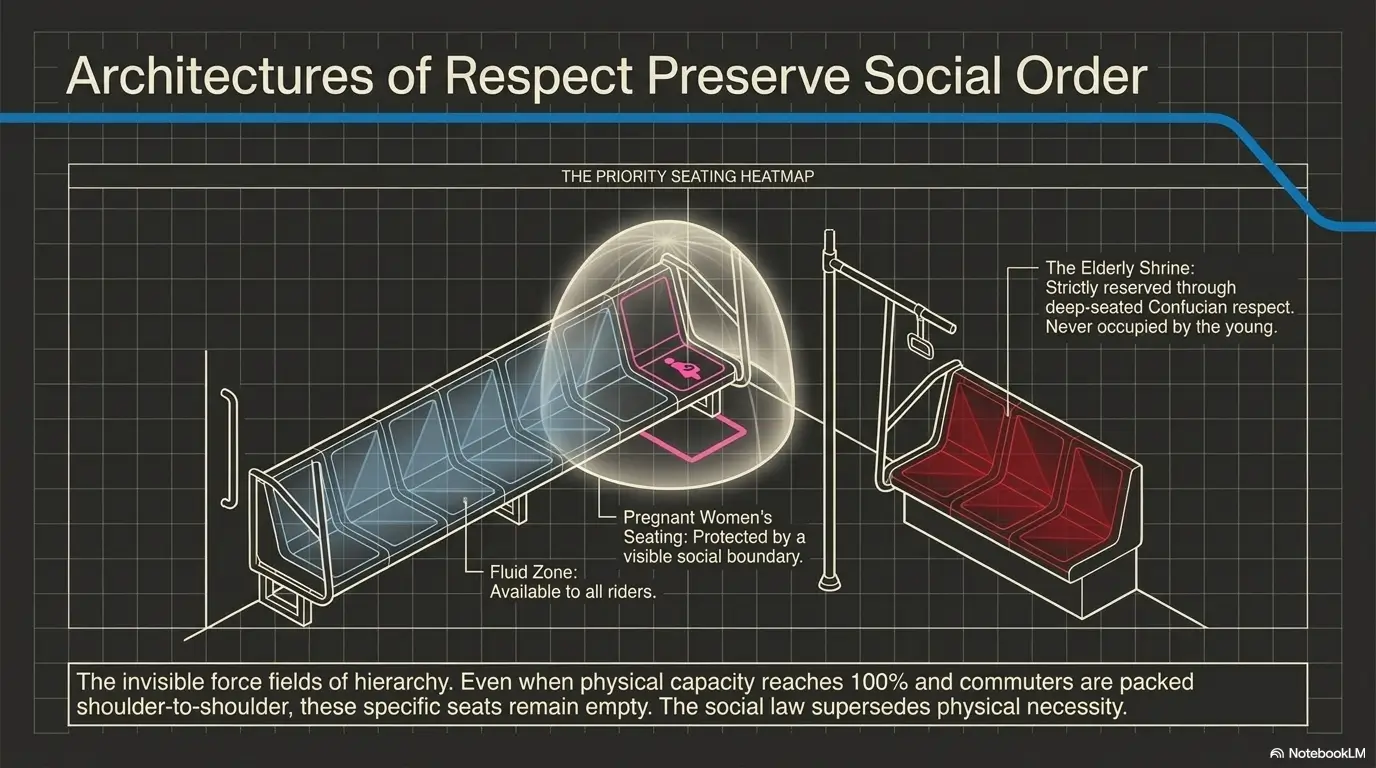
In Seoul, Busan, Daegu, and other Korean transit systems, an empty priority seat may remain empty even during a busy ride. To visitors from the United States, Canada, Australia, or the United Kingdom, this can feel puzzling. Why leave a perfectly good seat unused when everyone is tired?
Because the seat is doing work even when nobody is sitting in it. It is holding space. It is saying, “Someone who needs this may board soon, and we will not make that person negotiate for dignity.”
The sign carries a social script
In some countries, a sign tells you what the official rule is. In Korea, a sign often does that and more. It points toward a public script: who should sit, who should stand, who should notice, and who should not make others ask.
That script is especially strong around elderly priority seats. Korean culture has long placed weight on age, seniority, and visible respect. The subway may be modern, bright, and ruthlessly efficient, but the social code riding inside it is older than the touchscreen map by the door.
This does not mean every Korean passenger follows the same rule in the same way. Korea is not a museum exhibit. Young riders sit, older riders disagree, people scroll, people sigh, people make exceptions. Still, the safest visitor habit is clear: treat the marked priority zone as reserved unless you genuinely need it.
Why empty does not always mean available
For many travelers, “empty” means “available.” That is a sensible assumption in a cafe, airport gate, hotel lobby, or regular subway seat. Priority seats work differently because their emptiness can be intentional.
Think of it less as a vacant chair and more as a reserved place card at a dinner table. Nobody is sitting there yet, but the seat already belongs to a category of person. Taking it changes the room.
That is why the “but no one needed it” defense often lands poorly. The point is not only whether a senior passenger was standing in front of you at that exact second. The point is whether you understood the shared effort to keep the seat ready.
The furniture is speaking
A regular seat says, “Sit if free.” A priority seat says, “Think first.” That tiny pause is the whole lesson.
If you are new to Korea, you do not need to become a scholar of every transit custom overnight. You only need a few reliable habits. Priority seats are one of those habits, because they are visible, easy to respect, and emotionally louder than they look.
Key takeaway
On Korean subways, an empty elderly priority seat can still be socially reserved. The easiest visitor rule is to leave marked seats open unless you truly need priority seating.
The Elder-Respect Layer Foreigners Often Miss
To understand elderly priority seats in Korea, you need to understand that age is not just a number in many everyday interactions. It can affect language, seating, introductions, workplace relationships, family meals, and even who pours a drink first at dinner.
Foreign visitors do not need to master every part of Korean age culture to ride the subway politely. But recognizing that age carries public meaning helps explain why a small seat choice can feel bigger than expected.
In the United States or the United Kingdom, people often think about disability, injury, pregnancy, or visible frailty first. In Korea, age itself can be a stronger social cue. An older person may not need dramatic assistance to be treated as someone whose comfort matters publicly.
Confucian residue, modern subway pressure
Korean life has changed wildly in just a few generations. Skyscrapers, contactless payments, robot coffee machines, and app-based everything now sit beside older expectations about family, seniority, and social order. The subway car becomes a narrow hallway where these worlds meet.
The result is not a simple old-versus-young story. Many younger Koreans are tired, overworked, and squeezed by the cost of life. Many older Koreans remember harder decades and expect visible respect. Everyone is carrying something.
The priority seat becomes one of the places where those pressures quietly gather. A visitor who sits there may not intend disrespect, but the gesture can still be read through a Korean lens.
Age is socially visible before need is spoken
In some transit cultures, the question is, “Does this person seem physically unable to stand?” In Korea, the question often starts earlier: “Is this person older, and should they be spared the need to ask?”
That difference matters. A senior passenger may not limp, use a cane, or look fragile. Still, many riders will expect the priority area to remain open for them.
This is also why a young, healthy-looking visitor sitting in the priority zone can attract attention even before an older rider boards. The seat is not only about visible need. It is about public readiness.
The quiet rule behind the loud sign
Korean subway etiquette often rewards the person who prevents friction before it appears. Move your bag before someone asks. Lower your voice before someone glares. Stand aside before boarding passengers flood out. Leave the priority seat open before someone needs it.
That preventive style may feel unfamiliar if you come from a more direct culture where people are expected to speak up. In Korea, waiting for someone to ask can already feel like you missed the first note.
Key takeaway
The Korean priority-seat norm is partly about need, but it is also about age respect and preventing discomfort before anyone has to request help.
The “Just Move Later” Mistake
The most common foreigner logic sounds reasonable: “I will sit now and move if someone needs the seat.” This is not evil. It is not even lazy. It is a rule many transit riders learn at home.
In Korea, though, this logic can fail because the awkwardness may begin before anyone asks. The very act of occupying the marked seat can force others to decide whether to approach you, stare at you, ignore you, judge you, or stand nearby in discomfort.
That is a lot of emotional paperwork for one plastic seat.
Why waiting to be asked can look rude
In a direct communication culture, waiting to be asked can seem fair. Nobody has requested the seat, so no problem exists yet. In a more indirect public setting, the need to ask can be the problem.
An older passenger may not want to confront a stranger. A pregnant passenger may not want to announce their condition. A person with an invisible disability may not want to explain their body on a Tuesday morning train. So the ideal etiquette is not “move when challenged.” It is “do not make the challenge necessary.”
This is where visitors can accidentally seem less considerate than they are. They may be fully willing to move, but their willingness is invisible until after someone else experiences discomfort.
Do not make eye contact math your strategy
Some travelers try to solve the situation by scanning the car. No older riders nearby? Sit. Someone older boards? Move. In theory, this is efficient. In practice, it can look like nervous courtroom behavior.
You may find yourself calculating age, disability, pregnancy, distance, crowd density, and whether that person is walking toward your seat or merely toward the door. Meanwhile, everyone else sees a foreigner sitting in the marked area and looking around like a squirrel with a spreadsheet.
There is a calmer way. Avoid the marked seat. Let the math retire.
The better move is boring
Good public etiquette is often beautifully boring. You stand near the door without blocking it. You keep your bag close. You lower your voice. You leave marked seats alone. Nobody applauds. Nobody scolds. The ride simply works.
That is the goal. Not to perform Korean manners like a stage act, but to remove yourself from the category of “person causing avoidable friction.”
Mistake checklist: avoid these priority-seat traps
- Sitting because the train car is mostly empty.
- Assuming you can judge who needs the seat by appearance alone.
- Wearing noise-canceling headphones and missing social cues.
- Waiting for a passenger to ask you directly.
- Explaining your home-country transit habits during a tense moment.
- Thinking a short ride makes the seat choice invisible.
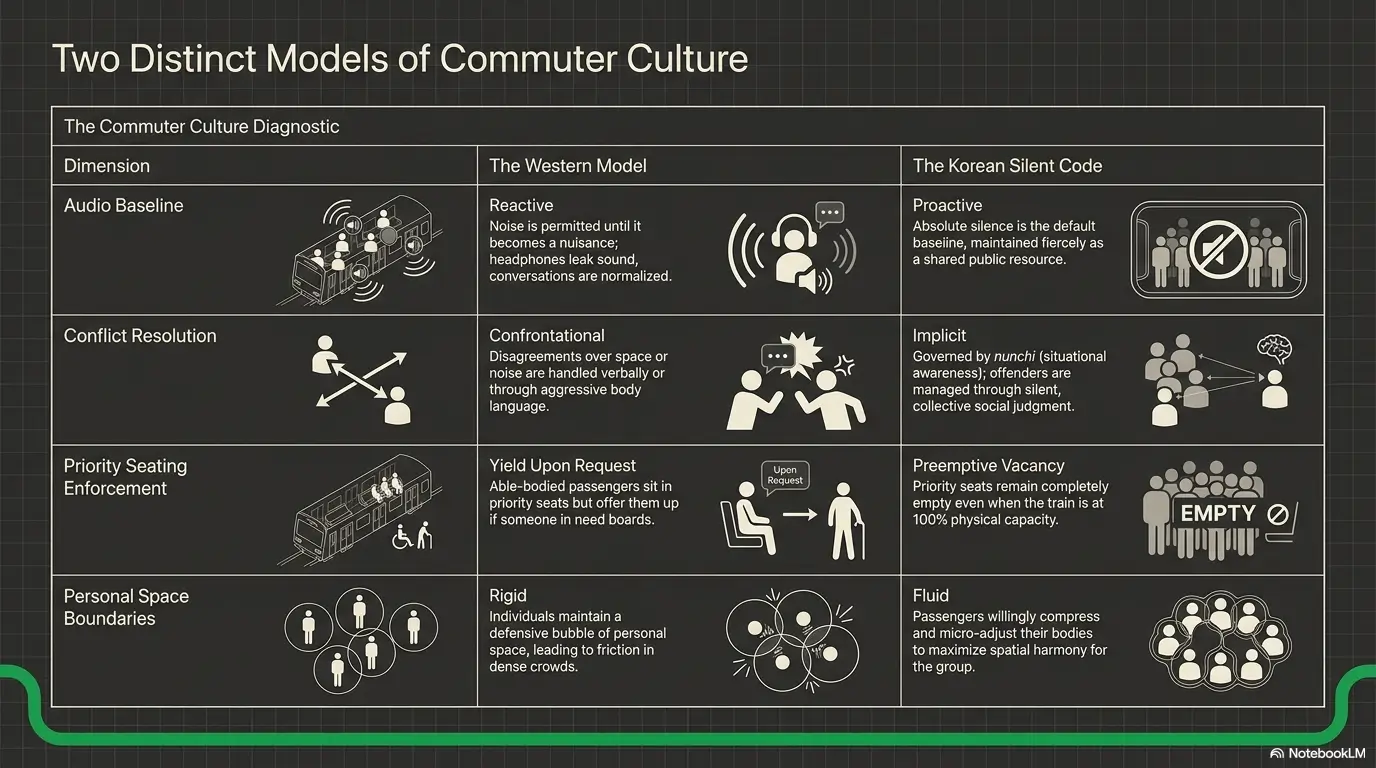
Priority Seating Is Also About Public Harmony
Korean subway manners are not only about rules. They are about keeping the ride smooth for a large number of strangers who will never know each other’s names.
That is why small actions matter. A backpack worn on the back during rush hour becomes a blunt instrument. A loud phone call becomes a weather system. A person standing in front of the door before others exit becomes a human cork. A young visitor sitting in an elderly priority seat can become a public question mark.
The train car is not private space. It is shared air.
Low-friction behavior wins
On Korean transit, the most fluent person is often the least noticeable person. They stand on the correct side of the escalator when local flow demands it. They move deeper into the car. They do not eat fragrant food. They keep calls short or avoid them. They let people exit first.
Priority seating belongs in that same family of habits. It is not glamorous. It is not complicated. It simply tells other passengers, “I know my comfort is not the only thing in the car.”
This matters even more during crowded hours, when everyone is tired and patience is thin. Rush-hour Seoul can feel like a city poured into a narrow metal tube. At that point, courtesy stops being decoration and becomes machinery.
The seat choice becomes everyone’s business
In a crowded subway car, people notice everything without appearing to notice anything. A glance at the reflection in the window. A tiny shift of the shoulder. A silence that thickens near the door.
If you sit in a marked priority seat, the choice is visible from several angles. You may think you are minding your own business. Others may feel your business has entered the public square.
That does not mean people are cruel. It means the space is communal. A train car is one of the last places where strangers still negotiate manners in real time, without profiles, ratings, or comment sections. The body votes first.
Tiny action, big signal
Leaving a priority seat open may seem like a small thing. But travel is built from small things. Where you stand, how you pay, when you speak, how you queue, whether you notice the elderly passenger boarding behind you.
Each small action tells locals whether you are reading the place as a guest or treating it as a backdrop. Korea rewards the first approach. So does almost everywhere, honestly.
Key takeaway
Korean subway etiquette is often about reducing friction before it appears. Leaving priority seats open helps the train car stay orderly, respectful, and emotionally quiet.
If you want a broader transit manners refresher before your trip, the official Seoul tourism guide is a useful place to start.
Pregnant Seats, Elderly Seats, And The Color-Code Trap
Not all marked seats in Korea carry the exact same meaning, and this is where visitors can get tangled. Elderly priority seats, disability-accessible areas, wheelchair spaces, and pregnancy seats may be marked differently. Some are at the end of the car. Some are pink. Some are near doors. Some have floor markings or signs above them.
The safe strategy is not to memorize every design variation in the country. The safe strategy is to treat marked seating as a high-attention zone.
If a seat looks specially designated, pause before using it. If the sign or color tells you it is for a specific group, leave it open unless you belong to that group or genuinely need accommodation.
Pink seats are a separate etiquette puzzle
Seoul’s pregnancy seats are often bright pink or clearly marked with pregnancy-related symbols. They were designed to make it easier for pregnant passengers to sit without having to announce themselves. That matters because early pregnancy may not be visible, and many pregnant riders do not want to ask a stranger to move.
For visitors, the rule is simple: do not sit in a pregnancy seat unless you are pregnant or have a genuine need that makes standing unsafe. Even then, be aware that the seat has a specific purpose and may attract attention.
The pink seat is not a cute design choice. It is a public health and courtesy tool wrapped in color.
Elderly priority seats often live at the car ends
On many Korean subway cars, priority seats for elderly passengers and people with disabilities are located at both ends of the car. That placement makes them easy to find and, in a way, easy to avoid.
When you enter a train, glance toward the ends. If you see marked seats, mentally label that area as reserved. Choose a regular seat in the middle section, stand near a pole, or move deeper into the car.
This one-second scan prevents most confusion. It is the travel equivalent of checking which side of the road cars drive on before crossing.
Accessibility spaces are not standing lounges
Some subway cars include spaces intended for wheelchairs, strollers, or passengers with mobility devices. Do not fill these spaces with luggage if you can avoid it. A suitcase parked in the wrong place can become a wall.
If you travel with bags, keep them close to your body, between your feet, or in a way that can move quickly. Korea’s subways are efficient because people cooperate in tiny, practical ways. Your luggage should cooperate too.
Marked seat comparison table
| Seat or area | Common cue | Visitor rule |
|---|---|---|
| Elderly priority seat | Marked signs, often at car ends | Leave open unless you need priority seating. |
| Pregnancy seat | Often pink with pregnancy symbols | Do not use unless pregnant or truly unable to stand safely. |
| Wheelchair or mobility space | Open area, floor or wall markings | Keep luggage and bodies movable. |
| Regular seat | No special marking | Use when free, but offer it to someone who needs it. |
What To Do Instead On Korean Subways
The best Korea subway etiquette is not a thick rulebook. It is a short sequence of practical choices you can repeat until they become automatic.
Enter. Let people out first. Move away from the doorway. Scan for marked seats. Avoid them. Hold your bag close. Keep your voice low. Offer regular seats when someone clearly needs one.
That is the whole song, and it fits in your pocket.
Stand by default during crowded hours
During rush hour, standing is often the least stressful choice. You do not have to monitor the door constantly. You do not have to guess who needs what. You simply become part of the standing crowd.
This is especially useful for first-time visitors who are already juggling station names, transfer lines, navigation apps, payment cards, and the quiet panic of “Was that my stop?” Removing the seating question frees up brain space.
If you are carrying luggage, try to stand near the side without blocking the door. If the car is packed, take off your backpack and hold it low. A backpack at face height during rush hour is not a bag. It is a rotating insult with zippers.
Use regular seats when clearly available
You do not have to stand for your entire trip in Korea. Regular seats are perfectly fine when they are available. The key is to stay awake to the room.
If an older passenger boards and stands near you, offer your regular seat. If someone is carrying a baby, struggling with a cane, visibly injured, pregnant, or having a hard time balancing, offer the seat. You do not need a speech. A small gesture toward the seat usually works.
When in doubt, err on the side of generosity. If the person declines, simply sit back down or remain standing. No drama, no bowing opera, no apology monologue.
Move before being asked
The smoothest etiquette happens early. If you notice someone who may need your regular seat, stand before they ask. This is not only polite; it also avoids the awkward performance of negotiation.
A useful phrase is not always necessary, but if you want one, you can simply say “앉으세요” in Korean, which means “Please sit.” If pronunciation makes you nervous, gesture with your hand and step aside. The body speaks enough.
Travel manners do not need perfect language. They need good timing.
Keep your voice low while you do it
Seat etiquette is only one part of the subway code. Loud conversation, speakerphone calls, eating, blocking the door, and leaning heavily into other passengers can draw attention even if your seating choice is perfect.
If you are traveling with friends, lower the volume. If you are using directions, check the map without stopping in the doorway. If you miss your stop, do not panic. Korean subway systems are forgiving. The next station is usually not the edge of the known universe.
First-ride priority-seat checklist
- Before boarding, stand to the side and let passengers exit first.
- After entering, move inward instead of stopping at the door.
- Look for marked seats at the ends of the car.
- Avoid elderly priority seats, pregnancy seats, and mobility spaces.
- Use regular seats only when clearly available.
- Offer your regular seat early if someone appears to need it.
- Keep bags low and voices quiet.
For route planning and calmer transfers, it may also help to read a practical guide to Korea bus arrival apps, since many visitors combine subway rides with short bus trips.
Mistakes Foreign Visitors Make Without Realizing It
Most priority-seat mistakes come from good-faith confusion, not bad manners. Visitors bring habits from home. Korea quietly asks for different ones. The gap between those two things is where embarrassment grows little teeth.
The good news is that these mistakes are easy to avoid once you can name them.
Sitting because “no one is using it”
This is the classic error. The train is not crowded. The seat is empty. Your legs are tired. You sit. Then the car fills up faster than expected, and suddenly your choice has a spotlight on it.
The fix is simple: do not treat priority seats as temporary seats. Treat them as ready seats. Ready for the next older passenger, pregnant passenger, injured rider, or person with a disability who boards.
This habit is especially useful at transfer-heavy stations where the crowd can change completely in one stop. A calm empty carriage can become a shoulder-to-shoulder puzzle in ninety seconds.
Wearing headphones and missing the moment
Noise-canceling headphones are a gift on long flights and a small risk on crowded trains. When you cannot hear station announcements, nearby comments, or the movement of people around you, you may miss the moment when your behavior needs to change.
You do not need to ride in total silence. Just keep enough awareness to notice the car. Lower the volume. Look up at stops. Make space when passengers board.
In Korea, good subway manners often begin with the ancient art of not disappearing completely into your own glowing rectangle.
Assuming you can see every need
Not every disability is visible. Not every pregnancy is visible. Not every injury comes with a cast. Not every exhausted person will explain their medical history to a stranger on Line 2.
This cuts both ways. Do not judge another young-looking person sitting in a marked seat. They may have a reason. Also, do not assume you are safe to sit there because nobody “looks” like they need it.
The cleanest personal rule is to avoid the seat unless you need it. The cleanest social rule is to avoid policing strangers.
Arguing when corrected
Sometimes a passenger may tell you to move. Sometimes the correction may feel blunt. Sometimes you may feel embarrassed, defensive, or unfairly singled out. The train car is not the place to litigate the philosophy of international priority seating.
Stand up. Nod. Move. Let the moment shrink.
Even if you believe you were misunderstood, a quiet response protects your day. The goal is not to win the carriage. The goal is to arrive at your stop with your dignity and everyone else’s knees intact.
Key takeaway
Most mistakes happen because visitors apply home-country logic to Korean public space. The recovery is easy: stand, move, stay calm, and treat the marked zone as reserved next time.
Short Story: The seat that taught the rule
On his third day in Seoul, Daniel boarded the subway after walking from Gyeongbokgung to Insadong. His feet felt like wet paper. At the end of the car, one seat was open, marked clearly, though he did not fully register it.
He sat for two stops. Nobody said anything. Then an older woman boarded, stood near the pole, and looked not at him, but at the sign above his shoulder.
That was enough. Daniel stood, gave a small nod, and moved toward the door. The woman sat. The train returned to its soft mechanical breathing.
Later, he realized the lesson was not “foreigners are watched.” It was gentler than that. Korea had asked him to notice before being asked. The next day, he stood from the beginning, and the ride felt easier.
When To Seek Help Or Stop
This topic is low risk compared with medical, legal, or financial decisions, but real bodies are involved. Standing is polite only when it is safe for you. If you are dizzy, injured, pregnant, disabled, recovering from illness, traveling with a mobility condition, or caring for someone who cannot safely stand, use the support you need.
Etiquette should never turn into self-punishment. Courtesy includes you too.
Safety note
This guide offers general cultural and travel etiquette information. If standing could cause pain, fainting, injury, or unsafe movement, prioritize your health and use available seating. You do not owe strangers private medical details.
Use the seat if you genuinely need it
Some travelers have invisible disabilities. Some have chronic pain. Some are recovering from surgery. Some may look young and healthy while fighting a body that has quietly filed a complaint.
If you need a priority seat, use it. You can carry a medical card, mobility aid, pregnancy badge, or translated note if that helps you feel safer, but you are not required to perform your condition for public approval.
If someone challenges you and you are comfortable responding, a simple phrase such as “I need this seat for health reasons” may help. If you are not comfortable, protect yourself and avoid escalation.
Move away from conflict
If a disagreement becomes tense, do not keep debating in a packed car. Move to another area if possible. Get off at the next stop if you feel unsafe. Ask station staff for help if needed.
Korean subway stations are staffed, signed, and generally well organized. If there is a serious issue, station employees are better equipped to help than random passengers trapped between stops.
For related public-space behavior, you may also find this guide to Korea public smoking rules useful, because it explains how Korean shared spaces often carry rules that visitors may not notice at first glance.
Ask staff, not the crowd
If you are confused about accessibility, elevators, lost items, or transit help, station staff are the right people to ask. Crowded train cars are poor classrooms. Everyone is tired, moving, and short on patience.
For lost belongings, station offices and transit lost-and-found systems can be surprisingly effective. A guide to Korea subway lost and found can save you time if a bag, wallet, or phone takes an unscheduled solo journey.
For official accessibility information, Seoul’s travel guide gives a helpful overview of subway access and priority seating.
A Simple Seat Decision Framework
When you are tired, hungry, and underground in a station with six exits, etiquette needs to be simple. You do not need a thesis. You need a decision framework you can run in three seconds.
Use this: marked, regular, need, offer.
If the seat is marked, avoid it unless you need it. If the seat is regular, you may use it. If you need a seat for health or safety, sit. If someone else appears to need your regular seat more, offer it.
Korea subway seat decision flow
1
Is it marked?
Leave it open unless you genuinely need priority seating.
2
Is it regular?
Use it when free, but stay aware at each stop.
3
Do you need it?
Sit if standing could harm your health or safety.
4
Can you offer?
Stand early for older, pregnant, injured, or struggling riders.
The three-second test
Before sitting, ask three questions:
- Is this seat marked for a special group?
- Do I genuinely need this seat for safety or health?
- Would sitting here make someone else ask for dignity?
If the first answer is yes and the second answer is no, stand. That is the whole decision.
A readiness check for different travelers
Different visitors face different subway problems. A solo backpacker may be worried about luggage. A parent may be balancing a stroller. An exchange student may be trying not to look rude in front of Korean classmates. A remote worker may be commuting daily and slowly learning the rhythm of a city that does not explain itself in footnotes.
Here is a practical map.
Traveler situation map
| Traveler | Main risk | Best habit |
|---|---|---|
| First-time tourist | Misreading marked seats | Stand unless the seat is clearly regular. |
| Exchange student | Repeating a small mistake daily | Learn car-end priority zones in your commute line. |
| Traveler with luggage | Blocking mobility space | Keep bags low, close, and movable. |
| Parent or caregiver | Crowd pressure and balance | Use elevators and quieter cars when possible. |
| Person with invisible disability | Feeling judged while needing support | Sit when needed and carry optional support documentation if useful. |
Show me the nerdy details
Priority seating works because it converts a private judgment into a public default. Instead of making each passenger decide whether someone nearby deserves a seat, the transit system creates a visible reserved category. In Korea, that category interacts with age hierarchy, indirect communication, and public order. This is why “I would have moved if asked” may not fully solve the problem. The system is designed to reduce the need for asking in the first place.
The same logic appears in many Korean public behaviors. People often avoid open confrontation by relying on shared cues: signs, seating zones, queue patterns, formal phrases, and body positioning. Visitors who learn these cues tend to experience Korea as calmer and easier. Visitors who wait for direct correction may feel blindsided, even when locals thought the cue was obvious.
For pregnancy-seat design context, Seoul’s official city site explains how seat changes were intended to support pregnant passengers more clearly.
Key takeaway
Use the four-word rule: marked, regular, need, offer. Avoid marked seats, use regular seats, sit if you need support, and offer your seat early when someone else needs it.
FAQ
Can foreigners sit in elderly priority seats in Korea?
Socially, it is safest not to sit there unless you genuinely need priority seating. Even if the seat is empty, many local riders treat it as reserved space for older adults, passengers with disabilities, pregnant passengers, injured people, or others who need support.
Is it rude to sit in a priority seat if the train is empty?
Many locals still avoid it, especially in Seoul. A nearly empty train lowers the chance of conflict, but the social meaning of the seat does not disappear. Visitors who want the smoothest option should choose a regular seat or stand.
Are Korean subway priority seats only for elderly people?
No. They are generally intended for older adults, passengers with disabilities, pregnant passengers, injured riders, and others who need seating support. The exact signs may vary by system, but the broad idea is courtesy for people with greater need.
What should I do if an older person stands near me?
If you are in a regular seat and can safely stand, offer the seat. A small gesture is enough. If you are in a marked priority seat and do not need it, stand immediately and move away from the seat area.
Are pregnancy seats different from elderly priority seats?
Yes. Pregnancy seats are often separately marked, commonly with pink color and pregnancy symbols. They exist to help pregnant passengers sit without having to ask, especially when pregnancy is not visible.
Will someone actually tell me to move?
Possibly. Some passengers may speak directly, while others may only stare or silently disapprove. The best prevention is to avoid marked seating unless you need it. If corrected, stand calmly and let the moment pass.
What if I have an invisible disability?
Use the seat if you need it. You do not owe strangers a detailed explanation. If it helps you feel more secure, carry a translated note, medical card, or visible support item, but your health comes first.
Do Korean buses have the same priority-seat expectation?
Yes, similar courtesy norms apply on buses, especially around marked seats near the front. If you are unsure, stand or choose an unmarked seat farther back when available.
Key takeaway
The FAQ answer hiding inside almost every scenario is the same: if the seat is specially marked and you do not need it, leave it open.
Your 15-Minute Subway Etiquette Reset
Before your first or next Korean subway ride, give yourself a 15-minute reset. Open your route app. Check your transfer stations. Read the line color and final destination. Then add one cultural note to your mental map: marked seats are not casual backup seats.
When you enter the car, look toward the ends. If you see elderly priority seats, treat that area as reserved. If you see a pink pregnancy seat, leave it open. If you find a regular seat, use it with awareness. If someone needs it more, stand early.
That is enough. You do not need to become perfect. You only need to become observant. Korea often opens itself through these small acts: shoes at the door, quiet voices on the train, careful hands when giving money, a seat left empty for someone who has not boarded yet.
The next time you ride, let the marked seat stay open. Stand beside the door, hold the rail, and watch the city move through the windows. A little discomfort in your legs can buy a lot of ease in the room. That is a fair trade, and a graceful one.
Your next-ride action card
- Find the marked priority zone before sitting.
- Leave elderly and pregnancy seats open unless you need them.
- Use regular seats with awareness.
- Offer your seat before someone has to ask.
- Keep bags low, voices soft, and doorways clear.
Last reviewed: 2026-06