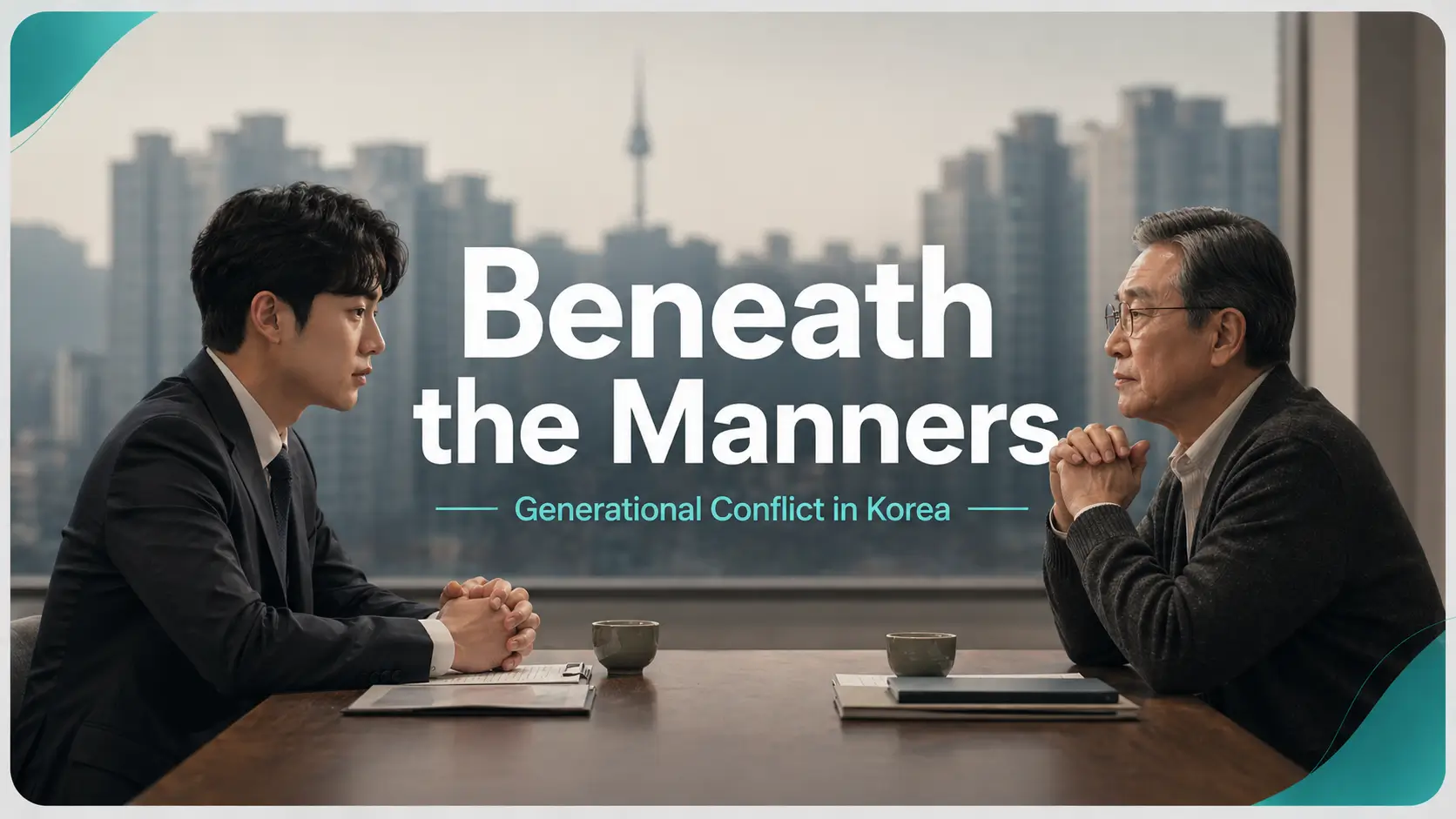
Generational Conflict in Korea
A younger employee skips the expected deference. A parent hears distance in a shorter phone call. A family dinner turns tense over tone, timing, or a single missing honorific.
For Anglo-American readers, generational conflict in Korea can look like a simple clash between tradition and modern independence. But the real pressure often sits underneath the manners: housing costs, job insecurity, elder poverty, family duty, workplace seniority, gender expectations, and the fear of becoming disposable.
It is the tension between older and younger Koreans over respect, hierarchy, work, family obligation, marriage, care, and survival in a society that modernized with extraordinary speed. It often sounds like an argument about etiquette, but it frequently reflects deeper struggles over money, dignity, time, status, and security.
Misread that, and you miss the whole room.
Table of Contents
Start Here: Manners Are the Surface, Scarcity Is the Engine
Korean generational conflict often enters the room wearing very formal shoes.
Someone says a younger worker does not show enough deference. Someone else says an older manager cannot listen. A parent complains that adult children have become selfish. A daughter or son whispers, perhaps not even to friends, that family love feels suspiciously close to a monthly invoice.
The visible words are usually about manners, respect, tone, and duty. The deeper argument is about protection. Who gets time? Who gets space? Who gets forgiven for being tired? Who gets to say, “I can’t live like this,” without being treated as morally defective?
Why “Respect Your Elders” Can Sound Different in Korea
In many Korean settings, respect is not simply a feeling. It has grammar, seating order, drinking etiquette, job titles, family rituals, and even the careful choreography of who pours for whom. To an outsider, this can look theatrical. To many Koreans, it is social traffic control.
I once watched a young office worker at a Seoul restaurant change posture the moment a senior colleague arrived. The shoulders straightened. The laugh got smaller. The sentences became tidier. Nothing dramatic happened, which was exactly the point. The room had rearranged itself without moving furniture.
That is why conflict over manners can feel so charged. When a younger person rejects a form of deference, an older person may hear, “Your life experience no longer counts.” When an older person demands deference, a younger person may hear, “Your exhaustion does not count yet.” For readers new to the cultural wiring, a broader guide to Korean politeness can make these tiny social signals easier to recognize.
When Politeness Becomes a Proxy War for Security
Politeness becomes a proxy war when people cannot safely say the real thing.
A parent may not say, “I am afraid of becoming poor, lonely, and medically fragile.” Instead, they may say, “You never call.” A younger adult may not say, “I cannot afford marriage, children, housing, and your expectations at the same time.” Instead, they may say, “Stop controlling me.”
Neither sentence is the whole truth. Both are smoke from a fire under the floorboards.
The Hidden Question: Who Gets Protected First?
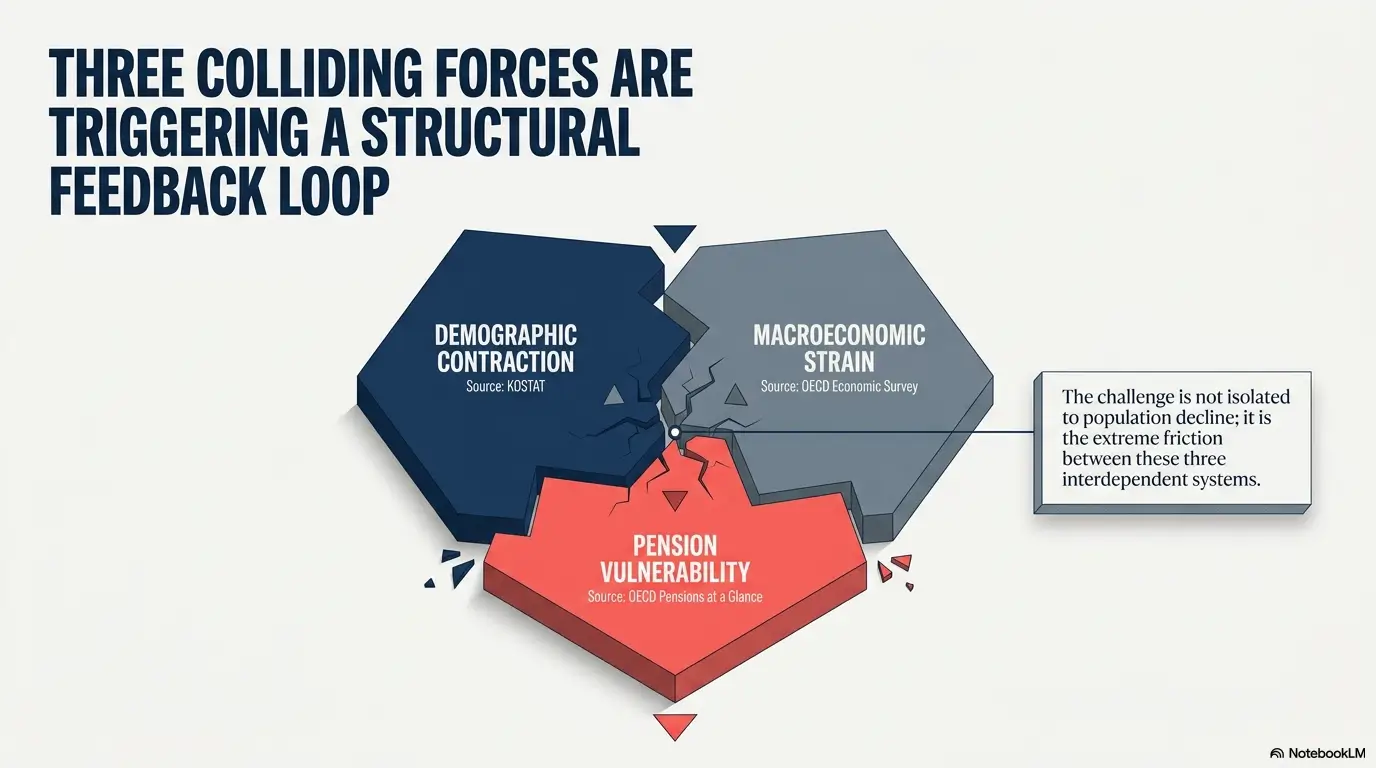
Underneath the argument is a brutal allocation question. In a compressed society with expensive housing, intense education competition, long work hours, low fertility, fast aging, and old-age poverty, “respect” is not always symbolic. Sometimes it is a claim on money, time, emotional labor, or future plans.
- Manners are the visible language.
- Scarcity is often the hidden engine.
- Family, work, housing, and aging pressures all speak through “respect.”
Apply in 60 seconds: The next time you hear a complaint about manners, ask what practical fear might be hiding behind it.
Who This Is For, and Who It Is Not For
This guide is for readers who feel there is more going on than “Korea is hierarchical.” That sentence is not completely useless, but it is too flat. It turns a living society into a museum label, and museum labels are famously bad at explaining why your uncle is angry at dinner.
For Readers Who Sense There Is More Than “Confucian Culture”
Yes, Confucian ideas shaped Korean family and social life. Age, education, ritual, filial duty, and hierarchy have long mattered. But saying “Confucian culture” and stopping there is like explaining a traffic jam by saying, “Cars exist.” True. Not enough.
Modern Korea is also shaped by export-led growth, war memory, apartment wealth, private education, corporate seniority, precarious labor, gendered care expectations, pension gaps, and demographic panic. The old vocabulary remains, but the economic weather has changed.
For Travelers, Expats, Diaspora Families, and Korea-Watchers
This article is especially useful if you are:
- A traveler trying to understand why small etiquette moments feel bigger than expected.
- An expat navigating Korean workplaces or family settings.
- A Korean diaspora reader translating family tension across languages.
- A student or observer trying to connect culture with economic pressure.
- A global workplace reader comparing seniority, age, and performance culture.
Not For Stereotype Shopping or Blaming One Generation
This is not a buffet for lazy stereotypes. We are not here to declare young Koreans spoiled, older Koreans rigid, women selfish, men doomed, parents manipulative, or office seniors tyrants. Real life is inconveniently more textured, which is rude of it, but also useful.
The better question is not, “Which generation is right?” The better question is, “Which survival strategy did each generation inherit, and what happens when that strategy stops working?”
Eligibility Checklist: Is This the Right Lens for What You’re Seeing?
Use the survival lens if you can answer yes to 2 or more:
- Is the argument about manners but the consequences involve money, housing, work, care, or status?
- Does one side mention respect while the other side mentions freedom, exhaustion, or fairness?
- Are family obligations tied to adult children’s income or availability?
- Does workplace seniority affect promotion, overtime, voice, or evaluation?
- Does the conflict become sharper around marriage, children, apartments, or parents’ retirement?
Neutral action: Write the visible complaint in one sentence, then write the material fear beneath it in another.
The Manners Trap: Why Outsiders Misread the Conflict
The manners trap is simple: outsiders notice the ritual and miss the risk.
They see honorifics, bowing, age questions, workplace titles, drinking etiquette, and careful seating. Then they conclude that generational conflict in Korea is mainly about old customs failing to survive modern life. That is partly true, but too tidy. Korea does not run on tidy. No country does, though some pretend better.
Honorifics Are Not Just Grammar
Korean honorifics are often explained as a language feature. They are that, but they are also social positioning software. They can signal age, intimacy, distance, workplace rank, family structure, and emotional temperature.
A sentence can be grammatically correct and socially wrong. That is the part many learners discover with the emotional elegance of stepping into a puddle while wearing socks.
For younger Koreans, honorifics may feel like normal cultural navigation in one setting and like forced submission in another. For older Koreans, relaxed speech may feel friendly in one context and disrespectful in another. The same words can have different weight depending on who paid for dinner, who got hired first, who married whom, and who is expected to apologize. This is why Korean honorifics for foreigners are not just vocabulary work; they are a map of social distance.
Bowing, Seating, Drinking, and Silence Carry Social Math
A bow is not just a bow. A silence is not always silence. Seating order may not look like economics, but it can encode rank, age, hospitality, and obligation.
In older restaurants, family gatherings, company dinners, and ceremonial occasions, manners can function like a map. They tell people where they stand. That map can make social life smoother, but it can also trap people in roles they did not choose.
For a younger worker, pouring drinks for a senior may be harmless courtesy one night and a symbol of power imbalance the next. For an older manager, being openly challenged by a junior employee may feel like healthy debate in a multinational company, but humiliation in a traditional hierarchy.
Don’t Do This: Reduce Everything to “Koreans Are Hierarchical”
“Koreans are hierarchical” is not an explanation. It is a weather report with no map, no umbrella, and no idea where the floodplain is.
Better: ask where hierarchy produces safety and where it produces silence. Ask who benefits from the ritual and who pays for it. Ask whether the conflict is happening in a family, office, school, church, apartment complex, military setting, or online space. Context changes the voltage. Even something as ordinary as Korean seating hierarchy can reveal whether a ritual is smoothing the room or quietly ranking everyone inside it.
Show me the nerdy details
One useful method is to separate symbolic hierarchy from resource hierarchy. Symbolic hierarchy includes titles, speech levels, bowing, and age order. Resource hierarchy includes control over wages, housing help, inheritance, promotion, caregiving, and family approval. Conflict becomes sharper when symbolic hierarchy protects resource control.
Youth Pressure: The Generation Asked to Be Polite While Feeling Cornered
Many younger Koreans are not rejecting respect because they woke up one morning and chose chaos as a lifestyle brand. They are reacting to a life script that asks them to be patient while the price of adulthood keeps moving.
Stable Adulthood Arrives Later, If It Arrives at All
The older script was difficult, but it had a clearer sequence: study hard, enter a stable job, marry, buy or secure housing, raise children, support parents, age into respect. Not everyone achieved it, of course. But the sequence had social authority.
Younger adults often face a more fragile sequence. Credentials are expensive. Good jobs are fiercely contested. Housing can feel unreachable without family help or years of sacrifice. Marriage and childbirth become less like milestones and more like financial negotiations with a very stern spreadsheet.
When a young person delays marriage, avoids childbirth, leaves a company, or refuses a family ritual, older relatives may read it as a values problem. The younger person may experience it as math.
Housing, Jobs, Marriage, and Childbirth Are Linked in One Knot
In Korea, housing is not just shelter. It is status, marriage eligibility, school access, commute logic, parental pride, investment vehicle, and sometimes family scoreboard. That is too much responsibility for concrete, frankly.
Jobs and housing shape marriage. Marriage shapes childbirth. Childbirth reshapes women’s work. Parents’ retirement reshapes adult children’s budgets. One decision pulls five strings.
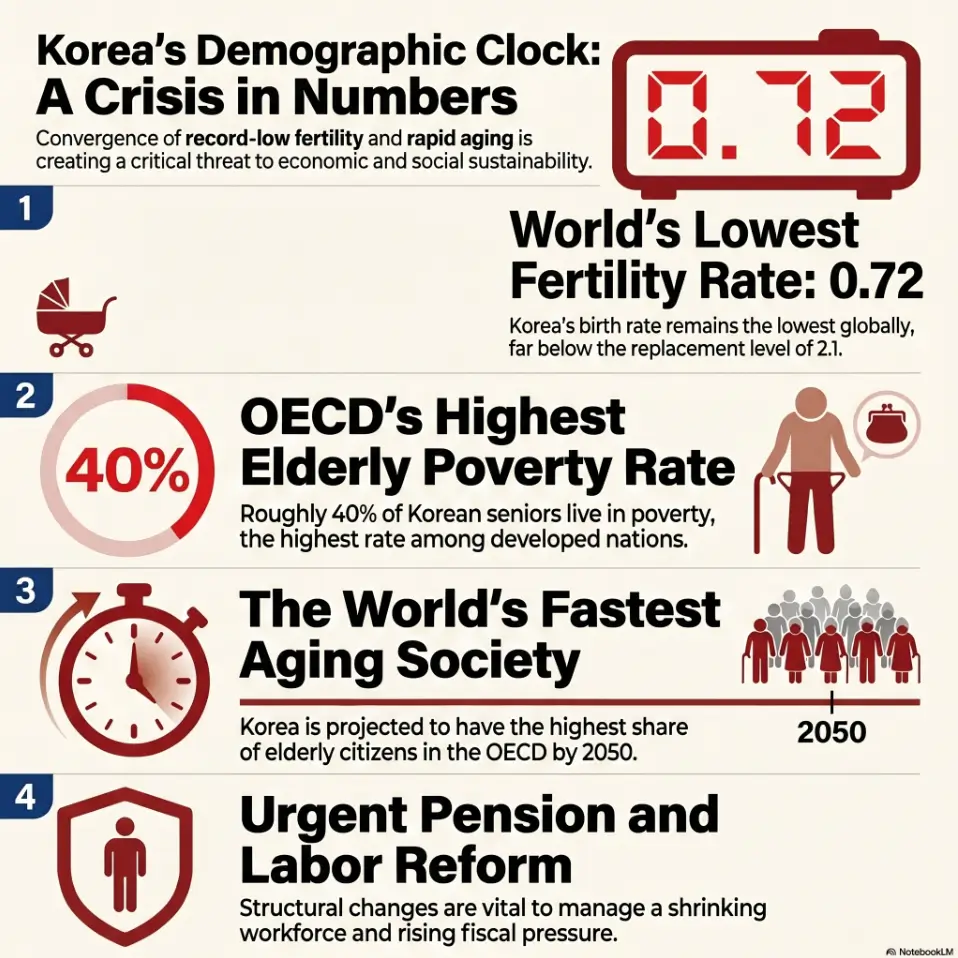
The OECD’s 2024 work on Korea’s population challenge notes that the fertility rate fell to 0.7 in 2023, one of the starkest demographic signals in the world. That number is not just about babies. It is a social pressure gauge. It suggests that many people are looking at the old adult life package and quietly deciding the monthly payment is too high. For a closer look at how that pressure travels through everyday life, see this guide to Korea’s low birth rate effects.
Here’s What No One Tells You: Delay Can Look Like Disrespect
To a parent, delay may feel like refusal. To a child, delay may be the only responsible choice.
A son who cannot afford a wedding apartment may avoid family conversations because every question feels like a bill. A daughter who wants to protect her career may resist motherhood not because she rejects family, but because she has seen what unpaid care does to women’s professional lives. A young worker may leave a rigid company not because endurance has no value, but because burnout does not pay interest.
- Housing pressure changes marriage decisions.
- Job insecurity changes family timing.
- Delayed milestones can be misread as moral failure.
Apply in 60 seconds: Replace “Why won’t they grow up?” with “What would adulthood cost them right now?”
Elder Anxiety: The Generation That Built Korea Still Fears Falling
It is easy to talk about older Koreans as if they are simply guardians of tradition. That misses something crucial: many older Koreans are economically and socially vulnerable, even after living through decades of national growth.
Rapid Aging Changed the Family Contract
Korea aged with astonishing speed. By 2025, government population data reported that more than one-fifth of South Korea’s registered population was aged 65 or older. That is not just a demographic footnote. It changes buses, hospitals, pensions, labor markets, family calendars, and the emotional meaning of being an adult child.
In a slower-aging society, families and institutions have more time to adjust. Korea’s shift has been more like trying to remodel a house while everyone is still eating dinner inside it. The same change is visible outside the family, too, in the benches, clinics, bus stops, and errand routes described in this piece on how Korea’s rapid aging shows up in neighborhoods.
Older Koreans Are Not Automatically Comfortable or Secure
The OECD’s Pensions at a Glance 2025 country note describes Korea’s old-age income situation as unusually difficult compared with many peer countries. It also reports that Korea has one of the highest old-age relative poverty rates in the OECD, with older women facing particular risk.
That changes how “respect” sounds. For some older adults, respect may mean emotional recognition. For others, it may also mean practical help, money, visits, medical navigation, or protection from disappearing into social invisibility.
I have heard older Koreans talk about children with pride, irritation, tenderness, and fear in the same breath. The emotional grammar is dense: “My child is busy” can mean “I am proud,” “I am lonely,” and “I do not know whether I can ask for help.”
Poverty Makes “Respect” Feel Less Symbolic and More Urgent
When older adults fear poverty, respect becomes less decorative. It can become a survival claim.
That does not mean every demand placed on younger family members is fair. It means the demand often comes from a real cliff edge. Older Koreans who sacrificed for children may expect children to remain available. Younger Koreans who are barely stable may feel that expectation as a second rent payment charged in guilt.
Decision Card: When Is It Respect, and When Is It Resource Pressure?
| If the issue is mostly respect | If the issue is resource pressure |
|---|---|
| The conflict centers on tone, ritual, greeting, title, or family recognition. | The conflict requires money, housing help, caregiving, career sacrifice, or repeated availability. |
| A sincere apology or clearer ritual may reduce tension. | Boundaries, budgeting, shared care, or public support may be needed. |
| Time cost may be low but emotional cost is high. | Time, money, and future options are all on the table. |
Neutral action: Before judging either side, identify whether the argument asks for recognition, resources, or both.
Workplaces Become the Battlefield
Korean workplaces often condense generational tension into fluorescent lighting. The office is not just where people earn money. It is where age hierarchy, seniority, performance metrics, global corporate language, and exhaustion sit in the same meeting room pretending to enjoy instant coffee.
Seniority Culture Meets Performance Culture
In seniority-heavy workplaces, age and tenure carry authority. In performance-heavy workplaces, measurable output and speed carry authority. Korea has both systems at once, which can feel like driving with two navigation apps arguing in different accents.
Older workers may believe endurance, loyalty, and hierarchy hold organizations together. Younger workers may believe transparency, efficiency, and merit matter more than face-saving. Neither side is automatically wrong. But when promotion, voice, overtime, and evaluation depend on the answer, the disagreement stops being abstract.
Younger Workers Hear “Endure”; Older Workers Hear “You’re Disposable”
A younger employee may hear, “Just endure,” as a demand to accept unpaid emotional debt. They may wonder why respect flows upward so easily but protection does not always flow downward.
An older employee may hear calls for flexibility as a threat. If the workplace prizes youth, English fluency, digital skill, and speed, older workers may fear being treated as obsolete before they are financially ready to exit.
This is where the generational argument becomes especially cruel. Younger workers want less hierarchy because hierarchy can trap them. Older workers may cling to hierarchy because it is one of the few protections left.
The Office Is Not Just an Office
Workplace culture spills into family life. Long hours delay dating. Job instability delays marriage. Burnout reduces caregiving capacity. Retirement insecurity creates pressure on adult children. A bad workplace can become a third parent, and not the generous kind.
When Korean workers challenge after-hours drinking, rigid reporting lines, or seniority rituals, they are not only asking for nicer office manners. They are asking for a different distribution of life. Even daily routines like Korean office lunch culture can show how hierarchy, belonging, and time pressure gather around one table.
- Seniority can protect some workers and silence others.
- Performance culture can reward skill and intensify disposability.
- Office rituals often carry hidden life costs.
Apply in 60 seconds: Ask whether a workplace custom builds trust, or simply transfers discomfort to the person with less power.
Family Duty: Where Love, Money, and Resentment Share One Table
Korean family conflict can sound unusually intense because family is often asked to do too many jobs at once. It is emotional refuge, retirement plan, education fund, housing bridge, care network, reputation system, and moral courtroom. Even a strong family can creak under that much furniture.
Adult Children Are Expected to Succeed and Stay Available
Many adult children grow up with a clear message: succeed, but do not detach. Earn, but remember who sacrificed. Build your own life, but remain reachable. Move forward, but do not make your parents feel left behind.
That can be loving. It can also be suffocating.
A child may accept parental support for education or housing, then later feel that every major decision arrives with invisible strings. Parents may feel those strings are not strings at all, but proof of relationship. This is where a Western phrase like “boundaries” may sound cold if translated without care.
Parents May Read Independence as Abandonment
For some parents, a child’s independence feels like success until it creates distance. The child moves out, marries differently, works late, visits less, avoids holiday obligations, or refuses to follow the expected care script.
The parent may not say, “I am afraid I no longer matter.” Instead, they may say, “You have changed.” That sentence can land like a small hammer.
I once heard a Korean friend describe family calls as “checking attendance in someone else’s dream.” It was funny for half a second, then not funny at all. It also explains why Korean phone call culture can carry more emotional weight than the length of the call suggests.
Let’s Be Honest: Family Harmony Often Has a Price Tag
Family harmony can require money, time, travel, gifts, housing help, hospital visits, ritual expenses, and emotional editing. Someone pays. Often the person paying is also expected not to mention the receipt.
This does not make family love fake. It makes family love expensive in ways people are trained not to calculate aloud.
Family Conversation Prep List: What to Gather Before the Argument Repeats
- Time: How many hours per week are being requested or assumed?
- Money: Is support occasional, monthly, seasonal, or emergency-based?
- Labor: Who handles hospital visits, paperwork, errands, and emotional mediation?
- Limits: What would cause burnout, debt, job risk, or relationship strain?
- Alternatives: Can siblings, public services, paid care, or community resources share the load?
Neutral action: Turn vague duty into visible tasks before deciding whether the request is fair.
Gender Makes the Conflict Sharper
Generational conflict in Korea is never only about age. Gender often sharpens the blade.
Young women and young men may both feel trapped, but not always by the same door. Older generations may interpret sacrifice as maturity. Younger generations may interpret forced sacrifice as a warning sign with family photos attached.
Young Women Face Career Penalties and Care Expectations
Young Korean women often face a double demand: compete seriously at school and work, then remain available for family and care expectations. Marriage may bring emotional partnership, but it can also bring domestic labor, in-law obligations, childbirth pressure, and career interruption risk.
When women resist marriage or childbirth, some older relatives read it as selfishness. Many younger women read the same decision as self-preservation. The disagreement is not just philosophical. It is about whose time becomes flexible by default.
In many societies, including Korea, care work has a way of finding women even when it did not put the appointment on their calendar. Very clever, care work. Very rude.
Young Men Often Feel Trapped by Provider Pressure
Young men may face another version of pressure. They may be expected to secure stable income, housing, family status, and masculine competence while the economic path becomes narrower. If they cannot perform the provider role, they may feel judged before they can even explain the conditions.
This can create resentment, withdrawal, or anger. Some of that anger gets misdirected. Some becomes online grievance. Some remains quiet and turns into shame.
Older Generations May See Sacrifice as Proof of Character
Many older Koreans survived hardship by enduring. That history matters. But endurance can become a dangerous moral test when conditions change.
If an older woman gave up her own ambitions for family, she may expect younger women to do the same. If an older man carried provider pressure silently, he may expect younger men to bear it without complaint. The problem is not that sacrifice has no value. The problem is that inherited sacrifice can become a script nobody is allowed to revise. That pressure also shows up in dating and marriage expectations, including the family-facing logic behind modern Korean matchmaking.
- Women often face career and care trade-offs.
- Men often face provider and status pressure.
- Older sacrifice can become both wisdom and burden.
Apply in 60 seconds: Ask who is expected to quietly adjust their time, body, money, or ambition.
The Apartment Problem: Why Survival Feels So Spatial
To understand Korean generational conflict, look at apartments.
Not just the towers on the skyline, but the emotional economy around them: school districts, commute times, family pride, marriage negotiations, resale value, parental help, debt, and the silent ranking system that makes private life feel publicly graded.
Housing Turns Private Life Into Public Competition
In Korea, where you live can say more than where you sleep. It can imply family resources, education access, marital prospects, taste, class position, and parental success. A home becomes a biography written in square meters.
Younger adults may see housing as an impossible gate. Older adults may see housing as the reward for decades of sacrifice, or as the asset that must protect retirement. Both views can be true. That is what makes the conflict stubborn.
Neighborhood Status Becomes a Family Report Card
Parents may compare neighborhoods because they believe they are measuring safety and opportunity. Children may experience the same comparison as humiliation. A young couple may delay marriage because the expected housing standard feels unreachable. A parent may interpret the delay as lack of seriousness.
The apartment becomes a moral object. It should not have to carry that much symbolism, but there it is, standing tall and charging maintenance fees.
The Smallest Room in the Debate Is Usually the Most Expensive One
The most expensive room is often not the kitchen or living room. It is the imagined future room: the child’s room, the parent’s room, the study room, the room near a better school, the room that proves a family did everything right.
Housing pressure turns generational conflict spatial. It decides who can marry, who can visit, who can host rituals, who can care for parents, who can have children, and who must commute their life away. For many younger adults, even the question of Korean adults living with parents is not simply cultural preference; it is also housing math with family emotions attached.
Infographic: The Korean “Manners” Argument Iceberg
Honorifics, bowing, tone, titles, seating, drinking etiquette, family greetings.
Seniority, reputation, filial duty, marriage timing, gender roles, workplace obedience.
Housing costs, job instability, elder poverty, pension anxiety, care burden, delayed adulthood.
Who gets protected first when family love, social status, and survival costs collide?
Common Mistakes: What Western Readers Often Get Wrong
Western readers often arrive with two bad tools: romanticism and judgment. One turns Korea into a beautiful tradition machine. The other turns it into a cautionary tale about hierarchy. Both tools break quickly.
Rusty Tool 1: Treating Korean Age Hierarchy as a Museum Piece
Age hierarchy is not just old ritual preserved behind glass. It still appears in workplaces, families, schools, social drinking, language, and daily introductions. But it is also being negotiated, softened, rejected, repackaged, and mocked.
Younger Koreans may use hierarchy strategically. They may respect it in family settings, resist it at work, ignore it among close friends, and joke about it online. Real people are annoyingly inconsistent. That is one way you know they are real. Even the shift from titles to names has its own social weather, which is why Korean titles versus first names can become a surprisingly revealing topic.
Rusty Tool 2: Calling Younger Koreans “Disrespectful” Too Quickly
When younger Koreans push back, they may be rejecting a specific demand, not every form of respect. A daughter who refuses unpaid care may still love her parents. A worker who dislikes forced drinking may still respect colleagues. A son who delays marriage may still value family.
Disobedience is not always disrespect. Sometimes it is the first visible sign that the old bargain has become unaffordable.
Rusty Tool 3: Romanticizing Older Koreans as Only Traditional
Older Koreans are not cultural furniture. They are people with medical bills, housing worries, memories of poverty, pride, grief, stubbornness, humor, and fear. Many helped build the prosperity younger generations now find difficult to enter.
To romanticize them is to erase their present vulnerability. To blame them entirely is to erase the systems that shaped their expectations.
Rusty Tool 4: Ignoring the Economic Panic Under the Etiquette
If you ignore housing, pensions, labor markets, education competition, fertility, and care infrastructure, you will misread the conflict. You will think the argument is about whether someone used the right speech level. Meanwhile, the actual argument is sitting behind the curtain holding a mortgage calculator.
Rusty Tool 5: Assuming Western Individualism Solves Everything
Western individualism can help explain why younger Koreans want autonomy, boundaries, and self-definition. But it is not a magic solvent. Strong individualism can also create loneliness, elder abandonment, weaker care networks, and private stress disguised as freedom.
The goal is not to replace one simplistic script with another. The goal is to understand the trade-offs.
Mini Calculator: The Hidden Cost of “Just Visit More”
Use this quick mental calculator. No storage, no tracking, no guilt confetti.
- Round-trip travel time per visit: ___ hours
- Visits expected per month: ___
- Extra care, errands, or admin per visit: ___ hours
Output: Monthly family-duty time = travel time × visits + extra care hours.
Neutral action: If the number surprises you, the conflict is probably not only emotional. It is logistical.
The Survival Translation: What Each Side May Actually Be Saying
The most useful way to read generational conflict in Korea is to translate the surface sentence into a survival sentence.
This does not excuse bad behavior. It does not make manipulation noble. It does not mean younger people must absorb every demand or older people must disappear politely. It simply makes the real argument visible enough to discuss.
“Be Respectful” May Mean “Do Not Erase What I Survived”
When older Koreans ask for respect, they may be asking for recognition of hardship. Many lived through poverty, national rebuilding, intense work demands, limited welfare, and family sacrifice. Respect may mean, “Do not treat my endurance as foolish just because the world changed.”
That sentence deserves to be heard.
But there is a second part: past endurance cannot automatically become a claim on someone else’s future. The fact that one generation suffered does not mean the next generation must repeat the same structure to prove love.
“I Need Freedom” May Mean “I Cannot Afford Your Script”
When younger Koreans ask for freedom, they may not be rejecting family or culture. They may be saying the inherited script no longer fits the price of rent, job competition, mental health, gender expectations, and delayed stability.
Freedom, in this context, is not always luxurious. Sometimes it is emergency breathing room.
“Times Have Changed” Is Not a Full Argument
“Times have changed” is true, but incomplete. Which times changed? Wages? Housing? pensions? family size? women’s employment? marriage expectations? elder care? company culture? school competition?
A serious conversation names the changed mechanism. Otherwise, “times have changed” becomes a fog machine. Dramatic, but not helpful.
- “Respect” may hide fear of erasure.
- “Freedom” may hide fear of financial collapse.
- “Change” must be tied to a specific pressure.
Apply in 60 seconds: Rewrite one complaint as: “I am afraid that…” and see what becomes clearer.
Short Story: The Dinner Table Where Nobody Mentioned Rent
A friend once described a family dinner in Gwangju where the entire conflict appeared to be about soup. His mother said he barely visited. His father asked whether his company was stable. His aunt asked, with surgical cheerfulness, when he would marry. He answered politely, then badly, then not at all.
Later, outside a convenience store, he told me the real problem was not soup, marriage, or manners. It was rent, debt, and the feeling that every adult milestone came with a hidden entrance fee. His parents, he said, had survived harder things. That made him admire them. It also made him feel unable to confess that his own life was hard in a different currency.
The family argument that night sounded like tone. It was actually about whether love could survive financial embarrassment.
Next Step: Read One Argument Through Two Survival Questions
Here is the practical move: stop asking, “Who is being rude?” first.
Ask the survival questions first. Then return to manners with better eyesight.
Ask What the Younger Person Is Afraid of Losing
A younger person may be afraid of losing time, money, career mobility, mental health, romantic choice, housing stability, or the chance to build a life not entirely pre-approved by family expectation.
This fear can sound defensive. It can sound selfish. Sometimes it is expressed badly. But if you miss the fear, you will only argue with the packaging.
Ask What the Older Person Is Afraid of Becoming
An older person may be afraid of becoming poor, irrelevant, dependent, lonely, medically vulnerable, or forgotten by the children for whom they sacrificed. That fear can sound controlling. It can sound judgmental. Sometimes it becomes unfair.
But again, if you miss the fear, you only argue with the wrapping paper while the actual gift is on fire.
One Concrete Action: Translate the “Manners” Complaint Into a Material Fear
Use this template:
- Surface complaint: “You don’t respect elders anymore.”
- Possible material fear: “I am afraid my age no longer gives me security or recognition.”
- Surface complaint: “You keep controlling my life.”
- Possible material fear: “I am afraid your expectations will make my future unaffordable.”
Interpretation Tier Map: From Shallow Reading to Better Reading
| Tier | Reading | What Changes |
|---|---|---|
| 1 | “They are rude.” | Blame is fast but thin. |
| 2 | “It is Confucian culture.” | History appears, but economics may vanish. |
| 3 | “It is age hierarchy under stress.” | Power and pressure become visible. |
| 4 | “It is survival language.” | Fear, money, care, and dignity enter the frame. |
| 5 | “Both sides need new agreements.” | The conversation can move from accusation to design. |
Neutral action: Aim for Tier 4 before offering opinions in family, workplace, or cultural discussions.
FAQ
Why does Korean generational conflict often involve manners?
Because manners are one of the main languages through which hierarchy, duty, recognition, and social order are expressed. Arguments about bowing, honorifics, tone, or family rituals often carry deeper questions about money, care, work, housing, aging, and who owes what to whom.
Is Korean age hierarchy still important among younger people?
Yes, but unevenly. Younger Koreans may still use age-based language and etiquette in family, school, and workplace settings, while also resisting hierarchy when it feels unfair, inefficient, or emotionally costly. The pattern is not simple rejection. It is selective negotiation.
Why do older Koreans care so much about respect?
For many older Koreans, respect is tied to sacrifice, hardship, family duty, and fear of social erasure. In a rapidly aging society with serious old-age poverty concerns, respect may also feel connected to practical security, not only emotional recognition.
Why are younger Koreans pushing back against traditional expectations?
Many younger Koreans face expensive housing, intense job competition, delayed marriage, low birth expectations, gendered care burdens, and uncertainty about the future. They may push back because the traditional life script feels financially or emotionally impossible, not because they reject every form of family or cultural respect.
How do housing and jobs affect Korean family conflict?
Housing and jobs shape marriage, childbirth, caregiving, parental expectations, social status, and adult independence. When stable work or affordable housing is difficult, family expectations can feel less like guidance and more like pressure without a payment plan.
Is this conflict mostly about Confucianism?
No. Confucian traditions matter, especially around filial duty, age hierarchy, education, and ritual. But modern conflict also reflects labor markets, apartments, pensions, gender roles, private education, demographic aging, and changing ideas of individual autonomy.
Why does workplace seniority create tension in Korea?
Seniority can offer order, loyalty, and protection, but it can also limit voice, slow change, and normalize unpaid emotional labor. Younger workers may see seniority as unfair control, while older workers may see attacks on seniority as threats to their dignity and job security.
How should foreigners discuss Korean generational conflict respectfully?
Avoid turning Korea into a stereotype. Do not reduce everything to hierarchy or tradition. Ask what material pressures are involved: housing, care, wages, pensions, status, gender expectations, and family obligations. Treat both younger and older Koreans as people navigating difficult trade-offs. That respectful approach is also useful when reading wider Korean culture, where visible customs often carry quieter social negotiations beneath them.
Conclusion
The opening clue was manners: bowing, tone, honorifics, workplace obedience, family duty, respect.
But the deeper story is survival. Younger Koreans may be asking for room to build lives under conditions their parents did not face in the same form. Older Koreans may be asking not to be discarded after surviving a century of national compression, family sacrifice, and economic uncertainty.
That does not make every demand fair. It does not make every rebellion wise. It simply gives us a better reading.
The next time Korean generational conflict sounds like a debate about manners, pause before choosing a side. Ask what each person is afraid of losing. Ask what each person is afraid of becoming. Then translate the etiquette complaint into a material fear.
Your 15-minute next step: choose one real argument, from a drama, workplace story, family memory, or news article. Write two sentences: “The younger side may fear losing…” and “The older side may fear becoming…” That tiny exercise will do more than another hot take with expensive shoes.
Last reviewed: 2026-04.