

The Art of Korean Silence
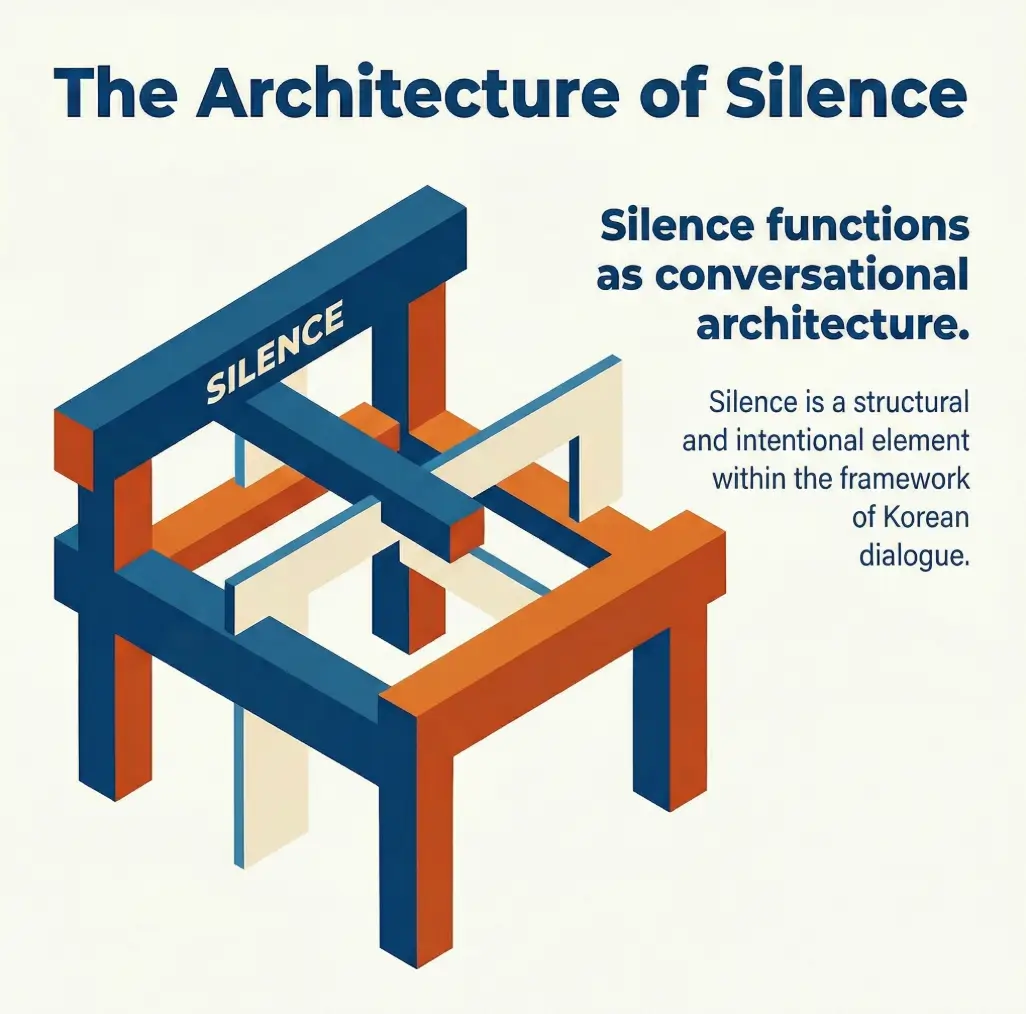
The part that throws many Anglo-American readers off in Korean conversation is not the sentence itself. It is the quiet beat after it. A pause that feels chilly, awkward, or vaguely disastrous in Western small talk can mean something very different in Korea.
That is where people start guessing badly. They overtalk, overexplain, crack a rescue joke, or walk away convinced they were disliked, when the other person may simply have been showing thoughtfulness, respect, or normal social caution.
Keep misreading those moments, and you do not just lose conversational ease. You can misjudge work meetings, dates, friendships, and entire relationships. This post helps you read Korean silence with a steadier lens, so you can stop treating every pause like a social emergency and start noticing what is actually happening underneath the quiet.
Because here is the twist: A quiet moment is not always rejection.
Sometimes it is respect.
Sometimes it is caution.
And sometimes, most beautifully, it is comfort.
Fast Answer: In many Korean contexts, silence is not automatically awkward, unfriendly, or something that must be filled right away. It can signal thoughtfulness, respect, social caution, or comfort with shared presence. By contrast, Western small talk often treats quick verbal warmth as a social lubricant. The real difference is not that one culture “likes talking” and the other “likes silence,” but that silence and speech can carry different social meanings.
Table of Contents
Start Here First, What Silence Is Actually Doing in Korean Conversation
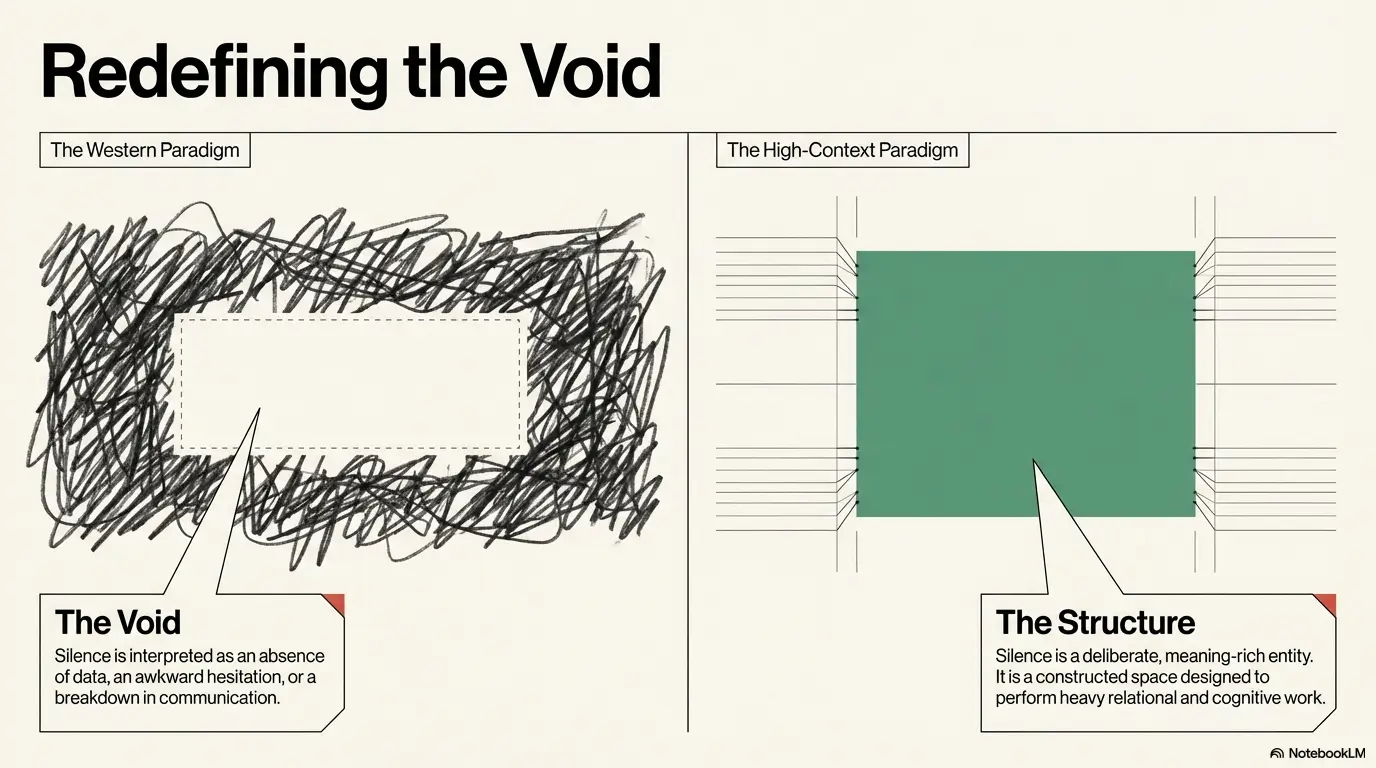
For many English-speaking readers, silence in conversation feels like a dropped plate. Something must have gone wrong. Somebody needs to rescue the moment. But in many Korean interactions, a quiet pause can do social work that words would do in a Western setting. It can mark care. It can show that someone is thinking before speaking. It can signal restraint, which in many situations reads as maturity rather than discomfort.
Why silence can function as respect, not rejection
In Korean social life, conversation is often shaped by role, age, relationship stage, and setting. That means speech is not just about self-expression. It is also about calibration. A pause before answering an elder, a teacher, or a new colleague may reflect respect for the moment. The speaker is not necessarily withdrawing. They may be choosing the least disruptive, least presumptuous way to respond, which is part of the broader logic behind Korean politeness.
I once watched an American friend treat a dinner-table pause like a fire alarm. She jumped in with a joke, a follow-up question, then another joke. The room was polite. It was also visibly tired. Nothing terrible happened, but the energy shifted. She later admitted she had filled the silence because she thought she was helping. In fact, the silence had not needed rescue at all.
How pauses may signal thoughtfulness rather than social failure
In many Korean contexts, answering too fast can sometimes look less impressive than answering well. That does not mean everyone prefers slowness. It means there is often more tolerance for measured timing. A short pause can suggest, “I am considering what fits here,” rather than, “I have nothing to say.”
Why Western readers often misread a quiet moment too quickly
Western small talk, especially in the US, often rewards visible ease. If the exchange flows, everyone relaxes. If there is a gap, people may assume the social engine is stalling. So when a Korean conversation goes still for three or four seconds, a Western reader may interpret the pause through the wrong map. The problem is not the pause itself. The problem is using one cultural measuring tape in another room.
- A pause may show respect, not rejection
- Measured timing can signal care and awareness
- Quick warmth is not the only form of social competence
Apply in 60 seconds: In your next Korean conversation, let the first pause sit one beat longer before deciding what it “means.”
Small Talk Isn’t Universal, Why the Same Pause Feels Different Across Cultures
Small talk is often treated in the West as basic human weather. Universal. Neutral. Just what people do before the real conversation begins. But small talk is not universal. It is a local technology. Different cultures use it differently, value it differently, and place different emotional weight on it.
How Western small talk often rewards ease, speed, and conversational warmth
In the US especially, a smooth stream of light conversation can function as a quick trust signal. You ask where someone is from, comment on the weather, mention the commute, laugh at the coffee situation, and the room begins to feel human again. This style is efficient. It reduces friction. It also makes silence feel heavier, because a silent stretch interrupts the ritual.
Why Korean interaction may place more value on timing, context, and social calibration
Korean conversation can be warm, playful, and highly expressive. But it is often more context-sensitive about when that warmth appears and how quickly it becomes informal. The point is not that Koreans dislike friendliness. It is that friendliness is often adjusted to relationship, hierarchy, and setting more carefully. The result is that silence may appear in places where Western readers expect instant verbal smoothing, much like the patterns discussed in Korean indirect communication.
The same five seconds, two completely different meanings
Imagine a five-second pause after a comment at work. In one context, it may feel like a problem to fix. In another, it may simply be everyone considering the comment before anyone adds noise. Same number of seconds. Entirely different social script.
That is the heart of this topic. We are not comparing talkative people to quiet people. We are comparing systems of meaning. The National Folk Museum of Korea and other Korean cultural institutions often present everyday etiquette as something woven into role and relationship. That framework helps explain why speech can feel more deliberate in some Korean settings. It is not theatrical distance. It is social tuning.
Decision Card: When should you speak, and when should you wait?
- New relationship, senior person, formal setting: wait a touch longer, observe tone, respond with care.
- Close friend, peer group, playful setting: lighter chatter may be more natural.
- Mixed group and unclear status: let the room reveal its rhythm before you perform yours.
Neutral next step: notice which version of warmth the setting rewards.
Don’t Fill the Air Too Fast, The Mistake Many Foreigners Make First
If you grew up treating silence as a mild social failure, your reflex will be to fill it. Fast. With humor, extra explanation, another question, or a topic change. This is probably the single most common mistake foreigners make when talking with Koreans in quieter or more formal settings.
Why overexplaining can feel more uncomfortable than the silence itself
Overexplaining often comes from good intentions. You want to be clear. You want to be friendly. You want to prove you are engaged. But when a pause is functioning normally, too much verbal patchwork can feel like stepping on wet paint. It introduces strain where none existed.
How nervous chatter can accidentally disrupt the rhythm of the exchange
Every culture has a rhythm to turn-taking. Some rhythms feel like jazz. Some feel like chamber music. In some Korean conversations, especially with people you do not know well, turn-taking can feel more measured. If you rush to stuff every gap with language, you may not seem warm. You may seem anxious, inattentive, or oddly self-focused.
I learned this the clumsy way while chatting with a Korean acquaintance after a lecture. I mistook his pause for confusion and began rephrasing my own point in three different ways, each less elegant than the last. He finally smiled and said, kindly, “I understood the first one.” It was a very efficient lesson. My mouth had sprinted ahead of the room.
Let’s be honest… many people talk more only because they fear being judged
This matters because the foreigner is not the only one reading the silence. You are also reading yourself inside it. “Do they think I am boring? Did I say something wrong? Have I become a social houseplant?” Very often, the silence feels unbearable because it activates self-consciousness. Once you see that, the pause gets less scary. It becomes information, not indictment.
Show me the nerdy details
In conversation analysis, pauses are rarely just empty time. They shape turn-taking, emphasis, repair, and face management. When speakers come from different conversational norms, the same pause can trigger different interpretations, which is why intercultural friction often feels emotional before it feels intellectual.
Context Changes Everything, When Silence Feels Normal in Korea
There is no single “Korean silence.” There are many. A quiet pause with your partner does not mean the same thing as a quiet pause with your manager. A silent classroom moment does not carry the same meaning as a quiet subway ride after dinner with friends. Context is the whole machine.
Quiet moments with elders, coworkers, dates, and acquaintances do not mean the same thing
With elders, silence may accompany deference or careful wording. With coworkers, it may reflect room-reading before speaking. With acquaintances, it may signal normal caution while social distance is still being negotiated. With close friends, it may simply mean nobody needs to perform.
Why hierarchy and relationship stage affect how much speech feels appropriate
Korean social interaction has long been influenced by role awareness. That does not mean every Korean person is formal, stiff, or conservative. People are people. Generations differ. Cities differ. Friend groups differ. Still, relationship stage matters. What sounds comfortably candid on the third year of friendship may sound too immediate in the third minute of acquaintance. This is also why learning the basics of Korean honorifics for foreigners can sharpen your ear for when restraint is social intelligence rather than distance.
How group settings often reshape who speaks, when, and how long
In a group, silence may reflect attention to collective flow. Who speaks first can matter. Who is senior can matter. Whether the moment calls for humor, listening, or agreement can matter. A Western reader may think, “Nobody is jumping in.” A Korean participant may think, “We are letting the moment settle.” The same logic often appears in Korean seating hierarchy, where role and order quietly shape behavior before anyone says much at all.
Eligibility Checklist: Is this a situation where you should tolerate more silence?
- Are you speaking with someone older or more senior? Yes/No
- Is this still a new relationship? Yes/No
- Is the setting formal, group-based, or role-sensitive? Yes/No
- Have others in the room already adopted a measured pace? Yes/No
If you answered “yes” to two or more, wait a little longer before filling the silence. Neutral next step: match the room before modifying it.
Who This Is For, and Who May Need a Different Guide
This guide is for readers who want better cultural decoding, not a cartoon. It is especially useful if you are an expat, student, traveler, multicultural partner, foreign employee, or simply someone who keeps leaving Korean conversations wondering, “Was that awkward, or was that normal?”
Best for US readers navigating Korean social life, work culture, dating, or family settings
If your default conversational training comes from an American environment, the gap can feel bigger because US small talk tends to prize quick friendliness, upbeat responsiveness, and verbal reassurance. This article helps translate without romanticizing.
Useful for expats, students, travelers, multicultural couples, and globally minded readers
It is also useful for readers whose Korean is limited. Silence becomes especially hard to interpret when you cannot fully rely on words. In that situation, it is tempting to overread pauses. Cultural understanding helps you avoid turning uncertainty into panic.
Not enough for high-stakes conflict, trauma, or mental-health-related communication struggles
This guide is not a substitute for conflict resolution, counseling, or clinical support. Silence can also signal distress, shutdown, resentment, exhaustion, or fear in any culture. When the stakes are high, do not hide inside “maybe this is cultural” if other warning signs are present. Look at the full pattern. Look at the history. Look at the consequences.
That distinction matters. Good cultural reading should make you less judgmental, not less perceptive.
Quiet Isn’t Empty, What Koreans May Be Listening For Instead
Western readers often focus on content. What was said? How much was said? How quickly did they respond? But in many Korean interactions, the texture around the words can matter just as much. Tone. Timing. Status awareness. Implication. Restraint. These can carry weight that a more speech-heavy culture might spread across extra sentences.
How tone, timing, status, and implication can matter as much as the words themselves
A brief answer delivered with care may do more social work than a long, enthusiastic one that ignores context. This is one reason some foreigners feel they are “doing well” verbally but still not quite landing well relationally. They are listening for lexical content while missing how the social music is being played.
Why restraint may communicate maturity, self-control, or situational awareness
In some settings, restraint reads as emotional steadiness. Not blurting the first thought. Not dominating the room. Not making everything instantly personal. That restraint does not mean there is no feeling. Often there is plenty of feeling. It is simply organized differently.
What goes unnoticed when you focus only on spoken content
You may miss eye contact patterns, who turns toward whom, who follows up later, who remembers your preference, who includes you the next time, who softens their tone, who waits for you to finish. These are not glamorous signals, but they are often more reliable than chatter volume. The same kind of misreading happens when foreigners take Korean personal questions etiquette too literally and miss the relational intent behind the wording.
Think of it this way. A Western reader may count words as proof of warmth. A Korean interaction may distribute warmth through timing, steadiness, and low-drama consideration. Neither system is morally superior. But they do produce different emotional weather.
Infographic: How the same quiet moment can mean different things
Western small-talk lens
- Pause may feel awkward
- Warmth is shown quickly
- Verbal flow reduces tension
- Fast response can signal ease
Korean conversational lens
- Pause may signal thoughtfulness
- Warmth may build more gradually
- Context shapes how much to say
- Measured timing can signal respect
Bottom line: Do not judge the relationship by word count alone. Read the role, the setting, and the follow-through.
- Tone and timing can carry relational meaning
- Restraint may be read as maturity
- Follow-up behavior often reveals more than live banter
Apply in 60 seconds: After your next interaction, ask what the person did, not just what they said.
Here’s the Twist, Silence Can Also Signal Comfort
Foreigners often assume that a quiet interaction means low connection. But sometimes the opposite is true. In many Korean relationships, once a certain ease is established, silence can become less threatening, not more. You do not have to constantly prove that the atmosphere is pleasant. Shared presence can be enough.
Why not needing to perform constant friendliness can reflect relational ease
Some relationships are built through steady reliability, not ongoing sparkle. That can be surprising if your home culture values lively conversational maintenance. You might think, “We barely talked.” The other person may think, “That was comfortable.”
How shared presence can matter more than verbal maintenance
Sitting together, walking together, eating together, studying together, waiting together, these may do relational work even when the conversation is sparse. There is a reason some of the warmest memories people have are almost wordless. A late-night convenience store run. A quiet bus ride. Tea after a long day. The silence is not absence. It is often ease without performance.
Here’s what no one tells you… some of the warmest interactions contain very little talking
That line matters most in friendship and family settings. Sometimes a person who is not especially chatty with you in the moment still remembers your schedule, sends food, checks if you got home, or quietly makes space for you in a group. If you only measure warmth by live conversation, you will miss entire categories of care. This is also why expressions like why Koreans ask if you ate can sound oddly practical to outsiders while carrying real warmth underneath.
A Korean friend once invited me to spend an afternoon at a café while we each worked on our own thing. We spoke perhaps every twenty minutes. By the end, I had learned almost nothing new about his favorite movies, but quite a lot about trust. The day felt companionable, not empty. That was the lesson.
Don’t Assume Rudeness, Common Misreadings That Create Distance Fast
Cross-cultural discomfort often hardens into bad stories. “They must dislike me.” “They are so cold.” “I guess I was too much.” These stories feel persuasive because silence leaves space for projection. But silence is a terrible witness. It says very little by itself.
Why “They must dislike me” is often the wrong first interpretation
Sometimes a reserved response simply means the relationship is still being placed in the right drawer. Not enemy. Not best friend. Not quite known yet. Just not fully mapped. In many Korean settings, people may warm up through consistency rather than instant self-disclosure.
How direct Western friendliness can be welcomed, but still feel intense in some settings
Warmth is not the issue. Volume and timing are. A Western conversational style can be appreciated and still feel slightly fast, slightly personal, or slightly too energetic for the moment. Think espresso in a teacup. Not evil. Just concentrated.
When a reserved response is really caution, not coldness
Caution is common in early-stage relationships everywhere. It simply wears different clothes across cultures. In Korea, that caution may show up as measured speech, narrower self-disclosure, fewer immediate opinions, or quieter feedback. None of this guarantees affection. But neither does it prove dislike.
Quote-Prep List: Before deciding a quiet interaction went badly, gather these clues first.
- Did they stay engaged physically, or drift away?
- Did they answer carefully, even if briefly?
- Did they include you again later?
- Did tone feel neutral, warm, tense, or dismissive?
- Was the setting formal, group-based, or status-sensitive?
Neutral next step: use the whole interaction, not one silent beat, as your evidence.
Korean Silence at Work, Why Meetings and Office Talk Can Feel More Measured
If there is one place Western professionals misread Korean silence most often, it is work. A meeting goes quiet after a proposal. Nobody jumps in instantly. The foreign employee thinks the idea landed badly. In fact, the room may still be processing, ranking risk, reading hierarchy, or waiting for the right person to speak first.
Why speaking quickly is not always seen as speaking wisely
US workplaces often reward visible participation. Korean workplaces can also value participation, but there may be more situational caution around how and when it appears. An immediate response is not always the gold standard. In some meetings, it can be smarter to observe the room for a moment than to treat speed as competence.
How people may wait, watch, and read the room before jumping in
Who introduced the topic? Who carries authority? Is the comment exploratory or final? Does the room expect consensus, dissent, or just information gathering? These variables affect timing. Silence may be a form of collective reading, not passive disengagement.
What Western professionals often mistake for disengagement
A measured room can still be highly engaged. People may follow up afterward, send notes later, or respond indirectly through action rather than live debate. If you came from a culture where real-time verbal energy is treated as proof of investment, this can feel oddly underlit. But attention is not always noisy.
One foreign manager I know spent her first three months in Korea assuming her quieter team members were less prepared. Then she noticed something inconvenient to her theory: the quietest people often sent the strongest written follow-ups within the hour. The silence had not been emptiness. It had been processing.
Show me the nerdy details
Formal workplaces often run on layered communication. People assess hierarchy, group harmony, possible risk, and how public disagreement should be expressed. This does not eliminate disagreement. It changes its timing and packaging.
- Not all engagement is live and verbal
- Room-reading can matter before speaking
- Follow-up actions may reveal the real response
Apply in 60 seconds: After a quiet meeting, wait for written follow-up and later behavior before judging the room.
Korean Silence in Friendship and Dating, Why Chemistry May Sound Quieter Than Expected
Friendship and dating are where many Western readers get most confused, because these are the spaces where they expect verbal sparkle. If the banter is light, the room is calm, and the pauses are longer than usual, they assume the chemistry is weak. Sometimes it is. Sometimes it absolutely is not.
Why a calm interaction does not always mean low interest
Interest can show up as reliability, attentiveness, repeated invitations, practical care, and consistency over time. A quiet date is not automatically a bad date. A low-banter friendship is not automatically a thin friendship. Sometimes calmness means the interaction does not require constant performance to survive.
How comfort can build through pacing, not just banter
For some people, chemistry is verbal tennis. For others, it is pacing. Can you sit together without strain? Can conversation rise and fall without panic? Can nobody talk for a moment without the atmosphere collapsing like a bad camping chair? Those questions matter, especially in cultures where interpersonal ease is not measured only through entertainment value.
When too much small talk starts to feel performative
There is a point where “keeping the conversation going” stops feeling generous and starts feeling like a monologue with decorative questions. In some Korean dating or friendship settings, too much forced chatter can feel less intimate, not more. The exchange becomes visibly managed. Nobody wants to date a podcast host against their will.
Short Story: A foreign student in Seoul told me about a first date that made him deeply uneasy. They walked along the river, got coffee, shared a pastry, and had several long pauses. He went home convinced there had been no spark. Then the other person texted to ask whether he got back safely, remembered a detail about his exam the next week, and suggested a place she thought he would like.
On the second date, the same calm rhythm appeared, but this time he noticed the warmth beneath it. What had felt like awkwardness on date one looked different once he stopped treating silence as failure. The conversation was not empty. It was unhurried. The interest was there. It was simply not wearing a neon jacket.
Common Mistakes, What Not to Do When a Korean Conversation Goes Quiet
Some mistakes are so common they deserve a clean list. Not because rules solve everything, but because a few avoided habits can dramatically improve the feeling of the exchange.
Don’t interrogate the silence by asking if something is wrong too fast
If you ask “Are you okay?” or “Did I say something wrong?” every time a conversation goes quiet, you may introduce alarm into a neutral moment. Save that question for when other signs suggest real tension.
Don’t force humor, speed, or personal disclosure to “save” the moment
Humor is wonderful when the room wants it. Forced humor feels like putting glitter on tax documents. Technically possible. Spiritually unhelpful. The same goes for sudden personal disclosure. Too much intimacy too soon can burden rather than warm the exchange.
Don’t assume your usual social script travels perfectly across cultures
Your instincts were trained somewhere. They are not useless. They are simply local. The more quickly you accept that, the less defensive you become. That is often the turning point. Not “How do I become Korean?” but “How do I stop demanding that every room reward my home script?” In practical terms, that mindset also helps with everyday adjustments in areas like KakaoTalk etiquette and Korean phone call culture, where pacing and expectation can feel unexpectedly different.
Mini Calculator: How much pause tolerance should you try?
Input 1: Relationship stage: new = 2, familiar = 1
Input 2: Formality: formal = 2, casual = 1
Input 3: Group hierarchy present: yes = 2, no = 1
Output: Add your score. A total of 5 to 6 means wait longer before filling silence. A total of 3 to 4 means lighter verbal pacing may be fine.
Neutral next step: test one extra beat of patience instead of improvising harder.
Read the Pattern, Not the Pause
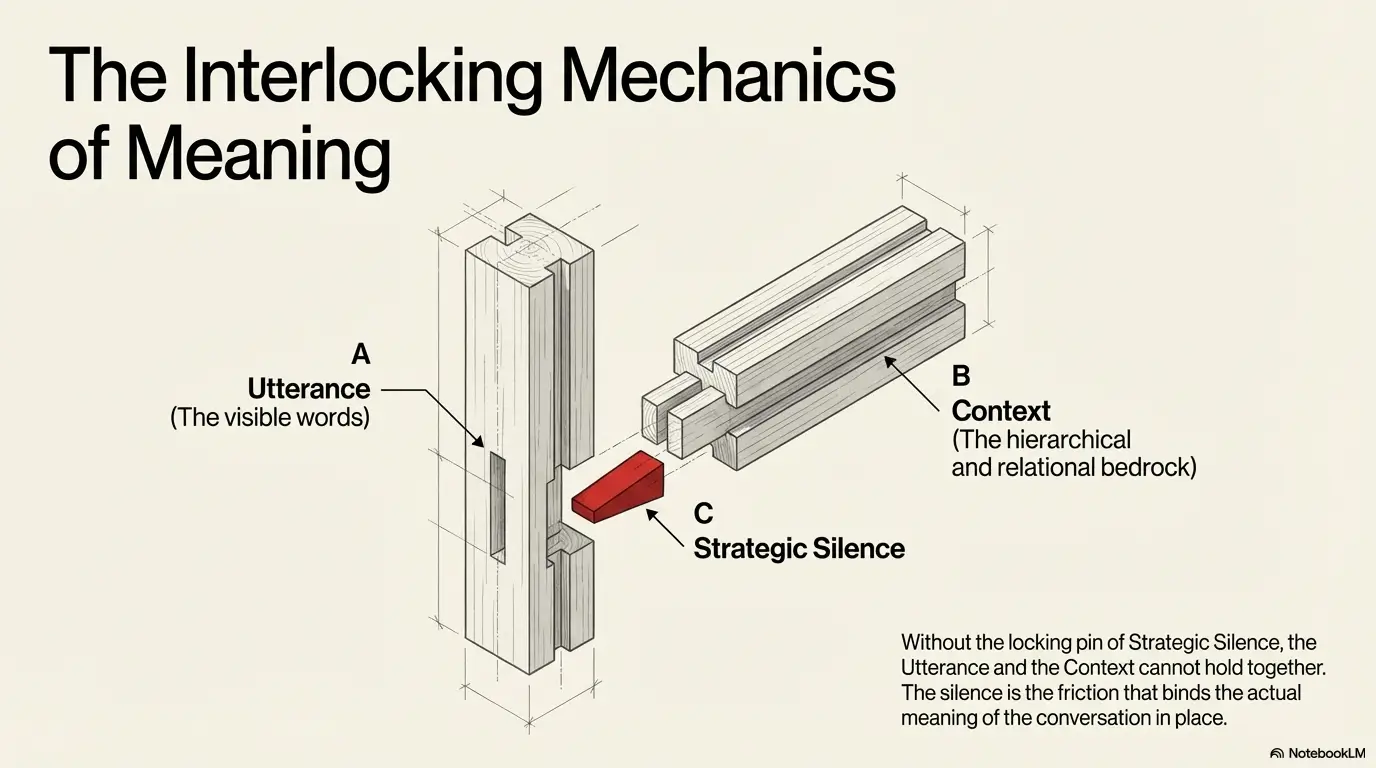
This may be the single most useful principle in the whole article. Read the pattern, not the pause. One quiet moment means very little on its own. The larger pattern tells the truth more reliably.
One quiet beat means very little on its own
Anyone can go quiet because they are tired, distracted, shy, hungry, worried, processing language, or simply not in performance mode. If you zoom in too tightly on a single pause, you will almost always invent more meaning than the moment can support.
Repeated warmth, follow-up, attention, and inclusion matter more than chatter volume
Does the person invite you again? Do they answer messages? Do they remember what matters to you? Do they make room for you in a group? Do they show practical consideration? These are stronger indicators than whether they filled every lull with talk.
Why the broader relational pattern tells the real story
Patterns reveal intention over time. That is why one silent meeting does not prove your idea failed. One calm date does not prove no chemistry. One quiet dinner does not prove people are unhappy. When you look across several interactions, the emotional weather becomes easier to read.
There is freedom in this. You no longer need to solve every silence in real time. You just need to stay observant enough to let the pattern emerge.
- Single moments are easy to misread
- Repeated behavior reveals the real relationship
- Follow-through beats chatter as a trust signal
Apply in 60 seconds: Judge your next interaction only after you have noticed at least three signals, not just one pause.
FAQ
Is silence in Korean conversation considered awkward?
Not automatically. In many Korean contexts, a brief silence can feel normal and even appropriate. Whether it feels awkward depends on the setting, the relationship, and the tone surrounding the pause.
Do Koreans dislike small talk, or just use it differently?
Usually the second. Many Koreans absolutely engage in light conversation, humor, and friendly banter. The difference is that the timing, amount, and purpose of that talk may be shaped more strongly by context and relationship stage.
Does a quiet Korean person mean they are shy or uninterested?
Not necessarily. Quietness can reflect caution, respect, habit, tiredness, comfort, personality, or simply the setting. It is safer to read repeated behavior over time than to assign meaning to one conversation style.
Why do Korean coworkers sometimes pause before answering?
They may be thinking through the answer, reading the room, considering hierarchy, or deciding how direct to be. A pause at work is not always a sign of uncertainty. It may be a sign of social and professional calibration.
Is silence on a date in Korea always a bad sign?
No. A calm date can still contain genuine interest. Look at consistency, follow-up, attentiveness, and whether the other person continues to make time for you. Silence alone is too weak a signal to judge chemistry accurately.
How should foreigners respond when a conversation suddenly becomes quiet?
First, do nothing dramatic. Let the moment breathe. Then look at the full context. If tone remains calm and engagement remains present, the silence may be completely normal. If other signs of discomfort appear, respond gently rather than urgently.
Are younger Koreans more Western in small talk style?
Sometimes, especially in globalized, urban, online, or bilingual environments. But even then, individual personality and context matter. Age can influence style, but it does not erase cultural patterns around timing, hierarchy, and conversational pacing.
What is the difference between respectful silence and uncomfortable silence?
Respectful silence usually feels stable, attentive, and unforced. Uncomfortable silence often comes with visible tension, avoidance, abrupt withdrawal, or repeated breakdowns in engagement. The difference is usually clearer in the full pattern than in one single pause.
Next Step, Try This One Adjustment in Your Very Next Conversation
Let one pause last two seconds longer before rushing to fill it
This is the simplest experiment with the highest return. Two extra seconds is not a lifetime. It only feels like one if your nervous system is narrating aggressively. Let the pause stand. Notice whether the other person continues it comfortably, answers in their own time, or shifts the exchange in a useful direction.
Watch for tone, attention, and follow-up instead of measuring warmth by word count alone
If you make only one upgrade to your conversational instincts, make it this one. Replace “How much did they talk?” with “How did they engage?” That shift alone can save you a great deal of needless confusion in Korean social life.
Treat silence as data, not danger
That is the loop we opened at the start, and this is where it closes. The pause is not always a problem to solve. Often it is simply a different kind of signal. Once you stop treating silence like a verdict, you become much easier to be with across cultures. You listen better. You project less. You stop grabbing the wheel every time the road curves.
In the next 15 minutes, try one tiny pilot step: think of a recent Korean interaction you labeled awkward. Re-read it using the questions from this article. Was the silence tense, or merely unfilled? Was the person cold, or simply measured? Did the broader pattern show care, inclusion, and follow-up? That small review can change the story you tell yourself, which in turn changes how the next conversation unfolds. And if you want to widen that lens further, related topics like Korean apology phrases or how to hand money gifts and business cards politely reveal the same deeper pattern: meaning in Korea often lives as much in timing and form as in the words themselves.
Last reviewed: 2026-03.