
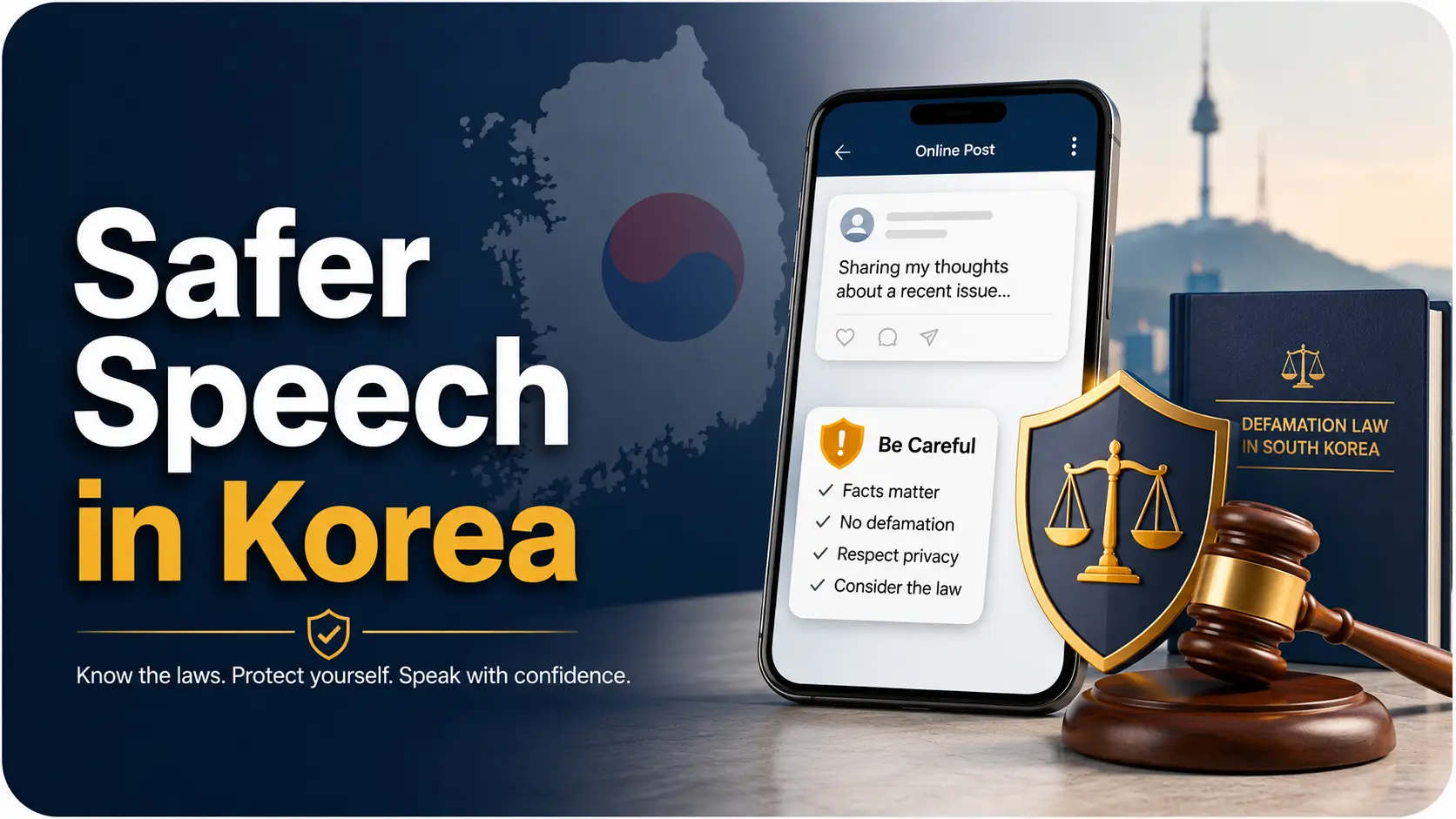
Navigating South Korea’s Defamation Laws: An Expat’s Guide
A foreigner in Korea can write one furious restaurant review, one “warning” post in an expat group, or one late-night hagwon rant and wake up inside a legal weather system they did not know existed. Defamation law in Korea surprises many Americans, Brits, Canadians, Australians, and other visitors because the instinctive defense of “but it was true” may not end the problem.
Modern & Painfully Specific Flashpoints:
Google reviews • Reddit threads • KakaoTalk screenshots • YouTube comments • School complaints • Landlord disputes • Online sellers • Workplace drama • Clinics • Public callouts
The stakes are not just hurt feelings. A public accusation can lead to criminal complaints, civil claims, online takedown pressure, settlement demands, employer stress, and immigration anxiety.
This guide helps you slow the train before it reaches the cliff. You will learn how to document privately, write more safely, avoid common foreigner mistakes, and know when to get Korean legal help.
The internet has a long memory, but the law has a sharper one.
The Safer-Speech Compass for Korea
Use this simple rule: document first, publish last. If your post names or clearly identifies a person, business, school, employer, landlord, clinic, or online seller, treat it as legally sensitive before you treat it as emotionally satisfying.
- Private evidence: contracts, receipts, screenshots, timelines, photos, call logs.
- Neutral wording: what happened, when it happened, what you asked for, what response you received.
- Risky wording: criminal labels, moral labels, insults, speculation, screenshots with identifiers.
- Urgent help: police contact, lawsuit letter, settlement demand, immigration issue, employer pressure.
Table of Contents
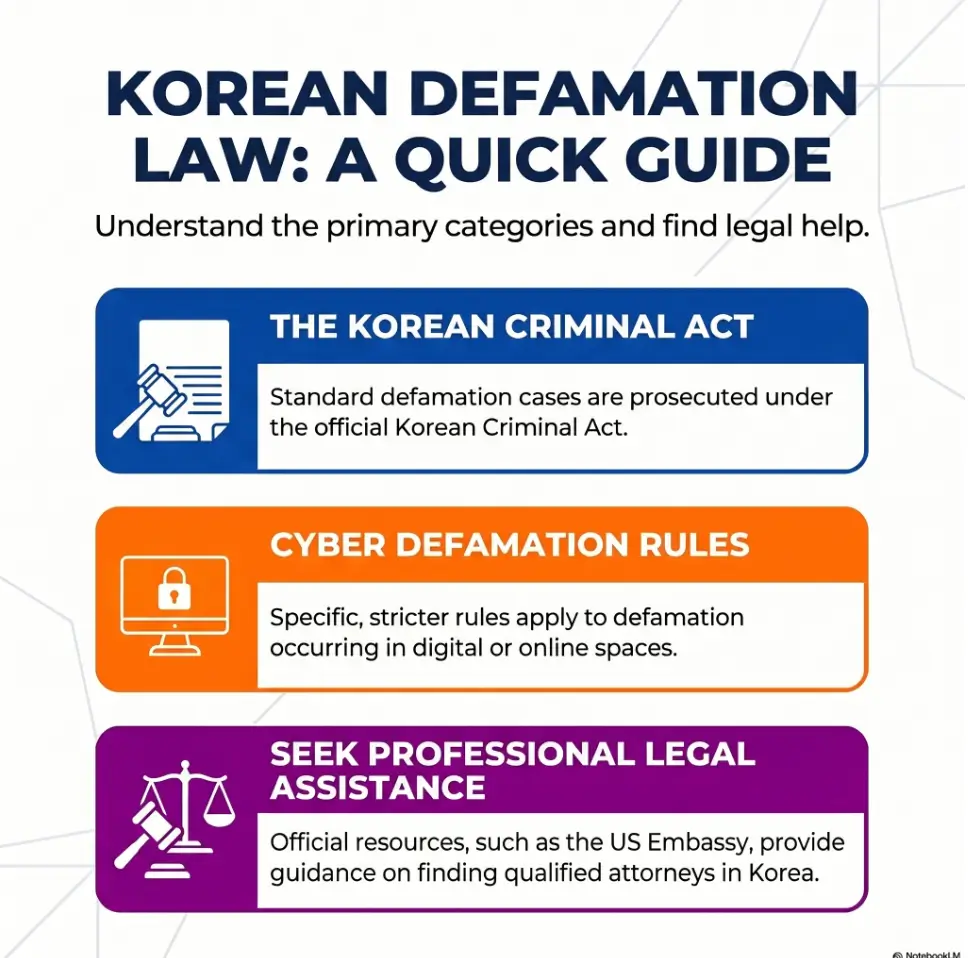
Safety / Disclaimer Block
This article is general legal information for readers comparing speech norms. It is not legal advice and does not create an attorney-client relationship. Korean defamation law is fact-specific, language-sensitive, and procedure-heavy. Anyone facing a police complaint, lawsuit threat, employer dispute, school conflict, immigration concern, platform takedown, or settlement pressure should consult a qualified lawyer in Korea.
One more sober note: translation changes risk. A sentence that sounds casual in English can become harsher in Korean, especially when words imply fraud, criminal conduct, professional dishonesty, sexual misconduct, abuse, corruption, or intentional harm. When the stakes are high, do not let a machine translation app become your tiny pocket lawyer. It is a dictionary with caffeine.
- Truth may matter, but it may not solve everything.
- Public interest and intent can matter a great deal.
- Online speech can carry added legal heat.
Apply in 60 seconds: Before posting, ask: “Could the person or business be identified by this?”
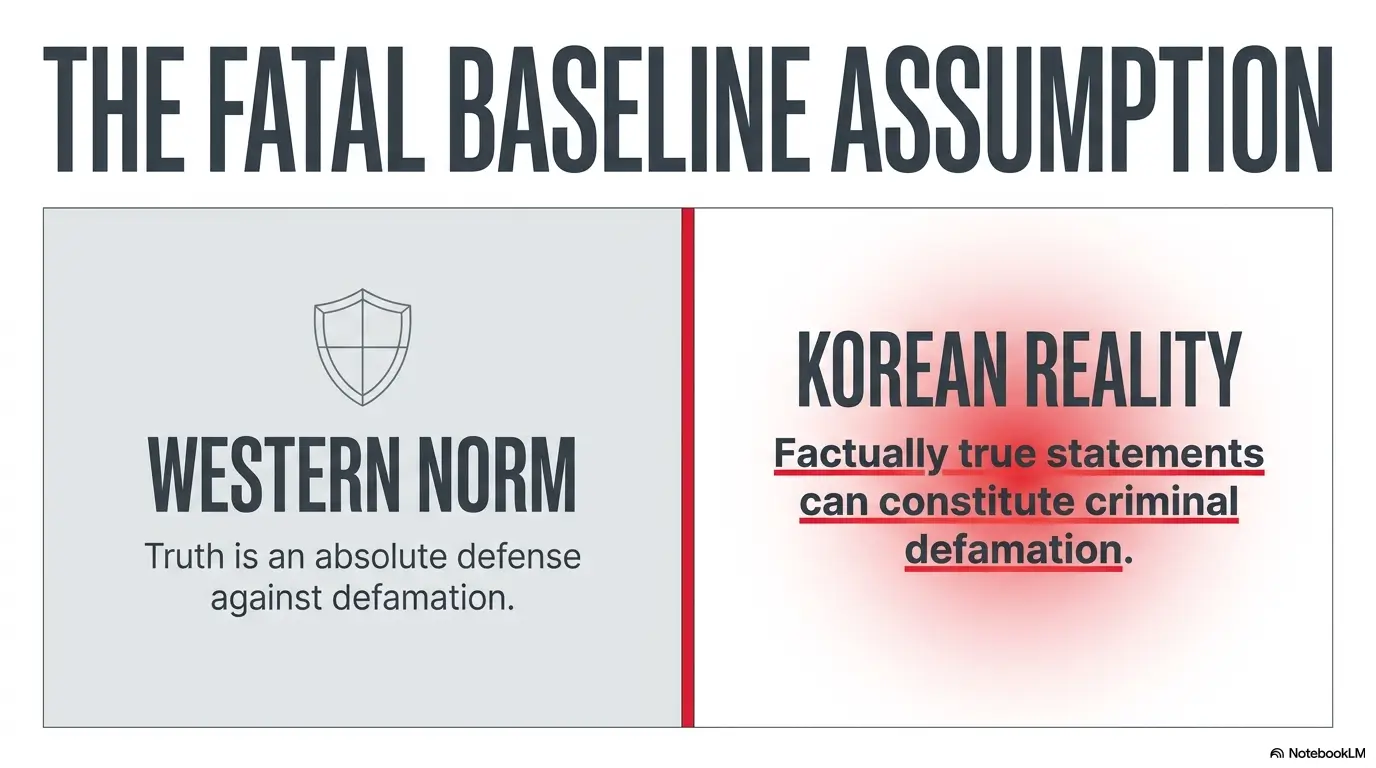
The First Shock: “But It Was True” May Not End the Problem
Why US-style truth defenses can mislead foreigners
Many foreigners arrive in Korea with a speech rule learned at home: if a statement is true, it is usually much safer. That instinct can be especially strong for Americans, who often think in First Amendment shapes even when they are standing in Seoul, Busan, Daegu, Daejeon, Gwangju, or Jeju with a convenience-store coffee in one hand and a grievance in the other.
Korea does not map perfectly onto that expectation. Under Korea’s Criminal Act, publicly alleging facts that damage another person’s reputation can create criminal defamation risk. A separate public-interest idea may matter when true facts are involved, but the mere fact that you can prove something happened does not automatically make every public post safe.
That is the first surprise. The law is not only asking, “Was the statement true?” It may also ask, “Was it public? Was someone identifiable? Did it harm reputation? Was the purpose mainly public interest, or was it closer to punishment, humiliation, revenge, or pressure?”
The Korean reputational-harm lens, explained without legal fog
Think of reputation in Korea less like a casual online score and more like a social asset. A public allegation can affect work, school, family, customers, neighbors, professional licenses, business partners, and social standing. In a country where titles, group belonging, workplace hierarchy, and face-saving can matter deeply, public embarrassment can be legally combustible.
This connects with broader Korean communication patterns. If you are still learning how hierarchy, indirectness, and titles shape daily interactions, guides like Korean politeness in everyday life and Korean titles versus first names can help explain why a public callout may land harder than the speaker intended.
None of this means you must stay silent about real harm. It means the order matters. Evidence first. Private correction first when safe. Professional help when serious. Public posting last, and only with careful wording.
Here’s what no one tells you: motive can become the battlefield
When a conflict escalates, your wording can become a fossil record of your motive. A post that says, “I want to warn others about a billing issue and describe my experience” reads differently from “Destroy this scammer. Everyone report them.” Same facts, different smoke trail.
In the cleanest version, you sound like a careful witness. In the dangerous version, you sound like a prosecutor, judge, and marching band combined.
Money Block: Quick Speech-Risk Checklist
Answer yes or no before posting anything about a Korean person, business, school, clinic, employer, landlord, or seller.
- Can someone identify the target? Name, photo, address, handle, logo, job title, school, building, or nickname?
- Does the post damage reputation? Dishonest, unsafe, abusive, criminal, incompetent, predatory, corrupt?
- Is it public or shareable? Review site, open forum, group chat, social post, video, comment, screenshot?
- Are you using labels instead of facts? “Scammer,” “thief,” “fraud,” “criminal,” “dangerous,” “evil”?
- Have you tried a private correction channel first? Email, receipt dispute, customer service, school office, landlord notice?
Neutral action line: If you answered yes to the first three, save the draft privately and get advice before posting.
Show me the nerdy details
Korean defamation risk often turns on several moving parts at once: public allegation, identifiable target, reputational harm, truth or falsity, online versus offline channel, intent, and public-interest purpose. The result is not a simple “true equals safe” formula. A careful reviewer looks at the whole communication: words used, audience size, timing, evidence, prior dispute history, whether private remedies were attempted, and whether the speaker appeared to inform the public or punish the target.
Who This Is For, And Who Should Slow Down First
For expats, travelers, creators, teachers, students, and business owners
This guide is for people living at the messy intersection of real life and public speech in Korea. That includes English teachers reviewing hagwons, exchange students posting about housing, creators filming service complaints, travelers reviewing restaurants, remote workers discussing coworking disputes, and foreign business owners trying to warn others about vendors.
It is also useful if you are new to Korean admin culture. A public complaint may feel faster than a formal process, but Korea often has structured channels for district offices, public petitions, workplace issues, consumer complaints, and platform reporting. For everyday administrative friction, Korea’s public complaint system for foreigners is often a better first step than a public flame post with confetti and consequences.
Not for people already under investigation without legal counsel
If police have contacted you, a lawyer has sent a demand letter, a platform has removed your post after a complaint, or a person is asking for money to “settle,” stop treating the issue as content editing. You are no longer polishing a sentence. You are managing legal exposure.
Do not post a follow-up thread titled “They’re threatening me now!” without advice. It may feel heroic for about nine minutes. Then it may become Exhibit B.
If your post names someone, this guide matters more than you think
Naming is not only a legal issue. Identification can happen through clues. A school nickname, clinic location, profile image, apartment building, business logo, license plate, phone number, KakaoTalk handle, or screenshot crop that still reveals too much can make the target obvious.
Foreigners sometimes think they are being discreet because they did not write the full legal name. But online communities are little detective villages. Give them three clues and they will bring a lantern.
- Photos, handles, addresses, and job titles can identify someone.
- Small expat communities make indirect clues more revealing.
- Private documentation is safer than public guessing.
Apply in 60 seconds: Remove names, faces, handles, logos, phone numbers, and unique location details from any draft.
The Public-Interest Trap: When “Warning Others” Needs Cleaner Evidence
Why public interest is not the same as personal frustration
“I wanted to warn others” is one of the most common sentences in foreigner disputes. Sometimes it is sincere. Sometimes it is also wrapped around anger, embarrassment, financial stress, or a desire to make the other side feel pressure. Korean law may care about that difference.
Public interest is strongest when the post is narrow, evidence-based, proportionate, and clearly useful to others. It is weaker when the post is broad, insulting, speculative, or designed to punish one identifiable target.
For example, “On March 4, I was charged a cancellation fee not listed in my contract. I requested clarification by email on March 5 and March 8 and have not received a response” is cleaner than “This company steals from foreigners.” The first gives facts. The second swings a sword in a crowded room.
How to frame safety concerns without sounding like a digital bonfire
If the issue involves safety, health, fraud, violence, children, sexual misconduct, medical care, or housing danger, do not rush to post. Serious allegations require cleaner process, not louder adjectives.
Use official channels when possible. In Korea, consumer complaints, local district offices, workplace channels, police reporting, school administration, and legal clinics may all matter depending on the facts. If the issue is administrative, local district offices in Korea may be more practical than a public thread. If it involves Korean office dynamics, Korean business communication norms can help you understand how to escalate without accidentally throwing gasoline on the paper lantern.
The quiet question: are you informing, punishing, or venting?
Before posting, ask yourself the uncomfortable question: would I still write this if I knew the target, a police officer, my employer, a judge, and a translator would read it line by line?
If the answer is no, keep drafting privately. Your future self may send you flowers.
Money Block: Public-Interest Strength Test
| Signal | Stronger | Weaker |
|---|---|---|
| Purpose | Help others understand a documented risk | Punish, shame, pressure, or rally a mob |
| Wording | Specific dates, actions, and outcomes | Criminal labels, insults, and motives you cannot prove |
| Evidence | Receipts, contracts, written requests, photos | Screenshots with missing context or hearsay |
| Scope | Limited to your experience | Broad claims about character or criminal intent |
Neutral action line: If your post is weak on purpose, wording, evidence, or scope, convert it into a private timeline first.
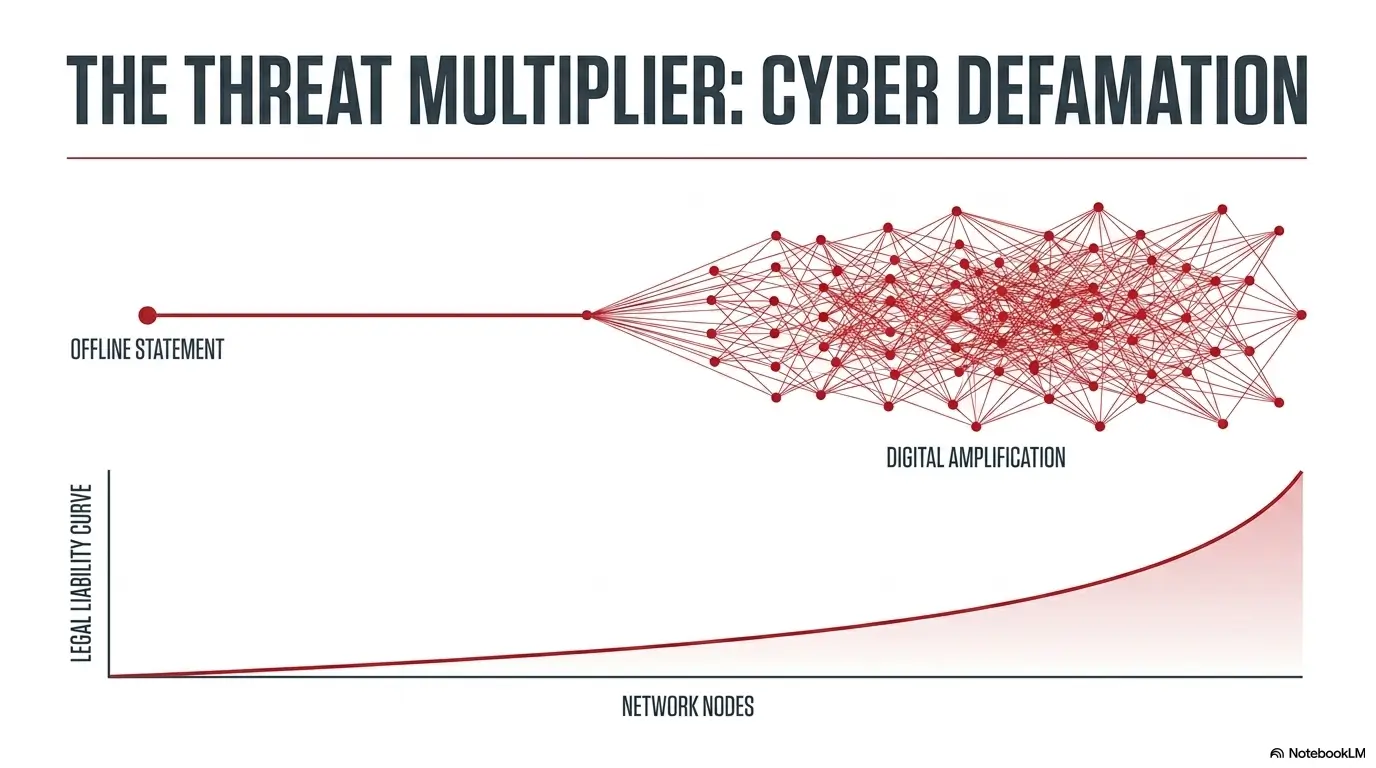
Online Posts Carry Extra Heat Under Korea’s Cyber Defamation Rules
Reviews, forums, Reddit posts, KakaoTalk screenshots, and YouTube comments
Online speech can spread faster, stay longer, and create wider reputational harm. That is why Korea treats information and communications networks seriously. The same emotional sentence can feel more dangerous when it is searchable, shareable, copied, translated, and archived.
Common risk zones include Google reviews, Naver reviews, Reddit posts, Facebook groups, Instagram stories, TikTok videos, YouTube comments, blog posts, Discord servers, open KakaoTalk rooms, and screenshots from private chats that get reposted publicly.
If you are navigating Korean chat etiquette, KakaoTalk etiquette in Korea and Korean group chat culture are useful companions. Group chats can feel casual, but screenshots travel with tiny invisible legs.
Why “small audience” does not always mean “low risk”
A small audience can still be legally meaningful if the message is shared with people who can identify the target. A private chat may feel safer than a public post, but a message sent to a group can be captured, forwarded, translated, or shown to the target.
One foreign teacher once told a small group chat that a school manager was “stealing wages.” The teacher meant “my paycheck is wrong and I’m angry.” The phrase landed much heavier. The screenshot did not care about nuance. Screenshots are little glass coffins for context.
Pattern interrupt: your anonymous account may not be as anonymous as it feels
Anonymous does not always mean unreachable. Platform records, payment records, phone numbers, device details, posting history, profile patterns, language habits, workplace clues, and community gossip can narrow things quickly. Even if no one can identify you immediately, the target may still file a complaint and try to learn who posted.
Safer Speech Flow: From Angry Draft to Lower-Risk Action
Could the target be recognized by name, photo, location, handle, job, or clues?
Save receipts, contracts, timelines, messages, photos, and attempted resolution steps.
Replace labels with facts. Remove speculation, insults, and criminal wording.
For serious claims, legal threats, employment, immigration, housing, or safety issues, pause.
Common Mistakes Foreigners Make Before a Dispute Explodes
Mistake 1: naming the business before asking for correction privately
Public pressure can feel efficient. It also creates a record. If you skipped private correction, the target may argue that your goal was reputational damage, not resolution.
A cleaner path is boring, which is why it works: keep receipts, email the business, state the problem, request a specific fix, set a reasonable deadline, and save the response. Boring is underrated. So are seatbelts.
Mistake 2: posting screenshots with names, faces, phone numbers, or handles
Screenshots feel like proof, but they often reveal too much. Names, profile photos, school logos, store addresses, phone numbers, bank details, IDs, child images, license plates, chat handles, and timestamps can all identify people.
Even blurred screenshots can fail if the blur is weak or the surrounding context is obvious. Do not let a lazy crop become the villain of your week.
Mistake 3: translating anger directly into Korean or English accusations
Words do not travel across languages with identical weight. “Sketchy” in English may become a harsher Korean word. “Fraud” may imply a legal conclusion. “Abuse” may carry serious criminal or workplace implications. “Harassment” may be treated differently depending on facts and context.
If you are writing in Korean, be extra careful. If you are writing in English for a Korean audience, still be careful. Translation apps, bilingual readers, and platform tools can carry your words into another legal and cultural register.
Mistake 4: assuming “everyone does this back home” matters in Korea
“This is normal where I’m from” is a cultural explanation, not a legal shield. The Korean process will care more about Korean law, the facts, your wording, the target’s identifiability, and the harm claimed.
This is also why adapting to local norms matters. The same way Korean apology phrases can prevent a small misunderstanding from growing teeth, careful complaint wording can keep a real dispute from becoming legally oversized.
Don’t Do This: The Review That Turns a Bad Meal Into a Police Visit
Avoid criminal labels unless a legal authority has established them
Bad service is not always fraud. A rude owner is not automatically a criminal. A billing dispute is not always theft. A refund delay is not always a scam. Those words may feel emotionally precise in the moment, but legally they can be too heavy for the evidence you have.
Write what you can prove. “I ordered X, was charged Y, asked for Z, and received this response” is safer than “They scam foreigners.” It may be less dramatic, but drama is not your friend when legal risk is sniffing around the doorway.
Replace “scammer” language with verifiable transaction facts
Try this conversion:
- Risky: “This seller is a scammer. Avoid them.”
- Cleaner: “I paid on April 12 for delivery by April 15. As of April 22, I had not received the item or refund. I contacted the seller twice through the app.”
- Risky: “This clinic lies to patients.”
- Cleaner: “The quoted price I received by message was different from the amount requested at checkout. I asked for a written explanation before paying.”
The safer review formula: date, service, outcome, attempted resolution
A lower-risk review often follows four parts:
- Date: When did the interaction happen?
- Service: What did you buy, book, receive, or request?
- Outcome: What specifically happened?
- Attempted resolution: How did you ask them to fix it?
That formula does not make every review safe. It does make your writing more factual, less inflammatory, and easier for a lawyer or advisor to review.
Money Block: Risky Review Rewrite Card
| Instead of | Try | Why it helps |
|---|---|---|
| “They are criminals.” | “I reported the issue to the appropriate office and am waiting for a response.” | Avoids making your own legal conclusion. |
| “They scam foreigners.” | “My final charge differed from the written quote I received.” | Focuses on a verifiable transaction. |
| “The owner is evil.” | “The staff declined my refund request.” | Describes conduct, not character. |
Neutral action line: Rewrite labels into dates, documents, actions, and outcomes.
Don’t Do This Either: The Workplace Post That Feels Righteous Until Monday
Employer, coworker, school, and hagwon disputes need extra restraint
Workplace disputes are emotionally loud because they touch money, identity, time, visa status, and dignity. A foreign teacher who feels cheated by a hagwon, a remote worker unpaid by a client, or a business owner accused by a partner may want public support immediately.
Pause. Workplace posts can identify managers, coworkers, students, parents, schools, and companies. They can also trigger contract disputes, employment retaliation, privacy issues, and defamation complaints at once. The legal soup gets chunky fast.
If the issue involves hierarchy, silence, indirect refusals, or after-work obligations, resources like Korean office culture, nunchi at work in Korea, and annual leave culture in Korea can help you read the room before you write the post.
Why internal documentation beats public accusation in the first round
Internal documentation is not glamorous. It will not get likes. It may, however, help you later.
Keep pay records, contracts, work schedules, attendance logs, tax documents, screenshots, workplace messages, policy manuals, emails, and a dated timeline. If you need labor advice, legal advice, union support, embassy resource lists, or a translator, a clear private packet is far more useful than a viral thread titled “My Boss Is a Villain.”
Let’s be honest: a viral post is a terrible legal filing system
The internet rewards speed, heat, and certainty. Legal processes reward order, evidence, and restraint. These two creatures do not share a lunch table.
Short Story: The Screenshot That Grew Legs
Mina, an English teacher in Suwon, wrote a private draft after a pay dispute. It was raw, funny, and furious. She called the school director a thief, attached KakaoTalk screenshots, and added the academy nickname everyone in the neighborhood knew. She planned to post it in a foreign teachers’ group after dinner.
Then a friend asked one small question: “What do you want this post to do?” Mina stared at the screen. She wanted her money, not a police station tour. So she made a timeline instead: contract clause, pay date, missing amount, two messages requesting correction. She sent a calm email, contacted a local advice resource, and saved the hot draft in a folder named “Do Not Feed the Dragon.” The practical lesson was simple: anger can identify the wound, but documentation helps you treat it.
- Contracts and timelines help advisors understand the facts.
- Public accusations can create new disputes on top of the old one.
- Visa, housing, and income stress make restraint even more important.
Apply in 60 seconds: Create a folder named “Evidence” and save the contract, pay records, and key messages.
Safer Speech Framework: Document First, Publish Last
Keep receipts, contracts, messages, photos, and timelines private first
The safest first move is not silence. It is structure.
Create a private timeline with dates, times, people involved, exact amounts, messages sent, replies received, photos, contracts, receipts, order numbers, call logs, and the specific resolution you requested. Keep originals. Do not edit screenshots except to make a separate redacted copy. Store files somewhere you can access if your phone breaks, because phones enjoy choosing dramatic timing.
Use neutral wording that describes experience, not character
Neutral wording does not mean weak wording. It means disciplined wording. It says, “Here is what happened,” not “Here is my final judgment on the soul of this person.”
- Experience: “I was charged a fee that was not listed in the written estimate I received.”
- Character attack: “They lie to foreigners.”
- Experience: “The landlord did not return my deposit by the date listed in our agreement.”
- Character attack: “My landlord is a thief.”
For housing issues, public accusation should not be the first tool. Guides like the Korean apartment move-in checklist, jeonse deposit protection, and jeonse insurance in Korea are better starting points for prevention and documentation.
Ask these three questions before posting anything public
- Can I prove each factual sentence with private evidence?
- Does this post help others, or mainly punish the target?
- Have I removed labels, identifiers, speculation, and unnecessary personal details?
Money Block: Evidence Packet Before You Seek Help
Gather these items before contacting a lawyer, translator, employer advocate, embassy resource list, consumer office, or platform support.
- One-page timeline with dates and times.
- Original contract, receipt, listing, menu, quote, or order confirmation.
- Messages in original language and, if needed, a separate translation.
- Proof of payment, bank transfer, card charge, or refund request.
- Photos or videos saved privately, not posted publicly.
- Names and roles of people involved, kept in your private file.
- Your requested outcome: refund, correction, apology, repair, payment, takedown, or record change.
Neutral action line: Prepare the packet first, then decide whether public speech is necessary at all.
What To Do If Someone Threatens a Defamation Complaint
Preserve evidence before deleting, editing, or replying emotionally
If someone threatens a complaint, your first instinct may be to delete everything. Do not rush. Deleting, editing, apologizing, reposting, or arguing can change the evidence picture. Preserve the original post, comments, messages, timestamps, platform notices, takedown requests, and any threats you received.
Then stop typing. The keyboard is not a fire extinguisher.
Do not apologize, admit, counter-threaten, or negotiate in panic
An apology can be wise in some disputes. It can also be risky if it admits facts or intent you do not fully understand. A counter-threat can make things worse. A panicked settlement message can create pressure, confusion, or new claims.
Keep any response short and non-admitting until you have advice. For example: “I have received your message. I am preserving the relevant records and will seek appropriate advice before responding further.” That is not magic, but it is calmer than a 900-word midnight defense with seventeen exclamation points.
When a lawyer, embassy resource, translator, or workplace advocate may help
A qualified Korean lawyer is the key resource for legal strategy. A translator may help you avoid misunderstanding official letters, police calls, or settlement language. Your embassy may provide lists of local attorneys, though it usually will not act as your lawyer. A workplace advocate, school advisor, labor office, consumer office, or local district office may also matter depending on the dispute.
If the issue overlaps with Korean administration, Korean administrative culture can help explain why documents, sequence, and official channels often matter more than emotional urgency.
When To Seek Help Immediately
You received a police call, summons, lawsuit letter, or settlement demand
If police contact you, do not treat it as a casual misunderstanding. Ask for the officer’s name, station, contact information, case details, and what is being requested. Do not guess, confess, or explain at length without understanding the situation.
If you receive a lawsuit letter or settlement demand, preserve it. Do not ignore deadlines. Do not pay money without advice. Do not sign documents you cannot read confidently. Legal Korean is not the same creature as café Korean; it wears a suit and carries traps in its pockets.
The dispute involves immigration status, employment, school enrollment, or housing
Defamation risk becomes more stressful when your visa, job, housing, school enrollment, or business status is attached. Foreign residents may feel extra pressure because they fear losing stability in Korea. That fear can lead to bad decisions, such as paying too quickly, apologizing too broadly, or posting a defensive counterattack.
If immigration status is part of the anxiety, consider getting advice early. For family and long-term stay issues, background resources such as Korea F-6 visa basics may help you understand why legal problems can feel bigger for foreign residents.
The post includes sexual misconduct, fraud, medical care, violence, or child safety claims
These topics are high-stakes. They may involve criminal law, privacy, platform policy, school rules, professional discipline, medical records, or child protection. A public post can also affect victims, witnesses, students, patients, families, and investigations.
If the issue is urgent or dangerous, use emergency, police, medical, school, employer, or child-safety channels as appropriate. Public posting should not replace formal reporting when someone may be in immediate danger.
You are being asked to pay money to make the complaint disappear
Settlement can be legitimate in some disputes, but pressure payments can also be dangerous. If someone demands money, asks you to sign a Korean document quickly, or says the complaint will disappear only if you pay immediately, get advice before responding.
- Preserve evidence before changing anything.
- Avoid panic apologies and counter-threats.
- Use qualified legal help for criminal complaints or lawsuits.
Apply in 60 seconds: Save the threat, screenshot the post, export key messages, and write down the exact time you received contact.
FAQ
Can I be sued for defamation in Korea if what I said is true?
Yes, risk can still exist. Truth may be important, but Korean defamation analysis can also consider public allegation, reputational harm, identifiability, intent, and public-interest purpose. Do not assume that a true statement is automatically safe to publish.
Is leaving a negative Google review risky in Korea?
A negative review is not automatically illegal, but it can become risky if it identifies a person or business and uses accusations, criminal labels, insults, private information, or claims you cannot prove. A factual review about your own transaction is generally cleaner than a broad attack on character.
Can foreigners face criminal defamation complaints in Korea?
Yes. Foreign status does not place someone outside Korean law while in Korea. A foreign resident, teacher, traveler, creator, business owner, or student can face complaints if the facts meet the legal elements. Immigration stress can make the process feel even heavier, so early advice matters.
Is it safer to post without naming the person or business?
Usually it is safer than naming directly, but it is not always safe. If readers can identify the target from clues like location, photos, job title, school, handle, logo, or unique facts, the target may still be identifiable. Redact more than you think you need to.
Can I share screenshots as proof online?
Be careful. Screenshots can reveal names, faces, phone numbers, handles, children, medical details, workplace details, addresses, or private conversations. Keep original screenshots privately for evidence. If you share anything publicly, remove identifiers and get advice first for serious disputes.
What is the difference between insult and defamation in Korea?
In simple terms, defamation often involves alleging facts that harm reputation, while insult can involve contemptuous or abusive expression without the same factual structure. The line can be technical and fact-specific. A Korean lawyer can help classify the risk accurately.
Should I delete a post after receiving a legal threat?
Do not rush. Preserve the original post, comments, messages, timestamps, and the legal threat first. Deleting may be appropriate in some situations, but it is better to get advice before changing evidence, apologizing, editing, reposting, or negotiating.
Can a private group chat become a defamation issue?
It can. A group chat may feel private, but if the message is shared with multiple people and identifies someone in a reputationally harmful way, risk may exist. Screenshots can also escape the group. Write group messages as if they may be read later by someone outside the room.
What should I do if I need to warn others about a real danger?
If there is immediate danger, use formal reporting channels first: police, emergency services, school officials, employer channels, medical authorities, or child-safety channels depending on the facts. For public warnings, use narrow, factual, evidence-based wording and seek legal advice when the claim is serious.
Are Korean defamation rules only about Korean-language posts?
No. English-language posts can still create issues if they are public, identify a target in Korea, and harm reputation. Translation may later become part of the dispute. Do not assume English-only posts are invisible to Korean readers, platforms, employers, police, or lawyers.
Next Step: Rewrite One Risky Sentence Before You Post
Turn accusation into documented experience
The opening shock was simple: in Korea, “but it was true” may not end the problem. The practical answer is just as simple, though less glamorous: write like a careful witness, not like a thunderstorm with Wi-Fi.
Take one risky sentence from your draft and rewrite it now.
- Change “They scammed me” into “I paid X on this date and have not received Y or a refund.”
- Change “My boss is stealing wages” into “My paycheck was short by X compared with the contract, and I requested correction on these dates.”
- Change “This clinic lies” into “The written quote I received differed from the checkout price.”
Remove names, identifiers, and criminal labels unless legally verified
Remove names, faces, handles, screenshots, addresses, phone numbers, logos, school names, apartment names, and unique clues unless you have received legal advice and have a clear reason to include them. Delete criminal labels unless a legal authority has established them or your lawyer advises otherwise.
Save your evidence privately, then get advice before going public
Your 15-minute next step: create a private timeline with the date, people involved, what happened, what evidence you have, and what outcome you want. Then rewrite the public version in neutral language, or decide not to publish at all until you get advice.
That is not weakness. It is adult self-defense in sentence form. In a country where reputation, hierarchy, and public speech can interlock tightly, restraint is not silence. It is strategy with clean shoes.
Last reviewed: 2026-05.