
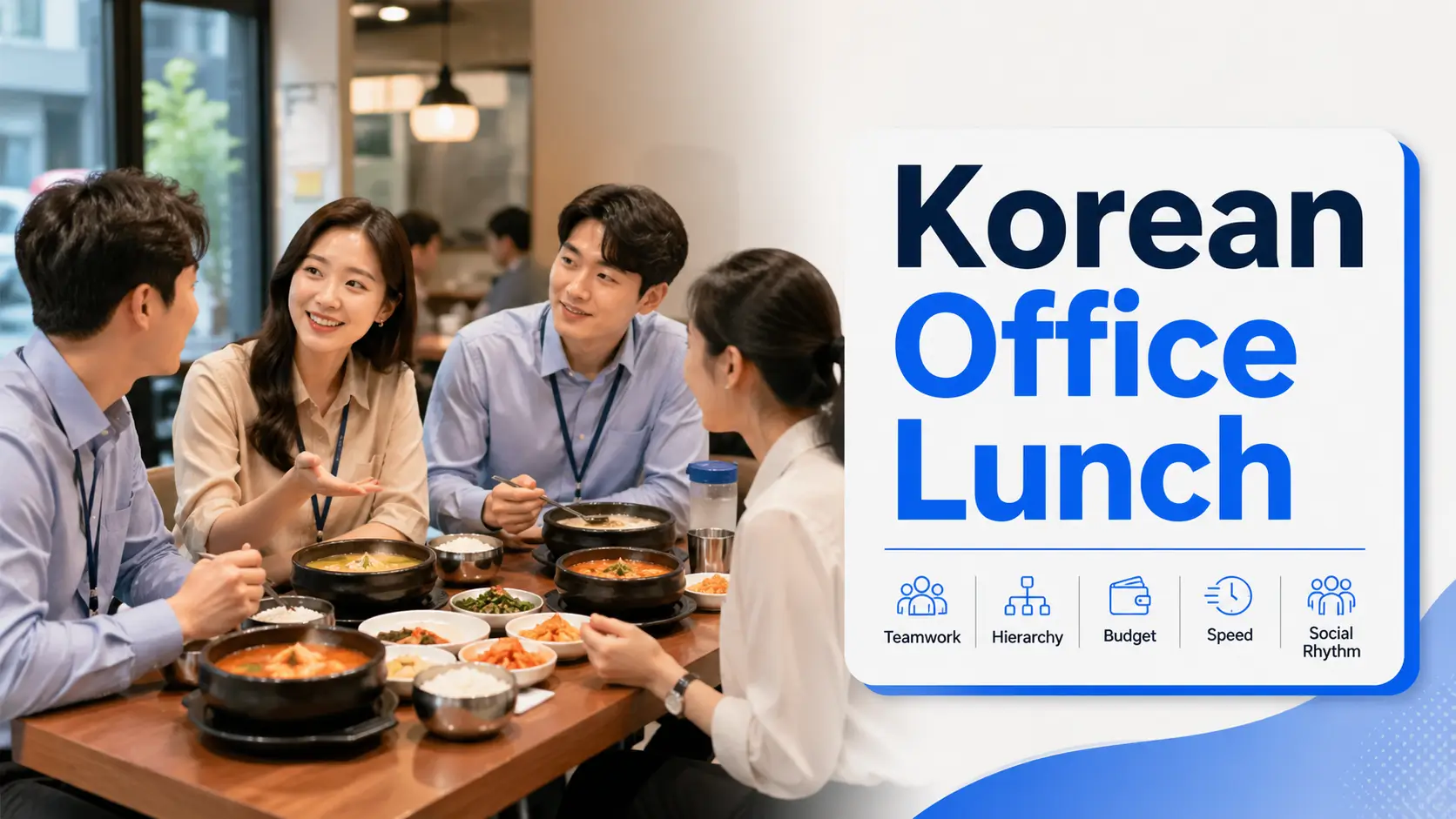
The Tiny Food Parliament: Decoding Korean Office Lunch Culture
At 11:17 a.m., the Korean office transforms. It’s not just hunger—it’s a complex intersection of hierarchy, budget, and social harmony.
For the uninitiated, the intense “menu talk” might look like indecision. In reality, it is a practical system designed to keep the workday moving. It’s where time pressure and neighborhood know-how meet over a shared bowl of stew before the 1 p.m. meeting begins.
“Misread it, and you may mistake consideration for indecision, or group lunch for instant friendship.”
Understand why “anything is fine” rarely means anything, and why the “usual” spot is often the smartest strategic choice.
Navigate the meal without turning a simple lunch into a cultural obstacle course. Watch the room; lunch is doing more than just feeding people.
Start with the menu. Then watch the room.
Table of Contents
Fast Answer
Korean workers often care about lunch menus because lunch is not just a meal. It can shape team bonding, hierarchy, budget, workplace mood, daily rhythm, and even whether the afternoon feels bearable. For US readers, the surprise is that lunch may function less like a private break and more like a small social checkpoint in the workday.
- It coordinates time, cost, taste, and group mood.
- It can reveal hierarchy without anyone naming hierarchy.
- It is practical first, symbolic second, and emotional somewhere in the middle.
Apply in 60 seconds: Before judging the menu talk, ask what problem lunch is solving today.
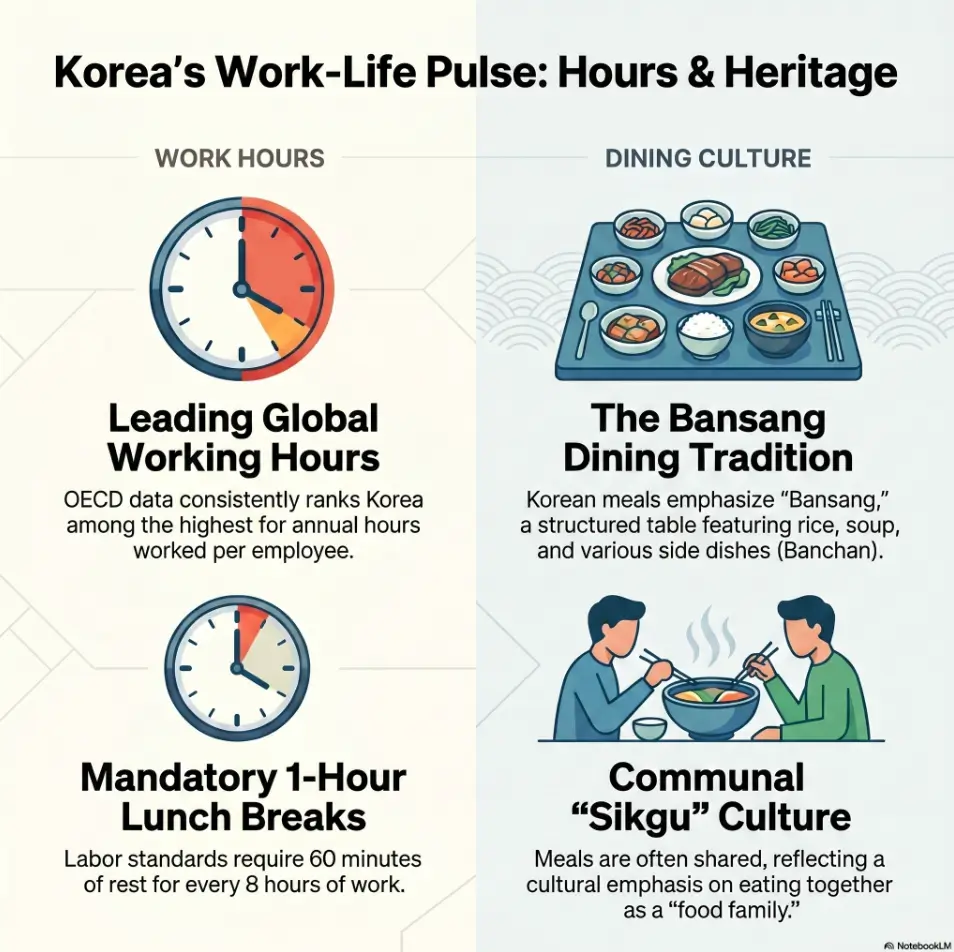
Start Here: Lunch Is a Workplace Signal, Not Just Food
Why the Menu Can Matter Before Anyone Sits Down
In many US offices, lunch can be almost invisible. Someone eats a salad at a desk. Someone disappears for a burrito. Someone drinks iced coffee with the haunted confidence of a person who has mistaken caffeine for nutrition.
In a Korean office, lunch may be more visible because the choice is often made together, or at least discussed together. The menu can signal whether the day feels rushed, whether the team is celebrating, whether someone is trying to keep costs down, or whether the group simply needs a reliable bowl of soup after a rough morning.
This does not mean every Korean workplace eats as one cheerful family. Some offices are independent. Some teams scatter. Younger workers may prefer more personal lunch routines than older managers expect. But the lunch question still tends to carry more social information than many foreigners anticipate.
The “What Are We Eating?” Question Carries More Social Weight Than It Seems
When a coworker asks, “What should we eat?” the literal meaning is simple. The hidden meaning can be messier:
- Who has the authority to decide?
- Who is paying, if anyone?
- Does the team need speed or comfort?
- Is there a guest, senior person, client, or new employee present?
- Is today a “safe menu” day or a “let’s try somewhere new” day?
I once watched three office workers spend more time deciding between two stew restaurants than they spent actually ordering. It looked silly for about 20 seconds. Then it became obvious: they were not choosing stew. They were negotiating fairness, fatigue, budget, seniority, and the fact that one person had already eaten pork twice that week.
The Tiny Office Ritual Hiding in Plain Sight
Lunch talk can function like an informal morning meeting without a whiteboard. People test the mood. They check who is busy. They learn who is stressed. They notice who has been unusually quiet.
The menu becomes a soft instrument. No one says, “Team cohesion appears unstable after the 10 a.m. call.” Someone says, “Should we get something warm today?” That is often enough.
Who This Is For, and Who This Is Not For
For US Readers Trying to Decode Korean Office Life Without Stereotypes
This guide is for readers who want to understand Korean work culture without reaching for the dusty shelf labeled “Asia is collectivist, America is individualist.” That shelf breaks easily. It also makes terrible coffee.
Korean office lunch culture is partly about group behavior, yes. But it is also about dense cities, short lunch windows, restaurant economics, workplace hierarchy, commuting patterns, food traditions, and the plain human need to feel restored before the afternoon begins.
The Korean Ministry of Employment and Labor explains that Korea’s amended Labor Standards Act reduced the maximum weekly working hours from 68 to 52 hours. That legal frame matters because lunch sits inside a work culture still negotiating time, rest, productivity, and quality of life. For a related workplace angle, it also helps to understand annual leave culture in Korea, where rest is not only a legal matter but a social negotiation.
For Expats Who Wonder Why Lunch Plans Feel So Coordinated
If you are an expat, business traveler, remote-work observer, or culture writer, the lunch ritual may surprise you because it can feel unusually synchronized. People may ask earlier than expected. They may debate menus with surprising seriousness. They may have strong opinions about soup temperature, restaurant distance, and whether today is a rice day.
That coordination is not always pressure. Sometimes it is efficiency. In dense office districts, the 12 p.m. rush arrives like a small weather system. Wait too long, and the good places fill. Walk too far, and the lunch hour collapses into logistics.
Not For Anyone Looking for a One-Rule Explanation of “Korean Culture”
No single rule can explain Korean lunch culture. A Seoul tech startup, a Busan shipbuilding supplier, a public agency in Daejeon, and a small design firm in Hongdae may all handle lunch differently.
The safer rule is this: treat lunch as context. Watch the office. Notice who suggests, who agrees quickly, who hesitates, and who smooths over the awkward parts. If you want to go deeper into that kind of soft social reading, Korean indirect communication explains why the message is not always sitting politely on the surface.
- Office type matters.
- Generation and role matter.
- Neighborhood layout matters more than outsiders expect.
Apply in 60 seconds: Replace “Koreans do this” with “this team seems to use lunch this way.”
The Hidden Job of Lunch: Turning Coworkers Into a Temporary Table
Lunch as a Daily Reset Button
Lunch can reset the emotional clock of the workday. A tense morning meeting may not disappear over a bowl of kimchi jjigae, but the body receives a message: sit down, eat something warm, breathe, continue.
That matters in Korean offices because workdays can still feel intense even as formal working hours have changed. OECD data has long shown Korea among countries with comparatively long annual working hours, even though those hours have been declining. So a midday meal is not decorative. It can be a pressure valve.
I have seen quiet office workers become visibly softer after the first spoonful of hot soup. Not transformed. This is lunch, not a violin concerto. But the shoulders drop. The jokes return. The afternoon becomes possible again.
Why Eating Alone Can Feel Different in Some Korean Offices
In some Korean workplaces, eating alone can be completely normal. In others, it may be read as distance, stress, dissatisfaction, or independence that needs explanation. The meaning depends on the office culture.
For US readers, the important shift is this: lunch may be less private by default. Saying “I’m going out alone” might be fine, but saying it every day without context could create a small social gap. Not a dramatic scandal. More like a loose thread in the sweater. This is why the rise of solo dining in Korea can feel modern and ordinary in one setting, but socially noticeable in another.
Here’s What No One Tells You: The Menu Is Sometimes the Mood
Menu choice can become a weather report. Spicy stew might mean people want energy. Cold noodles might mean the summer heat has conquered all optimism. A simple rice-and-soup place might mean nobody has the emotional bandwidth to compare restaurants today.
In one office district, I once heard someone say, “Let’s just go to the usual place.” The phrase sounded boring until I saw the relief around the table. The usual place was not lazy. It was mercy with side dishes.
Menu Choice Is Social Navigation in Disguise
Who Suggests the Restaurant Can Matter
In a flat friendship group, suggesting a restaurant is casual. In an office, the same suggestion may carry rank, tact, and timing. A junior employee may hesitate to name a place too strongly. A senior employee may intentionally ask others first to seem considerate. A manager may choose somewhere familiar to reduce friction.
That means the lunch menu often emerges through soft negotiation. People float options. Someone rejects one gently. Someone remembers a coworker cannot eat something. Someone checks the distance. The group eventually lands. These small moves become easier to read when you understand Korean titles versus first names, because rank often appears in language before it appears in the lunch bill.
Office Lunch Decision Flow
Time
Can we get back fast?
Budget
Is it comfortable for everyone?
Hierarchy
Who should choose?
Mood
Comfort or novelty?
Menu
The final answer is rarely just taste.
Why “Anything Is Fine” May Not Be as Neutral as It Sounds
In English, “anything is fine” can mean true indifference. In Korean workplace lunch culture, similar responses may mean several things:
- “I do not want to burden the group.”
- “I have a preference, but it may not be appropriate to state it first.”
- “Please choose something safe.”
- “I am too tired to negotiate.”
This is where foreigners can accidentally become lunch bulldozers. A well-meaning visitor hears “anything is fine” and chooses the most interesting option. But the group may have needed the least complicated option. The same pattern shows up in what “maybe” can mean in Korean culture, where a soft answer may carry more guidance than it first seems.
When the Safest Answer Is Not the Most Honest One
A Korean coworker may not say, “I dislike that place” directly, especially if someone senior suggested it. Instead, you may hear “It might be crowded,” “It is a little far,” or “Maybe something lighter?” These are not random logistics. They can be polite steering wheels.
Show me the nerdy details
In high-context workplace communication, indirect objections often protect group harmony. Lunch decisions are useful because the stakes are low enough to observe this pattern without turning the office into a sociology lab with chopsticks.
The Lunch Budget Problem Foreigners Often Miss
A Cheap Lunch Can Feel Like a Small Victory
Foreign visitors sometimes hear Korean coworkers talk excitedly about food and assume lunch spending is loose. Not necessarily. Many workers care deeply about price because lunch is repeated 5 workdays a week, roughly 20 times a month.
A difference of even a few thousand won can add up quickly. The “good lunch place” is often not the fanciest place. It is the place that balances price, portion, speed, taste, and emotional repair. A tiny miracle, basically, with metal chopsticks.
Why Price, Portion, Speed, and Distance All Compete
A lunch restaurant near a Korean office is judged by a practical equation:
- Is it close enough?
- Will the food arrive fast?
- Can everyone find something acceptable?
- Will it feel worth the money?
- Can we sit without waiting too long?
That is why some humble restaurants become office legends. They know the lunch crowd. They serve fast. They refill side dishes. They understand that the customer has a meeting at 1 p.m. and a soul held together by barley tea.
Don’t Assume Food Enthusiasm Means Unlimited Spending
Food talk can sound abundant, but many workers are budget-conscious. Inflation, rent, commuting costs, and personal savings goals all sit quietly behind the menu. The person who debates lunch passionately may also be trying to avoid an expensive restaurant for the third time that week.
Mini Calculator: The Repeated Lunch Cost
Use this quick mental check: daily lunch difference × 20 workdays = monthly difference.
- If one option costs 3,000 won more, that is about 60,000 won more per month.
- If two coworkers are choosing together often, the social pressure around price gets louder.
- Neutral action: suggest one affordable default and one slightly nicer option.
- Repeated meals make small price differences meaningful.
- Affordable restaurants can become trusted team infrastructure.
- Generosity is kind, but price awareness is also kindness.
Apply in 60 seconds: When choosing, ask “Should we keep it simple today?” before naming an expensive place.
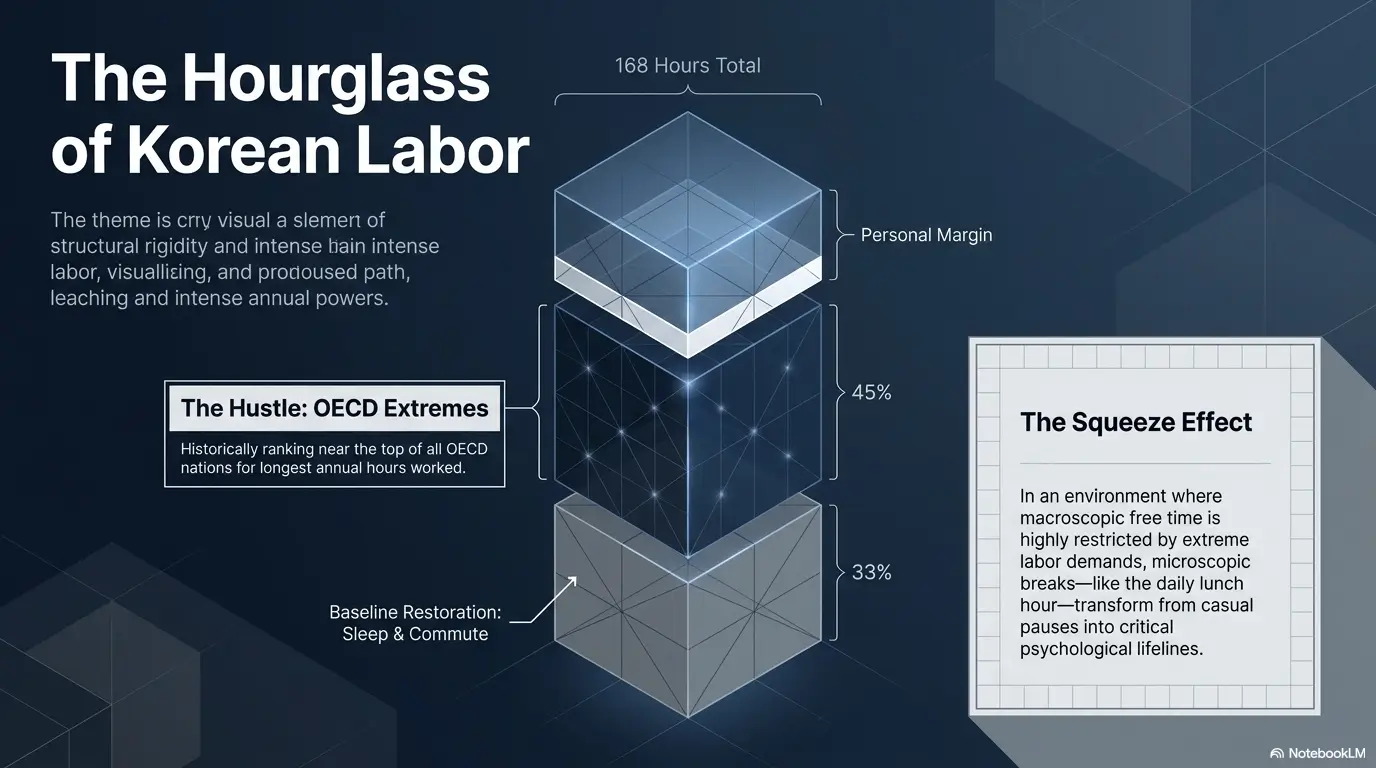
Speed Matters: Korean Lunch Often Runs on a Tight Clock
Why Nearby Restaurants Become Office Infrastructure
In dense Korean business districts, restaurants are not just restaurants. They are part of the office machine. The best lunch spots know how to move groups through quickly without making the meal feel joyless.
This is one reason foreign visitors may notice so many restaurants clustered near offices. A good lunch district is like a transit network for hunger: short routes, predictable stops, fast boarding, minimal emotional turbulence. For a wider street-level view, Korean city identity shows how neighborhoods quietly teach people where to eat, move, wait, and belong.
The Table Turnover Dance
At peak lunch, the restaurant may operate with remarkable choreography. Menus are short. Side dishes arrive quickly. Regular customers know what to order. Staff can read a table’s urgency from across the room.
I once watched a small soup restaurant feed what looked like half a department in under 35 minutes. Nobody seemed rushed, exactly. But nobody was floating in leisure either. It was efficient comfort, the rare workplace luxury that does not announce itself.
The Real Question: Can We Eat and Get Back Without Friction?
For many Korean workers, lunch is not an open-ended break. It is a narrow bridge between morning demands and afternoon obligations. The winning restaurant often answers one question: can we eat well without creating a second problem?
Decision Card: Nearby Usual Place vs. New Restaurant
- The team has a 1 p.m. meeting.
- Someone looks visibly drained.
- The group is larger than 4 people.
- The afternoon is flexible.
- The group is small.
- Someone has already checked the wait time.
Neutral action: Ask “Do we have time to try somewhere new, or should we go safe?”
- Korea Ministry of Employment and Labor: Labor Standards — Korean work hours, rest, and labor standards context for understanding why lunch sits inside a time-sensitive office rhythm.
- OECD: Hours Worked Indicator — Useful background for discussing Korea’s working-hours context and why midday breaks can matter in workplace culture.
- Visit Korea: About Korean Food — Official tourism guidance explaining Korean meal structure, including rice, soup, side dishes, stew, and kimchi.
Common Mistakes Foreigners Make When Reading Korean Lunch Culture
Mistake 1: Treating Lunch as Pure Personal Preference
The first mistake is assuming lunch is only about what each person wants to eat. In some Korean offices, that is too thin a reading. Lunch may also be about not inconveniencing the group, not overspending, and not making the senior person wait.
A foreigner who says “I don’t care, you all choose” may think they are being easygoing. Sometimes they are. Sometimes they are handing the group a small, annoying puzzle with no picture on the box.
Mistake 2: Assuming Group Lunch Always Means Deep Friendship
Group lunch can be friendly without being intimate. It can be routine without being emotional. It can be useful without meaning everyone wants to share childhood memories over soybean paste stew.
This distinction helps US readers avoid overreading warmth. A group may eat together because it is efficient, expected, pleasant, or simply normal. Friendship may grow from it, but lunch is not always a friendship certificate.
Mistake 3: Ignoring Hierarchy When Someone Says “You Choose”
When a senior coworker says, “You choose,” that may be sincere. It may also be a test of tact. The safest response is often to offer two or three reasonable options rather than one bold declaration.
Try: “Would you prefer something quick like gimbap, something warm like stew, or something lighter?” This gives choice without forcing the senior person to accept your one-man food manifesto. The same logic applies to Korean seating hierarchy, where “any seat is fine” may not always mean every seat carries the same social weight.
Mistake 4: Confusing Restaurant Excitement With Leisure Time
Korean workers may talk about lunch with real enthusiasm, but that does not mean they have a leisurely schedule. The excitement often exists because the window is short. A good meal matters more when there is not much time to recover.
- Group lunch is not always friendship.
- Choice is not always simple preference.
- Enthusiasm does not always mean leisure.
Apply in 60 seconds: Offer 2 options plus an easy exit: “Or we can go wherever is easiest.”
Don’t Do This: The Lunch Habits That Can Accidentally Create Distance
Don’t Reject Every Group Lunch Without Context
If you always decline group lunch, coworkers may eventually stop asking. That may be exactly what you want. But if you are trying to build trust, refusing every invitation can accidentally signal distance.
You do not need to join every lunch. You do not need to perform extroversion like a rented mascot. But joining occasionally can help you understand the team in ways no meeting agenda will reveal.
Don’t Mock Shared Dishes, Soup, Side Dishes, or “Same Menu Again?”
Shared dishes and repeated menus may look strange if you come from a workplace where everyone orders individually. But mocking the pattern can sound dismissive. The “same place again” may be popular because it is fast, fair, affordable, and reliable.
Also, be careful with comments about smell, spice, fermentation, or texture. Food is intimate. A careless joke can land like a spoon dropped in a quiet room. Even something as ordinary as tableware carries cultural texture, which is why Korean metal chopsticks can become part of the dining learning curve for visitors.
Let’s Be Honest: Lunch Can Be Awkward Before It Becomes Warm
The first few Korean office lunches can feel like entering a play after missing the first act. People know where to sit, what to order, how to share, when to speak, when to let silence be soup-shaped.
Awkwardness does not mean failure. It means you are learning the choreography. Start by watching. Ask simple questions. Accept help. Laugh gently at your own uncertainty without turning the whole meal into your cultural debut.
Eligibility Checklist: Should You Join Today’s Group Lunch?
- Yes/No: Are you trying to build rapport with this team?
- Yes/No: Is the invitation casual rather than clearly private?
- Yes/No: Can you handle at least one menu option comfortably?
- Yes/No: Do you have enough time to return with the group?
Neutral action: If mostly yes, join and observe more than you optimize.
Why Soup, Stew, Rice, and Side Dishes Feel So Practical at Work
The Comfort Logic Behind Hot Meals
To many Korean workers, a “proper meal” often means rice, soup or stew, and side dishes. Not always. Not for everyone. But the idea still carries weight. A sandwich may be convenient. A warm rice meal may feel like the day has been properly repaired.
Visit Korea, the country’s official tourism organization, describes Korean meals through a table pattern that often includes rice, soup, kimchi, and side dishes. That structure helps explain why workplace lunches can feel complete without requiring a long menu debate. It also connects neatly to the broader idea of why soup is a full meal in Korea, especially when broth, rice, and banchan work together as one table system.
Why “Proper Meal” Thinking Still Shapes Many Lunch Choices
In the US, lunch may be a productivity accessory: wrap, smoothie, protein bar, desk salad, emergency almonds. In Korea, lunch more often retains the dignity of a meal, even when eaten quickly.
That does not make one culture better. It simply changes the workplace rhythm. A Korean coworker may feel that a cold snack is not enough to carry the afternoon. The body wants rice. The mind wants broth. The inbox, unfortunately, wants everything.
The Quiet Power of Banchan: Variety Without a Long Debate
Banchan, or side dishes, solve a practical problem. They give variety without requiring every person to order a separate customized meal. A table can feel generous even when the main order is simple.
This is one reason Korean lunch can satisfy groups efficiently. People share variety around a stable center. The decision is not “How do we personalize everything?” It is often “What shared foundation works for most of us?” For visitors, Korean banchan refill rules can make this shared table feel much less mysterious.
Show me the nerdy details
Rice-centered meals with soup and side dishes reduce decision complexity because the table provides multiple textures and flavors without multiplying orders. In a workplace setting, that can make group dining faster and less fragile.
Lunch Menus Also Reveal the Neighborhood Around the Office
The Office District Has Its Own Food Map
Korean office districts often have a lunch geography that workers know by instinct. One alley has fast stews. One basement has cheap noodles. One corner place is good but too slow. One restaurant is reserved for payday optimism.
For a foreign visitor, this food map is a shortcut to understanding the neighborhood. The office does not end at the elevator. It spills into nearby restaurants, convenience stores, coffee shops, bakeries, and tiny places with handwritten signs.
Why Certain Alleys Become Unofficial Cafeterias
Some alleys become unofficial cafeterias because they meet the lunch equation: close, fast, affordable, filling, predictable. Once a few teams trust a place, the habit thickens. New workers inherit the map.
I once followed a group through an alley I would never have chosen alone. It looked plain from the main road. Inside, every table was full of office workers eating with the seriousness of people who had exactly 42 minutes and no patience for a disappointing broth.
One Block Away, the Culture Often Gets More Interesting
Tourists often stay on the shiny street. Workers know the second-floor place, the basement place, the narrow place behind the pharmacy. One block away from the obvious route, lunch culture becomes more legible.
This is where you see practical Korea: speed without fuss, regulars without ceremony, owners who know the rush, and menus built for people who must return to spreadsheets, calls, patients, clients, code, or complaints. When the restaurant line is impossible, the backup plan may be just as revealing: the quiet reliability of a Korean convenience store lunch stop.
The Emotional Weather of the Afternoon Starts at Lunch
A Bad Lunch Can Make the Workday Feel Longer
A bad lunch is rarely catastrophic. But it can stretch the afternoon. Too expensive, too slow, too salty, too awkward, too far, too little food: each problem adds a small pebble to the shoe.
In a busy office, morale does not always collapse dramatically. Sometimes it leaks. Lunch is one place where that leak can be patched or widened.
A Good Lunch Gives People Something Small to Anticipate
Good lunch anticipation is modest but powerful. It gives the morning a horizon. People can endure a tedious task more easily when there is a reliable meal waiting.
This is not sentimental. It is operational. Workers are bodies, not floating productivity ghosts. Feed the body decently, and the afternoon has a better chance.
The Menu as Morale: Not Grand, Just Human
The menu can become a small morale signal. A manager choosing a place everyone likes may be offering care. A team choosing something cheap near payday may be practicing solidarity. A coworker remembering your dietary limit may be building trust without speeches.
- A good lunch can soften a hard day.
- A bad lunch can make the afternoon heavier.
- Remembered preferences build quiet trust.
Apply in 60 seconds: Notice whether lunch leaves people more settled or more irritated.
How US Visitors Can Join Korean Lunch Culture Gracefully
Ask One Better Question Than “What’s Good Here?”
“What’s good here?” is fine. But a better question is, “What do people usually order when they need to get back quickly?” That question shows you understand the lunch situation is practical, not just culinary.
You can also ask, “Is there something easy for the group?” This signals that you are not trying to turn lunch into a personal tasting tour while everyone else watches the clock melt.
Notice the Group Rhythm Before Optimizing for Yourself
Before asking for substitutions, separate checks, unusual seating, or a faraway restaurant, watch the rhythm. Is everyone ordering the same dish? Is one person handling the order? Are side dishes shared? Is the group moving fast?
Your preferences matter. But timing matters too. The graceful move is to adapt first, then ask where needed. This is everyday Korean politeness in motion: not grand ceremony, just small adjustments that keep the room from snagging.
A Simple Script for Choosing Without Taking Over
Use this script when coworkers ask what you want:
Simple Lunch Script
“I’m happy with something nearby and easy. Maybe something warm, or whatever the team usually likes. If there are 2 options, I can choose between them.”
- It gives a preference without dominating.
- It respects time pressure.
- It lets locals guide the practical choice.
Neutral action: Use this script once, then adjust based on how the team responds.
If you have dietary restrictions, say them early and clearly. Do not wait until everyone reaches the restaurant door. A simple “I cannot eat pork, but I’m flexible otherwise” is much easier to work with than a last-minute menu crisis. The same practical honesty matters when navigating other food settings, including how to refuse alcohol in Korea without making the moment heavier than it needs to be.
Next Step: Try the “Lunch Context Check” Before You Judge the Menu Talk
Ask: Is This About Taste, Budget, Hierarchy, Time, or Belonging?
The fastest way to understand Korean office lunch is to stop asking only, “Why do they care so much about food?” Ask a better question: “What is this lunch decision really managing?”
It may be managing taste. But it may also be managing budget, speed, rank, newcomer comfort, team mood, or the simple wish to survive the afternoon with dignity intact.
Watch Who Decides, Who Hesitates, and Who Smooths the Plan
Every lunch group has roles. Someone proposes. Someone rejects gently. Someone translates vague preferences into a workable plan. Someone notices the quiet person. Someone says, “Let’s just go,” which is sometimes leadership and sometimes hunger.
Watch these roles for one week, and the office will become easier to read.
Use One Lunch to Read the Office More Clearly
One lunch can show you who carries social labor. It can reveal whether hierarchy is stiff or relaxed. It can show whether the team values speed, comfort, novelty, or thrift.
That is the hidden loop from the opening question. “What are we eating?” is rarely only about the menu. It is a small daily test of how people make life workable together. In digital spaces, a similar test happens through Korean group chat culture, where timing, tone, and who responds first can carry more meaning than outsiders expect.
Coverage Tier Map: How Deeply Are You Reading Lunch?
- Tier 1: Taste only. “They like this food.”
- Tier 2: Logistics. “This place is close and fast.”
- Tier 3: Budget. “This choice keeps lunch affordable.”
- Tier 4: Hierarchy. “The decision protects rank and comfort.”
- Tier 5: Belonging. “The meal helps the team feel temporarily aligned.”
Neutral action: After lunch, identify which tier mattered most today.
Differentiation Map
Many explanations of Korean lunch culture stop at the charming surface: delicious food, shared dishes, busy restaurants, spicy stews. Those details are real, but they are not enough. The deeper story is that lunch does social and operational work.
| Common Surface Reading | Deeper Workplace Reading |
|---|---|
| “Koreans love food.” | Lunch coordinates time, hierarchy, mood, and belonging. |
| “They always eat together.” | Some teams eat together from habit, efficiency, expectation, or care. |
| “The menu debate is excessive.” | The debate often protects budget, speed, preference, and group comfort. |
| “Shared dishes mean closeness.” | Shared dishes can also be practical, fast, and economical. |
FAQ
Why do Korean office workers talk about lunch so much?
Korean office workers may talk about lunch because it affects more than appetite. It can shape team mood, timing, budget, and social comfort. In some offices, deciding lunch together is a daily ritual that helps people reset before the afternoon. It also echoes a broader cultural habit explored in why Koreans ask if you ate, where food can quietly stand in for care, attention, and social temperature.
Is lunch usually eaten with coworkers in Korea?
Often, yes, but not always. Some teams regularly eat together, while others split into smaller groups or eat alone. The pattern depends on company culture, team size, generation, workload, and neighborhood options.
Do Korean workers feel pressured to join group lunches?
Some may feel pressure, especially in more traditional or hierarchical offices. Others see group lunch as convenient or pleasant. The key is not to assume one meaning. A group lunch can be obligation, friendship, efficiency, habit, or all of those at once.
Why do Korean lunch menus often include soup, stew, or rice dishes?
Rice, soup, stew, kimchi, and side dishes fit a common idea of a complete Korean meal. They are filling, familiar, shareable, and practical for restaurants serving office crowds quickly.
Is choosing the lunch restaurant a big deal in Korean offices?
It can be. The restaurant choice may involve time, price, hierarchy, dietary preferences, weather, distance, and group mood. Even when the stakes are low, the social signals can be surprisingly layered.
How should a foreigner respond when Korean coworkers ask what they want for lunch?
A good response is flexible but useful: “Something nearby and easy sounds good. Maybe something warm, unless the team has a usual place.” This gives direction without taking over the decision.
Is it rude to eat lunch alone in Korea?
Not automatically. Eating alone is increasingly common in many areas. But in some office settings, always eating alone may be read as distance. If you need solo time, a little context helps: “I need to run an errand today, but I’d like to join next time.”
Why do Korean office areas have so many fast lunch restaurants?
Office districts create concentrated demand during a short lunch window. Restaurants that serve quickly, price fairly, and handle groups smoothly become part of the daily work rhythm.
What does lunch reveal about Korean workplace culture?
Lunch can reveal how a team handles hierarchy, inclusion, time pressure, budget sensitivity, and informal care. It is a small ritual, but repeated rituals often show the real texture of workplace life.
How is Korean office lunch different from American office lunch?
American office lunch is often more individual and desk-based, though this varies widely. Korean office lunch is more likely to involve group coordination, nearby restaurants, shared dishes, and a stronger sense that lunch is part of the team’s daily rhythm.
Conclusion
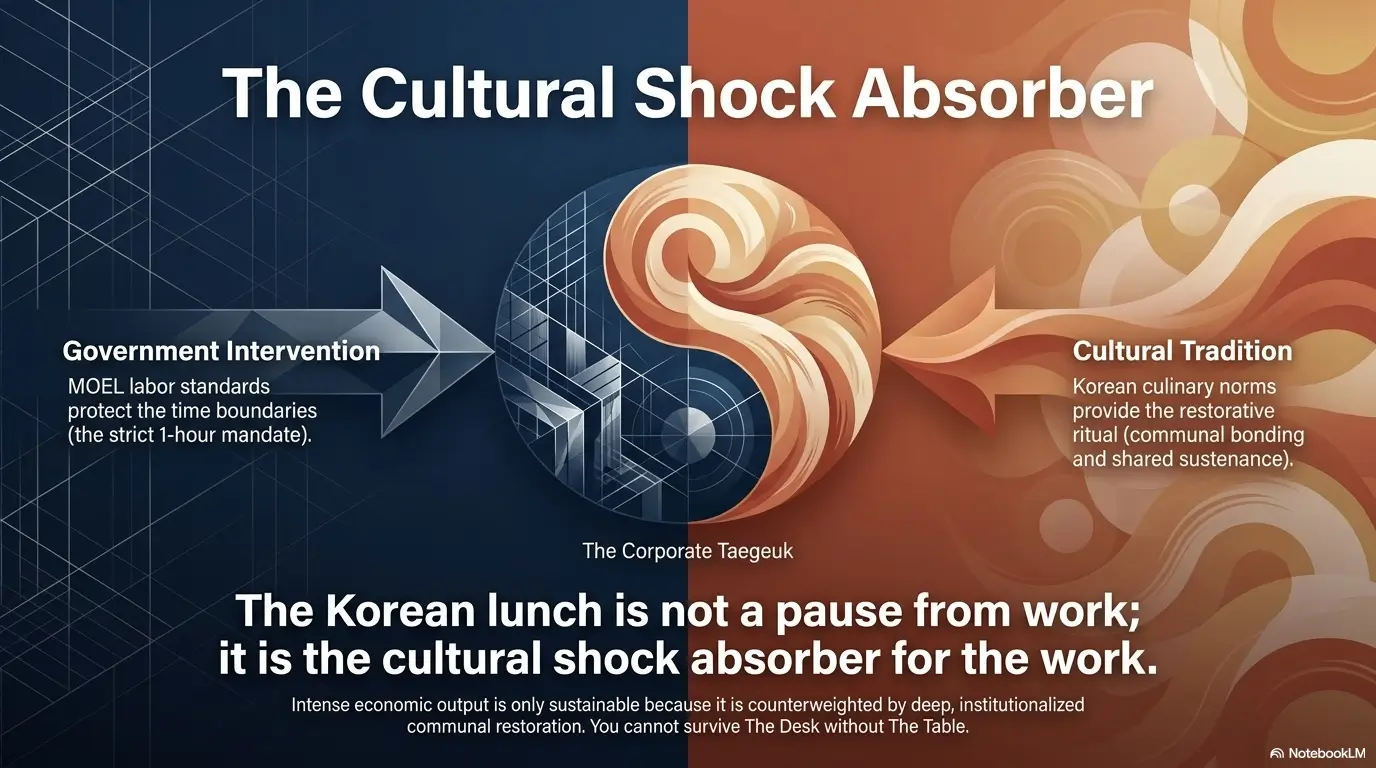
The reason Korean workers may care so much about lunch menus is not that lunch is magically more important in Korea, or that every office is a cozy food drama with better side dishes. The reason is simpler and more interesting: lunch is one of the few daily moments where time, hierarchy, money, appetite, neighborhood design, and belonging all sit at the same table.
That is why the 11:17 a.m. question matters. “What are we eating?” can mean “How tired are we?” “How much time do we have?” “Who needs comfort?” “Who should decide?” and “Can we make the afternoon a little easier?”
Before you judge the menu talk, run the Lunch Context Check. Ask whether the decision is about taste, budget, hierarchy, time, or belonging. Watch one lunch closely. Within 15 minutes, you may understand the office better than you would from three formal meetings and one beautifully useless onboarding slide deck.
Last reviewed: 2026-04.