
Navigating Your First
Korean Family Holiday
Your first holiday visit can feel less like a “family dinner” and more like walking onto a stage after everyone else has rehearsed since childhood. During Chuseok or Seollal, expectations appear in tiny moments: a greeting, a gift, or a silent glance from your partner.
We skip the fantasy rulebooks to give you a practical holiday map. Learn the hidden scripts of respect, food, and boundaries—so you can show up with confidence, not stiffness.
Table of Contents
Start Here: Korean Holidays Are Not Just “Family Dinner”
Why Chuseok and Seollal Feel Bigger Than a Regular Visit
For many Korean families, Chuseok and Seollal are not simply meals with extra side dishes. They are calendar landmarks. They carry memory, travel, ancestral respect, family status, old grievances, new marriages, and enough food prep to make a small restaurant blink twice.
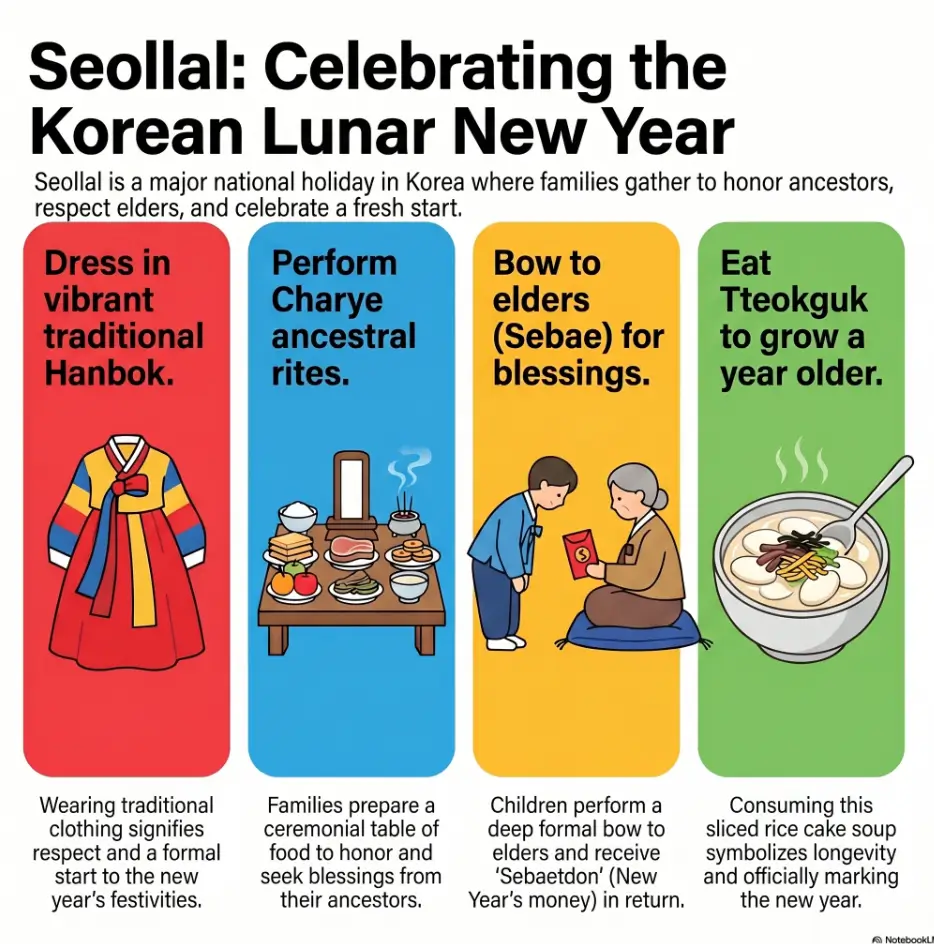
Korea Tourism Organization describes Chuseok as one of Korea’s major traditional holidays, tied to harvest, family gatherings, ancestral rites, and visits to family graves. Seollal, the Lunar New Year, also centers on family, respect for elders, and rituals such as sebae, the New Year bow. So when a foreign spouse hears “come over for lunch,” the cultural load may be closer to “enter the family theater, act one.” If you want a focused etiquette companion for one of the biggest family days, this guide to Chuseok etiquette for foreigners can help you read the room before the door opens.
The Hidden Script Behind Greetings, Food, Gifts, and Timing
The hidden script is not always explained because many Korean partners grew up inside it. They may not think to say, “Please greet the oldest person first,” or “Do not open that gift like it is a birthday party in Ohio,” or “My aunt will ask about babies before the soup cools.”
That is where tension starts. Not because anyone is evil. Because everyone is using a different operating manual.
- Expect formality at the beginning.
- Ask your partner what their family notices most.
- Prepare for food, greetings, gifts, and timing before arrival.
Apply in 60 seconds: Text your partner one question: “What is the first thing your parents will expect when we walk in?”
What Foreign Spouses Often Notice First
Foreign spouses often notice three things quickly: people move with unspoken roles, food arrives in waves, and the Korean partner becomes a human switchboard. They translate language, mood, duty, jokes, seating, and whether that “Are you tired?” means concern or a warning flare.
I once watched a foreign husband proudly help by stacking dishes immediately after the meal. Sweet idea. Tiny problem: he nearly carried away plates that were still part of the ritual layout. Everyone froze for 1.5 seconds. Then his wife rescued the moment with one sentence, and the room exhaled. That is the holiday in miniature: good intent needs local timing.
Who This Is For, and Who This Is Not For
This Is For Foreign Spouses Meeting Korean In-Laws During Major Holidays
This guide is for the foreign spouse, fiancé, long-term partner, or soon-to-be family member who wants to show respect without becoming a nervous etiquette robot. It is especially useful if you are visiting during Chuseok or Seollal, meeting extended relatives, staying overnight, or joining a holiday meal for the first time.
It is also for the Korean partner who has been quietly thinking, “How do I explain my family without making them sound terrifying?” Good news: you do not need a 42-slide deck. You need a map.
This Is For Couples Trying to Reduce Family Tension Before It Starts
Most holiday stress is not caused by one dramatic disaster. It is caused by 12 tiny unplanned moments: late arrival, unclear gift, awkward greeting, food refusal, too much phone use, a joke that does not travel, a chore imbalance, and one exhausted partner whispering, “Why did you say that?” near the shoe rack.
A little preparation turns those moments from traps into ordinary turns in the road.
This Is Not a Rulebook for Every Korean Family
Korean families are not one single personality wearing hanbok. Some are formal. Some are relaxed. Some still observe ancestral rites. Some skip them. Some expect daughters-in-law to help deeply in the kitchen. Some order food, laugh loudly, and treat the holiday like a long lunch with better fruit.
The family culture matters more than the national stereotype. Your Korean partner is not just a translator. They are the local weather report. For couples trying to understand how affection, obligation, and public roles mix in everyday life, Korean couple culture offers another useful lens.
This Is Not About Performing Perfect Korean Identity
You do not have to erase yourself. In fact, trying too hard can become its own strange little puppet show. The goal is to communicate, “I understand this matters to you, and I am willing to learn.”
That sentence, lived through small actions, is more powerful than flawless grammar.
Korean Holiday Visit Map: What the Room Is Quietly Measuring
On time, calm, greeted elders first
Not flashy, not empty-handed, partner-approved
Try, compliment, refuse carefully if needed
Offer help without barging into the system
Thank elders, leave warmly, debrief later
The First Expectation: Show Respect Before You Show Personality
Why First Impressions Can Feel More Formal Than Americans Expect
In many American families, friendliness arrives first. A big smile, a casual “Hey, good to see you,” and maybe a hug can be enough to melt the room. In many Korean family settings, especially with older relatives, respect often enters before personality. Warmth is welcome, but it usually wears a pressed shirt.
This does not mean you must become stiff. It means you should let the room see that you understand rank, age, and occasion before you become your full charming self. Think of it as knocking before entering, emotionally speaking.
How Small Gestures Carry Big Meaning in Korean Family Settings
Small gestures may carry a surprising amount of weight. Taking off shoes neatly. Greeting the oldest person first. Using two hands when giving or receiving something. Waiting a beat before sitting. Not starting to eat before elders begin. These are not decorative manners. They are social signals. If the shoe rack already feels like a cultural threshold, this deeper guide to Korean shoe etiquette explains why the doorway matters more than visitors often realize.
I have seen a room soften because someone used two hands to receive a cup of tea. It took 3 seconds. It said, “I see you.” Not bad for a tiny hand movement.
The Polite Version of “I’m Trying” Matters More Than Perfection
If your Korean is limited, your body language becomes the subtitle track. Face people when they speak. Put the phone away. Nod when your partner translates. Smile with attention, not with the glassy panic-smile of someone trapped in a language aquarium.
Respect is not perfection. It is visible care.
Gift-Giving Expectations: The Quiet Test Many Foreign Spouses Miss
Why Showing Up Empty-Handed Can Feel Colder Than Intended
For many Korean holiday visits, bringing something is not just “nice.” It can be read as a sign that you understood the occasion had weight. Showing up empty-handed may not ruin anything, but it can feel colder than intended, especially if everyone else arrived with fruit, meat sets, health items, or carefully wrapped boxes.
The gift does not need to scream luxury from a mountain peak. It needs to say, “I did not treat your family’s major holiday like a random Tuesday.”
What Counts as a Thoughtful Holiday Gift for Korean In-Laws
Common holiday gifts can include fruit boxes, premium pears or apples, quality meat sets, tea, coffee, health-oriented items, snacks, or practical household gifts. The safest choice depends on the family’s habits, age, health concerns, budget expectations, and whether you are visiting in Korea or abroad.
Decision Card: When to Bring What
| Situation | Safer Gift Direction | Why It Works |
|---|---|---|
| First major holiday visit | Partner-approved fruit, tea, or food set | Traditional enough without being intimate |
| Parents are practical | Useful premium household item | Signals thought, not performance |
| You are unsure | Ask your partner before buying | Family norms beat internet lists |
Neutral action: Choose the gift only after your partner names 2 options their parents would actually use.
Ask Before You Buy: Your Partner Knows the Family Temperature
This is not the time for surprise creativity unless you already know the family well. A bottle of wine may be perfect in one home and awkward in another. A health supplement may be thoughtful or accidentally imply, “Congratulations on aging.” A huge expensive gift may make people uncomfortable because reciprocity wakes up and starts doing math.
Ask your partner three things: What do they usually receive? What would feel too cheap? What would feel too much? Those answers are worth more than 30 gift guides written by people who have never met your mother-in-law. If the gift will include cash, envelopes, or a formal presentation moment, it is also worth reading how to hand money, gifts, and business cards politely so the gesture feels careful rather than clumsy.
Food Expectations: Helping, Eating, Complimenting, and Not Panicking
Why Holiday Food Can Feel Like a Love Language With Chores Attached
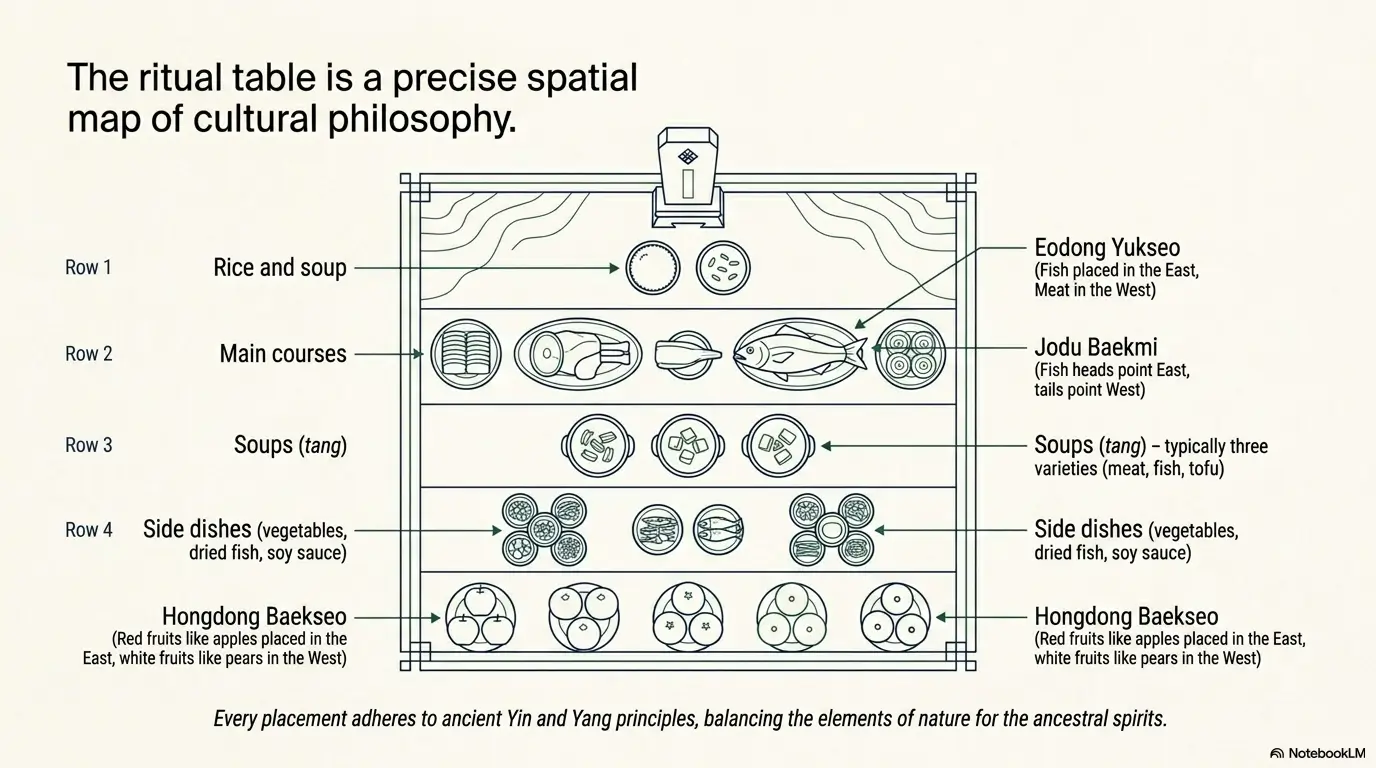
Korean holiday food often carries affection, labor, memory, and hierarchy on the same plate. During Chuseok, songpyeon and other holiday foods may appear. During Seollal, tteokguk is closely associated with the New Year. In some homes, the food is homemade over many hours. In others, part of it is purchased, because modern families also have jobs, sore backs, and a healthy respect for convenience.
Food is rarely just food. It can mean, “I worked for you.” It can also mean, “Please recognize that I worked for you.” That second part is where foreign spouses sometimes miss the cue. Even a simple Korean mealtime question can carry social warmth, as this piece on why Koreans ask if you ate shows beautifully.
When to Offer Help, and When to Step Back Gracefully
Offer help early, but do not invade the kitchen like a rescue helicopter. Try: “Can I help with anything?” Then let your partner translate the real answer. In some homes, guests are expected to sit. In others, not helping reads badly. In still others, your help is welcome only if you can follow instructions without rearranging the entire kitchen ecosystem.
I once dried dishes in the wrong cabinet zone and created a tiny archeological mystery for the host. Helpful? Technically. Efficient? No. Spiritually noisy? Very.
“I Can’t Eat That” Without Making the Table Go Silent
If you have allergies, religious restrictions, pregnancy-related limits, medical restrictions, or strong dietary boundaries, your partner should explain them before the meal. Not during the moment when an elder is holding chopsticks and waiting for your face to approve 4 hours of effort.
Use soft, grateful language: “It looks wonderful, but I cannot eat this ingredient. Thank you for understanding.” If you can eat something else at the table, compliment that specifically. Specific praise is a small lantern.
Let’s Be Honest: The Kitchen May Be the Most Emotional Room
The kitchen is where tradition, gender roles, fatigue, pride, and family politics gather around the cutting board. If the room feels tense, do not assume it is about you. It may be about 20 years of holiday labor arriving early and wearing an apron.
- Warn your partner about restrictions before the visit.
- Offer help once, then follow the host’s lead.
- Compliment one specific dish or gesture.
Apply in 60 seconds: Prepare one sentence for food limits and one sentence of praise before you arrive.
Family Hierarchy: The Invisible Seating Chart of Respect
Why Age, Titles, and Birth Order Still Shape the Holiday Room
In many Korean families, age and relationship titles shape how people speak, sit, serve, and joke. This does not mean every older person is stern or every younger person is silent. It means the social room often has a built-in architecture. If you cannot see it, you may bump into furniture.
Foreign spouses from highly informal cultures may feel confused. Why does one uncle get served first? Why does everyone use different titles? Why does your partner suddenly sound 12 years old around their parents? Welcome to the invisible seating chart. For a closer look at this invisible furniture, see this guide to Korean seating hierarchy.
What to Call People When You Are Not Sure
Names can be tricky. Titles can be trickier. The safest move is to ask your partner before the visit: “What should I call your mother, father, grandparents, siblings, and older relatives?” Write it down if needed. No shame. Holiday vocabulary is not a personality test.
If you are not sure in the moment, pause and let your partner lead. A careful pause is better than confidently inventing a title that sounds like you found Korean kinship terms in a blender. The difference between titles and names matters deeply in Korea, so this explainer on Korean titles vs. first names can prevent many tiny social bruises.
How to Avoid Accidentally Sounding Too Casual
Avoid first-name casualness with elders unless the family has clearly invited it. Keep early jokes gentle. Do not tease older relatives as a bonding shortcut. American-style roast humor can land like a dropped tray in a formal room.
After the room warms up, there may be laughter and looseness. But let the family open that door. Do not kick it in wearing socks with avocados on them.
Show me the nerdy details
Korean kinship language is not only vocabulary; it encodes age, relationship, marriage position, and social distance. For foreign spouses, the practical goal is not mastering every term. It is reducing avoidable friction by learning the specific titles used in this family. Ask for a short family title list, including pronunciation, before the visit. If the family uses English labels like Mom, Dad, aunt, or uncle, follow their preference rather than forcing Korean terms for display. For wider context, you may also want to understand everyday kinship labels such as oppa, unni, hyung, and noona, because they reveal how relationship language works beyond direct translation.
Common Mistakes Foreign Spouses Make During Korean Holidays
What Goes Wrong Is Usually Small First
Most mistakes are not dramatic. They are small signals that get interpreted through old family expectations. The foreign spouse thinks, “I was just being relaxed.” The in-law thinks, “They did not understand the seriousness of the day.” Both may be sincere. Both may be tired. The tiny gap becomes a hallway echo.
Mistake 1: Treating the Holiday Like a Casual American Potluck
American potluck logic says: bring something, chat freely, sit anywhere, help yourself, leave when the energy fades. Korean holiday logic may involve arrival order, elder greetings, food sequencing, gift presentation, ancestral customs, and whether the family expects people to stay longer than one meal.
Do not wing it. Winging it is for karaoke, not first Chuseok with in-laws.
Mistake 2: Letting Your Partner Explain Everything in the Moment
Your Korean partner may already be managing traffic, family messages, emotional pressure, and the silent audit of whether the foreign spouse is doing okay. If every cue must be explained live, they become a holiday air traffic controller.
Prepare the basics before arrival: greeting order, gift plan, food restrictions, expected length of stay, chores, and sensitive topics.
Mistake 3: Over-Correcting Until You Seem Stiff or Frightened
Some foreign spouses read etiquette advice and arrive like a Victorian butler trapped in a language app. They bow too much, whisper too much, refuse to sit, and look terrified of the soup.
Respect should make you attentive, not wooden. Breathe. Smile. Try. Repair quickly if needed.
Mistake 4: Assuming Silence Means Disapproval
Silence can mean many things: fatigue, language barrier, shyness, digestion, family tension, or simply that someone is watching a holiday TV special with the concentration of a temple monk. Do not immediately convert quiet into rejection. In fact, Korean silence in conversation can mean something very different from what an anxious outsider imagines.
Eligibility Checklist: Are You Ready for the Visit?
- Yes/No: Do you know who to greet first? Next step: ask your partner for the elder order.
- Yes/No: Do you have a gift plan? Next step: confirm the budget and item type.
- Yes/No: Do you know whether you are expected to help with food? Next step: ask before the day begins.
- Yes/No: Do you have one polite exit phrase? Next step: agree on it as a couple.
Neutral action: Fix every “No” before you leave home.
Don’t Do This: Turning Cultural Stress Into a Couple Fight
Why Holiday Pressure Often Lands on the Korean Partner First
The Korean partner often stands between two worlds and gets squeezed by both. Their family may expect them to explain tradition, protect family harmony, and make the foreign spouse look good. The foreign spouse may expect them to translate everything, defend every boundary, and decode every glance. That is a lot of unpaid emotional project management.
By the time the meal ends, the Korean partner may be tired in three languages.
The Worst Time to Debate Family Boundaries
The worst time to debate boundaries is in the car outside the family apartment, 8 minutes before arrival, while holding a fruit box and a plastic bag of emergency coffee. Boundaries need oxygen. Holiday driveways do not provide much.
Decide in advance what is flexible and what is not. How long will you stay? Who answers baby questions? What if someone comments on weight, salary, Korean ability, religion, or future plans?
What to Agree on Before You Walk Into the House
You need a couple-level plan, not a vague hope. Agree on signals. A phrase. A glance. A reason to step outside for air. Decide who handles awkward questions and which topics are not being debated in front of relatives.
One couple I know used the phrase “I need to check the car” as a reset button. Did the car need checking? Almost never. Did the marriage benefit? Absolutely.
Here’s What No One Tells You: Your Partner Is Translating More Than Words
Your partner is translating intention. They are translating tone. They are translating the difference between “My aunt is blunt but kind” and “My aunt has opened the family interrogation drawer.” They may also be translating you to their family: “They are quiet because they are nervous, not rude.”
- Agree on sensitive topics before arrival.
- Use a private reset signal.
- Debrief after, not during the emotional peak.
Apply in 60 seconds: Choose one phrase that means “Please help me exit this conversation gently.”
The Language Gap: How Much Korean Do You Really Need?
The Few Phrases That Carry Outsized Emotional Weight
You do not need advanced Korean to make a warm impression. A few phrases can carry more emotional weight than a long speech. Learn a greeting, a thank-you, a food compliment, and a goodbye. If Seollal is involved, ask your partner whether a New Year greeting is expected.
Useful phrases may include “Annyeonghaseyo,” “Gamsahamnida,” and “Jal meogeosseumnida,” which means you ate well. Practice them out loud at least 5 times. Quiet practice in your head does not count. Your mouth needs rehearsal.
Why Pronunciation Matters Less Than Warm Timing
Pronunciation matters, but timing often matters more. A slightly imperfect thank-you said warmly at the right moment can land beautifully. A perfect phrase shouted across the room while someone is discussing family memorial food may not.
Let your partner tell you when to use phrases. Korean language learning is helpful. Korean timing is the premium subscription. For the broader manners system underneath those words, this guide to Korean politeness can help you understand why tone, age, and situation all matter.
When Smiling Is Helpful, and When It Looks Like Avoidance
Smiling can soften the language gap. But if you smile through every serious question, it may look like avoidance. When someone addresses you directly, pause, look attentive, and let your partner translate. If you understood part of it, respond to that part simply.
Mini Calculator: Your 10-Minute Korean Phrase Plan
Choose up to 3 phrases: greeting, thank-you, food compliment.
Practice each phrase for 2 minutes, then use 4 minutes for your partner to correct timing and tone.
Output: In 10 minutes, you have 3 usable phrases and fewer panic subtitles running in your head.
Neutral action: Ask your partner to record the phrases once so you can hear the family-friendly version.
Gender Roles and Chores: The Sensitive Part No One Wants to Name
Why Some Holiday Labor Still Falls Unevenly in Traditional Homes
In some Korean families, holiday labor still falls unevenly on women, especially daughters-in-law and mothers. This is not universal, and younger families vary widely. But the pattern exists strongly enough that foreign spouses should not walk in pretending the kitchen runs on fairy dust and stainless steel.
The sensitive part is that holiday labor can look like “family love” from one angle and “exhausting gender expectation” from another. Both can be true in the same room.
How Foreign Spouses Can Help Without Becoming the Family Servant
Help should be meaningful, not self-erasing. Offer to carry, wash, set, clear, entertain children, make tea, or run a practical errand. But do not quietly accept a role that will become the permanent family pattern if it violates your couple’s boundaries.
There is a difference between helping for one holiday and being drafted into the Ministry of Endless Dishes.
What Couples Should Discuss Before the Holiday Meal Prep Begins
Talk about labor before the visit. Will you help in the kitchen? Will both partners help? What if only one gender is expected to work? What if your partner disappears into the living room and leaves you smiling beside a mountain of plates?
This conversation may feel awkward. Have it anyway. A 15-minute discussion at home can prevent 2 hours of resentment later.
- Discuss labor roles as a couple before the holiday.
- Offer specific help instead of vague martyrdom.
- Notice whether a one-time favor is becoming a pattern.
Apply in 60 seconds: Ask your partner, “What will helping look like for both of us?”
Boundary Setting: Respectful Does Not Mean Spineless
How to Say No Without Making the Whole Room Freeze
Respect does not mean saying yes to everything. It means saying no with care when needed. The trick is to keep the refusal small, warm, and not overly explanatory. Long explanations can sound like debate invitations.
Try: “Thank you, but we cannot stay overnight this time.” Or: “I appreciate it, but I cannot eat that ingredient.” Or: “We are not ready to discuss children yet, but we are happy to be here today.” Calm words. Firm floor. For another everyday version of this skill, especially when drinking pressure appears, see how to refuse alcohol in Korea without turning the moment into a public standoff.
When Your Partner Should Speak for the Couple
Some boundaries should come from the Korean partner, especially when the issue involves their family’s expectations. If an elder asks a sensitive question, your partner may be the best person to protect the room and the relationship at the same time.
This is not cowardice. It is routing. You would not ask a visitor to negotiate your family’s 20-year Thanksgiving politics alone with a pie server in one hand.
The Difference Between a One-Time Compromise and a New Family Pattern
One-time compromise can be generous. Repeated compromise without agreement becomes a pattern. The key question is: “Are we choosing this freely, or are we drifting into it because we are afraid to disappoint people?”
Coverage Tier Map: How Strong Does the Boundary Need to Be?
| Tier | Situation | Best Response |
|---|---|---|
| 1 | Minor preference | Adapt graciously |
| 2 | Temporary discomfort | Use humor or soft redirect |
| 3 | Repeated pressure | Partner speaks clearly |
| 4 | Personal boundary | Couple gives unified answer |
| 5 | Harmful or disrespectful pattern | Limit exposure or leave |
Neutral action: Decide your Tier 4 and Tier 5 issues before the holiday.
The Emotional Math: Why Everyone May Be More Tired Than They Look
Older Relatives May Be Protecting Tradition, Not Attacking You
Older relatives may care deeply about holiday customs because those customs connect them to parents, hometowns, ancestors, hardship, migration, and decades of family continuity. A correction about greeting or food may feel personal to you, but to them it may feel like protecting the thread.
This does not excuse rude behavior. It does explain why a small custom may carry an emotional weight that seems disproportionate from the outside.
Younger Couples May Be Carrying Work, Travel, Money, and Family Pressure
Modern Korean holidays can involve heavy traffic, expensive gifts, limited vacation time, childcare, work messages, and pressure to visit multiple households. Foreign spouses may see only the living room moment. The Korean partner may be carrying the full spreadsheet of obligations. In everyday work life, this pressure can also be shaped by annual leave culture in Korea, where time off is not always as emotionally simple as it looks on a calendar.
Britannica notes that Seollal and Chuseok are among Korea’s most important holidays, often involving family gathering in ancestral hometowns or the home of the family head. That kind of travel and obligation can turn a 1-day meal into a logistical opera.
The Holiday Is Short, but the Memory Can Become Long
The holiday may last only a few days, but family memory has excellent storage capacity. A sincere effort can become part of your reputation. So can a visible refusal to try. The good news is that you do not need to be perfect. You need to be repairable.
If something goes wrong, apologize simply. Thank people. Ask your partner what to do next. The family may remember your mistake less than they remember whether you handled it with humility.
Short Story: The Pear Box and the Quiet Father-in-Law
A foreign wife once told me she thought her first Chuseok had failed because her father-in-law barely spoke to her. She had brought a pear gift box, practiced two Korean phrases, helped clear dishes, and then sat through long stretches of conversation she could not understand. In the car, she cried. Her husband called his mother later, expecting damage control.
Instead, his mother said, “Your father liked that she used both hands. He said she seems sincere.” The father-in-law had not been cold. He had been quiet. The pear box did not perform magic. The two-handed gesture did not solve every future holiday. But together they sent a message: I know this matters. I am trying carefully. Sometimes that is the first bridge. Not a dramatic bridge with fireworks. A small wooden bridge. The kind people actually cross.
- Assume fatigue before malice when possible.
- Repair small mistakes quickly.
- Let your partner explain family subtext after the visit.
Apply in 60 seconds: After the holiday, send or say one specific thank-you to the host.
FAQ
What should I bring to Korean in-laws for Chuseok or Seollal?
Bring a thoughtful, partner-approved gift. Common options include fruit boxes, tea, quality food sets, coffee, or practical premium items. The best choice depends on the family’s habits and budget norms. When in doubt, ask your Korean partner what their parents usually appreciate and what would feel too cheap or too excessive.
Do foreign spouses have to bow to Korean in-laws?
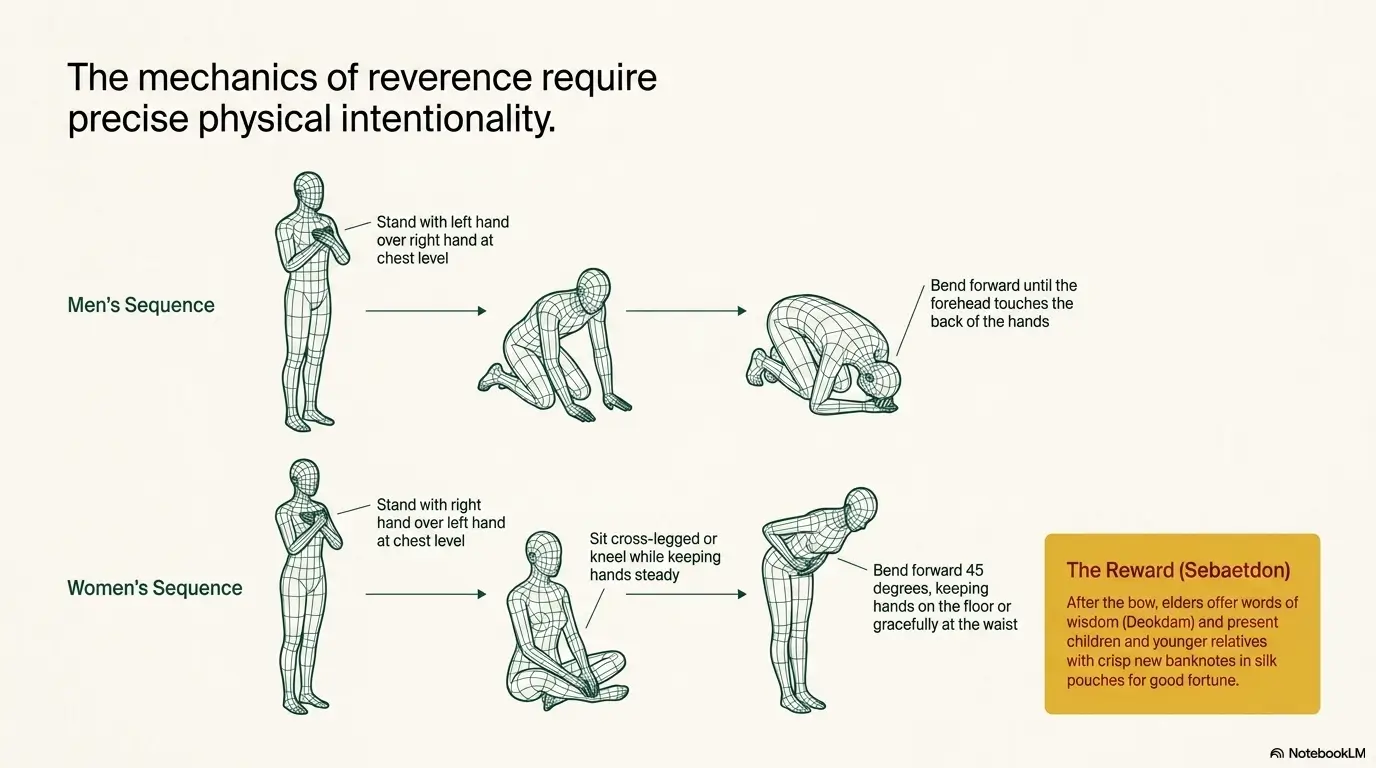
Not always. Some families may expect a formal bow during Seollal, especially sebae for elders. Other families are relaxed or may not expect a foreign spouse to perform the custom perfectly. Ask your partner before the visit. If a bow is appropriate, learn the timing and basic form in advance rather than improvising mid-room. For a holiday-specific walkthrough, read this guide to Seollal etiquette for foreigners.
Should I help cook during Korean family holidays?
Offer help, but follow the household rhythm. Some hosts want guests to rest. Others expect visible participation. A good first line is, “Can I help with anything?” Your partner can clarify whether you should wash dishes, set the table, carry food, entertain children, or stay out of the kitchen traffic lane.
What if I do not speak Korean well?
Learn a few high-value phrases: hello, thank you, I ate well, and goodbye. Warm timing matters more than perfect pronunciation. Also show attention with body language: put your phone away, look at people when they speak, and let your partner translate without drifting mentally into the wallpaper. If you want a beginner-friendly foundation, this guide to Korean honorifics for foreigners is a useful next step.
Is it rude to refuse food from Korean in-laws?
It can feel abrupt if you refuse without explanation or gratitude. If you have allergies, religious limits, medical restrictions, or strong dietary boundaries, tell your partner before the visit so they can prepare the family. Refuse gently, thank the host, and compliment something you can eat or appreciate.
How formal should I be with older Korean relatives?
Start more formal than casual. Use polite greetings, two hands when giving or receiving items, and avoid first-name casualness unless invited. As the room relaxes, you can become warmer and more natural. Early respect creates room for later personality.
What should my Korean spouse explain before the visit?
Your spouse should explain greeting order, gift expectations, food customs, whether ancestral rituals are involved, what to call people, how long you are expected to stay, who usually helps with chores, and which questions may be sensitive. This protects both of you from live improvisation under family lighting.
How do I handle uncomfortable questions from Korean relatives?
Decide as a couple before the visit. For questions about children, money, weight, work, religion, or long-term plans, your Korean partner may need to answer for the couple. Use short, warm redirects. Do not debate family boundaries for the first time at the holiday table. For more examples of questions that can surprise visitors, this guide to Korean personal questions etiquette can help you prepare without overreacting.
Next Step: Have the 20-Minute “Holiday Map” Talk Before You Go
Ask Your Partner What Their Family Notices Most
The best preparation is not memorizing every Korean holiday custom. It is learning this family’s version. Ask your partner: What does your mother notice first? What does your father care about? Who is sensitive about respect? Who asks blunt questions? What topics should we avoid?
This is how the hook closes: you do not need the “right shoes” for every Korean family dance. You need your partner to show you the first few steps before the music starts.
Choose One Gift, Three Korean Phrases, and One Exit Plan
Keep the plan small enough to use. Choose one appropriate gift. Learn three phrases. Agree on one exit plan if the day becomes too long, too tense, or too confusing. A holiday plan that fits on one phone note is better than a perfect theory nobody remembers.
Holiday Map Prep List
- Arrival: Time, parking, greeting order, shoe etiquette.
- Gift: Item, budget, who receives it, how to present it.
- Language: Three phrases and when to say them.
- Food: Restrictions, compliments, whether to help.
- Boundaries: Awkward questions, exit signal, length of stay.
Neutral action: Fill this list with your partner before buying anything or rehearsing anything.
Decide Who Handles Awkward Questions Before They Happen
Do not wait until someone asks about babies, salary, housing, weight, job stability, or your Korean ability. Decide now. Your partner can answer, redirect, or soften the question. You can smile, breathe, and avoid accidentally turning a family meal into a courtroom drama with kimchi.
For broader context on how Korean holidays are presented to international visitors, official tourism resources can help you understand public customs. For private family expectations, your partner remains the best source.
Conclusion: Korean in-law expectations during holidays are not a secret exam, even if they sometimes feel that way. They are a set of signals: respect, preparation, gratitude, timing, and family awareness. You will not get every cue right. No one does, not even insiders. But you can arrive prepared enough to be warm instead of panicked, helpful instead of intrusive, and respectful without disappearing.
Within the next 15 minutes, make your Holiday Map with your partner: one gift, three phrases, one chore plan, one boundary plan, and one exit signal. That small conversation may do more for family harmony than a perfect bow performed under emotional thunderclouds.
Last reviewed: 2026-04.